


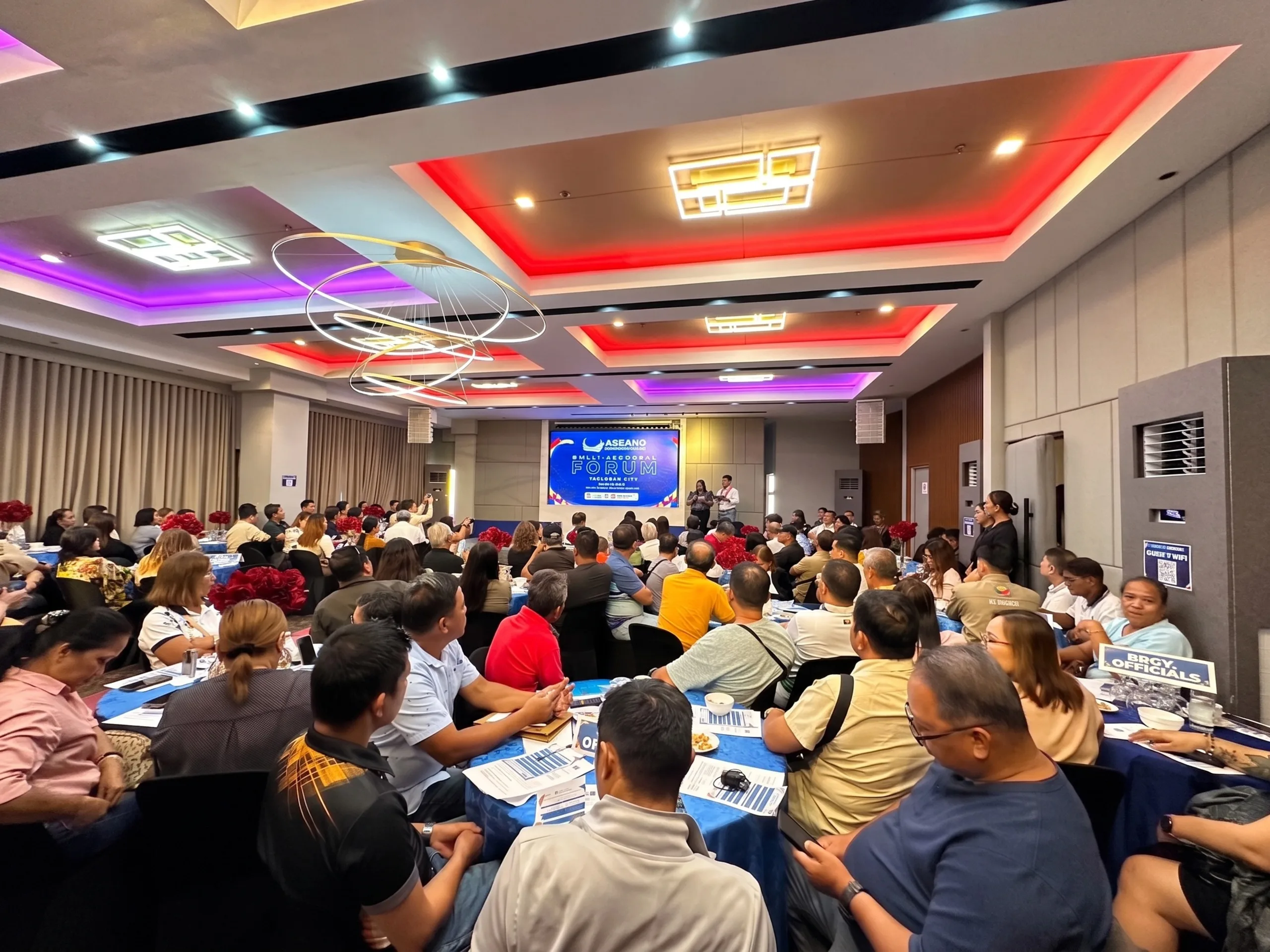
TACLOBAN CITY, LEYTE — Highlighting the collective push toward regional disaster preparedness and adaptive governance, "The ASEAN Multi-Sectoral Forum: Building Resilient Communities from Early Warning to Recovery" officially opened on August 19, 2026, at the Aviore Hotel in Tacloban City. Marked by the ceremonial entrance of the ASEAN flags, the multi-day gathering convenes over 200 delegates representing local government units, civil society organizations, emergency response agencies, and academic partners from across the region.
Empowering Grassroots Leadership for Climate and Disaster Resilience
Guided by the theme "Empowering Community Leaders for Climate Resilience, Disaster Preparedness, and Inclusive Recovery," the forum provides a collaborative platform to evaluate disaster risk management strategies across Southeast Asia. Featuring technical presentations and panel discussions led by resource speakers from key national government agencies, sessions focus on translating high-level policy frameworks into practical, community-driven solutions. Key agenda items include strengthening localized early warning systems, upgrading multi-agency emergency communication channels, and ensuring equitable support structures during post-disaster rehabilitation.
Fostering Multi-Sectoral Collaboration Across Southeast Asia
The gathering in Tacloban—a city historically recognized for its resilience and community-led recovery efforts—serves as a fitting backdrop for cross-sectoral dialogue. Organizers and delegates emphasized that mitigating modern climate risks requires continuous alignment among local chief executives, scientific experts, first responders, and community leaders. By establishing unified standards for risk communication and resource allocation, the forum seeks to enhance regional readiness against natural hazards and environmental changes.
Building Momentum for Inclusive Recovery Frameworks
As proceedings continue at the Aviore Hotel, participants will engage in action-planning workshops designed to strengthen grassroots capacity, safeguard vulnerable demographics, and promote sustainable infrastructure development. The insights and policy recommendations generated throughout the event are set to inform future regional agreements, ensuring that communities across Leyte and the wider ASEAN network remain equipped to predict, respond to, and bounce back from climate challenges.
