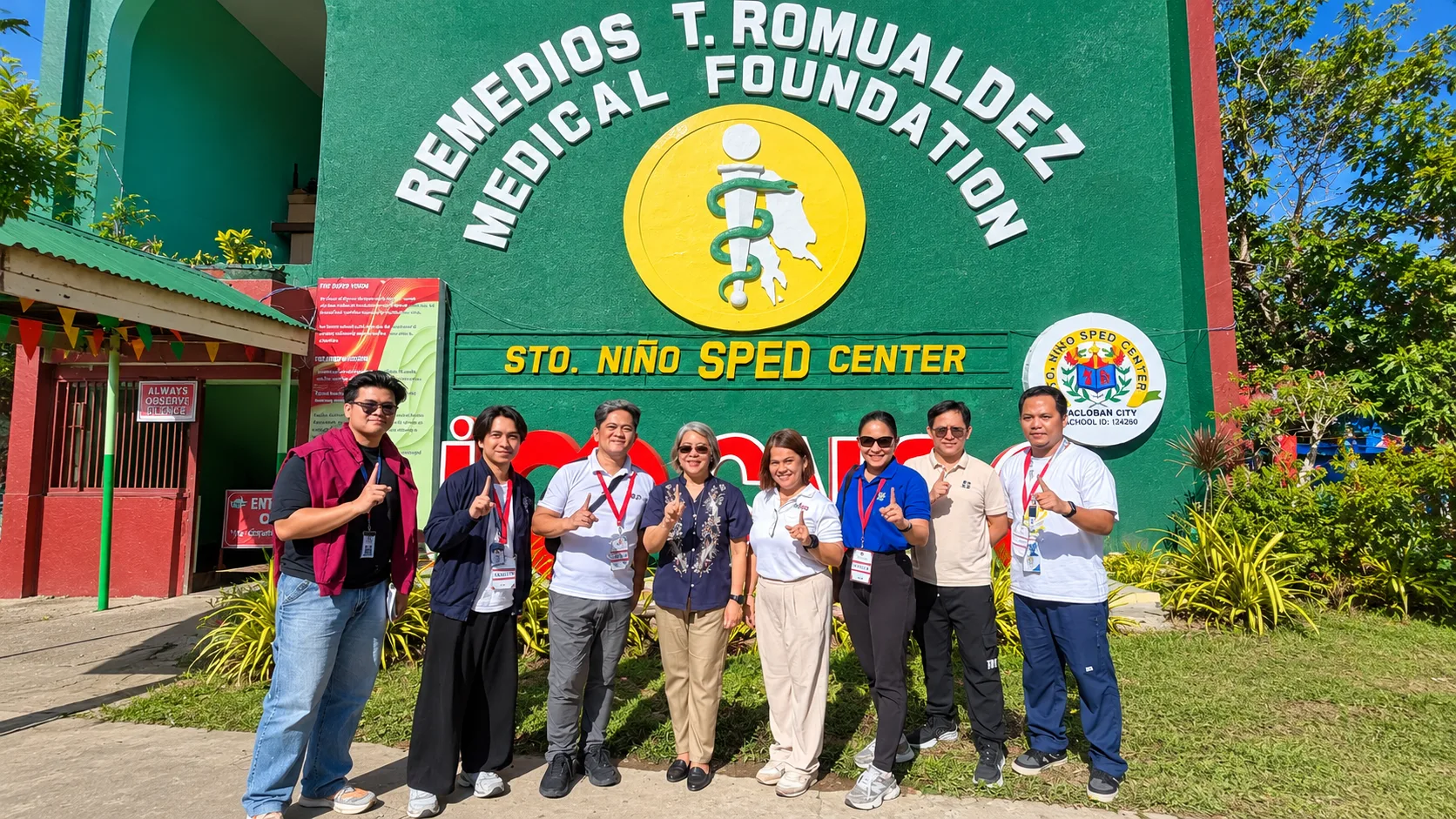
TACLOBAN CITY — Representatives from the Department of Science and Technology–National Research Council of the Philippines (DOST-NRCP), serving as the lead monitoring agency for the nationwide pilot implementation of the Enhancing Teachers' Unimpeded Rational Objectives (e-TURO) Digital Learning System, recently conducted on-site evaluations in Eastern Visayas. Joined by personnel from the DOST Eastern Visayas Scholarship Unit, the monitoring team was welcomed by school heads and selected Grade 2 classes at the two designated pilot schools in Region VIII: Sto. Niño SPED Center in Tacloban City and Guinsorongan Elementary School in Catbalogan City. The field assessment focused on evaluating classroom user experience, system functionality, hardware-use appropriateness, and the overall quality of instructional modules and digital content.
Developed as an AI-enhanced digital learning platform, e-TURO integrates a comprehensive learning management system, a curated digital content library, and AI-powered content creation tools into a single ecosystem. The technology is engineered to assist elementary teachers in lesson planning, developing instructional materials and assessments, and monitoring student performance even in rural or underserved public schools operating with limited internet connectivity. Currently, the system is undergoing parallel pilot testing across selected elementary schools in Regions I, II, the Cordillera Administrative Region (CAR), V, VIII, and XII.
Data and classroom feedback gathered from the Tacloban and Catbalogan pilot beneficiaries will play a decisive role in shaping policy decisions regarding the wider rollout of e-TURO across the Philippine public school system. By validating how AI-assisted teaching tools perform in real-world Grade 2 classrooms, DOST-NRCP aims to ensure that technological innovations effectively reduce teachers' administrative workloads while enhancing foundational learning outcomes nationwide.