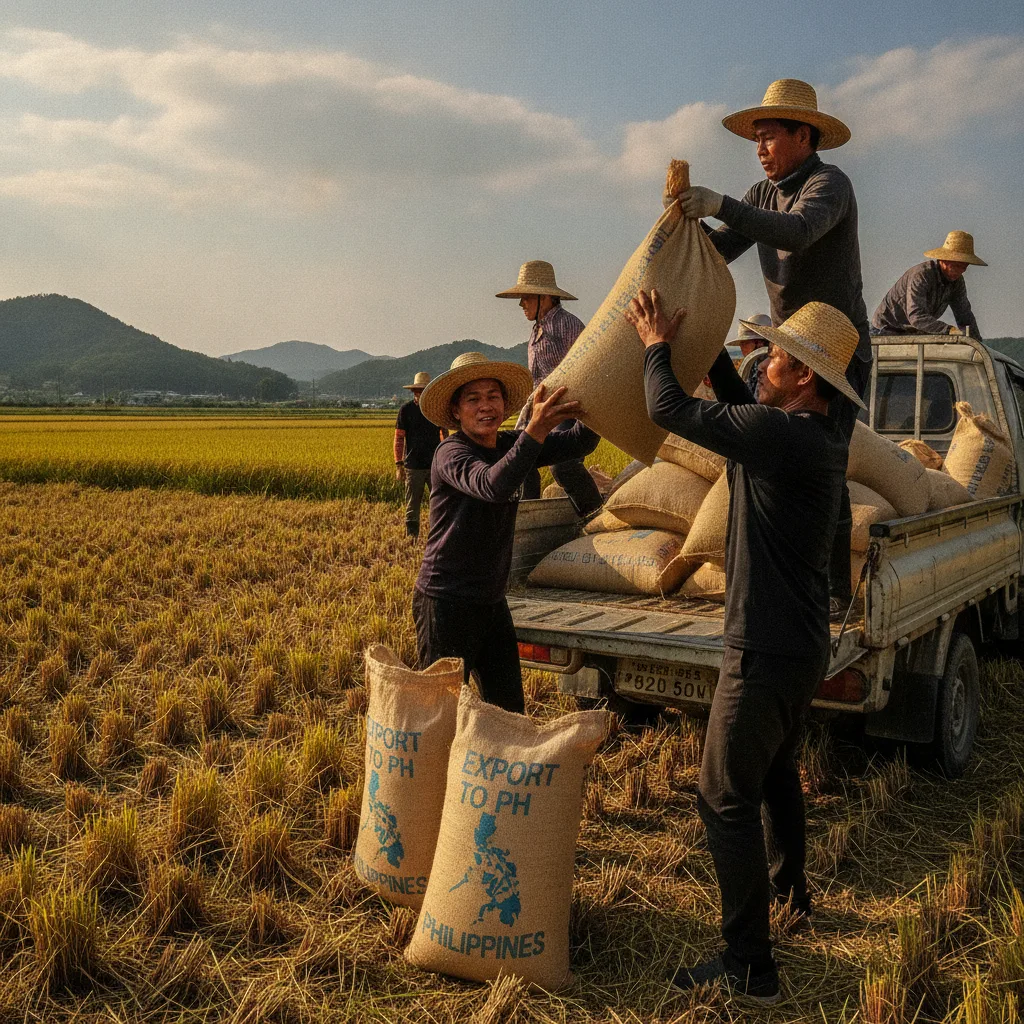
South Korean Gangjin rice has officially made its inaugural entry into the Philippine market, marking a new chapter in agricultural trade between the two nations. This development signifies a strategic expansion for South Korean agricultural exports, with the Philippines now receiving shipments alongside Australia for the first time.
Connecting South Korean Agriculture Directly with Filipino Consumers
The move by Gangjin County to export its rice internationally underscores a growing trend of South Korean agricultural producers seeking to diversify their overseas markets. While specific details regarding shipment volumes or the exact varieties of rice are not immediately available, the initiation of these exports represents a direct link between South Korean farms and Filipino consumers, a connection that could evolve significantly in the coming years.
Diversifying Grain Imports and Stabilizing Market Supply
For the Philippines, a nation where rice is a fundamental staple and food security remains a critical concern, the introduction of a new source of imported rice could have several implications. It could potentially contribute to stabilizing rice supply, offering consumers more choices, and possibly influencing market prices, depending on the volume and regularity of future shipments. This diversification of import sources can be a strategic move to bolster national food reserves and reduce reliance on traditional suppliers, a crucial consideration in an era of unpredictable global supply chains and climate change challenges.
Fostering OFW Connections and Opportunities in Agriculture
While the immediate impact on the average Filipino household or the broader economy of the Philippines will depend on the scale of these new imports, the entry of South Korean rice signals an evolving landscape in regional food trade. For Filipinos working abroad, particularly those in South Korea, this development could be seen as a tangible connection between their host country and their homeland, potentially fostering greater economic ties. Families in the Philippines should monitor local market announcements for potential new rice varieties or price changes, as this new import channel matures. This agricultural partnership could also open doors for future collaborations, potentially impacting Filipino workers in agriculture or related industries in the long term, though such opportunities remain to be seen.