Palawan — The Armed Forces of the Philippines (AFP) has expressed its full support for the Department of Justice’s (DOJ) newly established maritime law unit, a strategic initiative designed to serve as a central repository of legal expertise on the 2016 Arbitral Award and international maritime law. This dedicated legal center is seen as a vital component in the country's whole-of-nation approach to defending its sovereignty and sovereign rights in the West Philippine Sea. While military and maritime agencies maintain a robust physical presence through regular patrols, the AFP emphasized that this new unit provides the critical legal armor necessary to sustain Philippine gains on the international stage. By consolidating domestic legal records and strengthening expertise, the government ensures that all actions at sea remain firmly anchored in the United Nations Convention on the Law of the Sea (UNCLOS).
Consolidating Legal Expertise For Sustained National Maritime Gains
The establishment of the DOJ’s maritime law unit marks a significant milestone in the country’s commitment to a rules-based international order. Rear Admiral Roy Vincent Trinidad, AFP spokesman for the West Philippine Sea, noted that this unit functions as a central hub of knowledge, allowing the government to effectively defend its maritime heritage. This legal backing complements the daily efforts of the AFP, Philippine Coast Guard, and Bureau of Fisheries and Aquatic Resources as they patrol the nation's waters. With this dedicated legal support, the country is better equipped to articulate its position and protect its sovereign rights against any challenges to the 2016 South China Sea arbitral ruling.
Showcasing Naval Precision During Prestigious International Training Drills
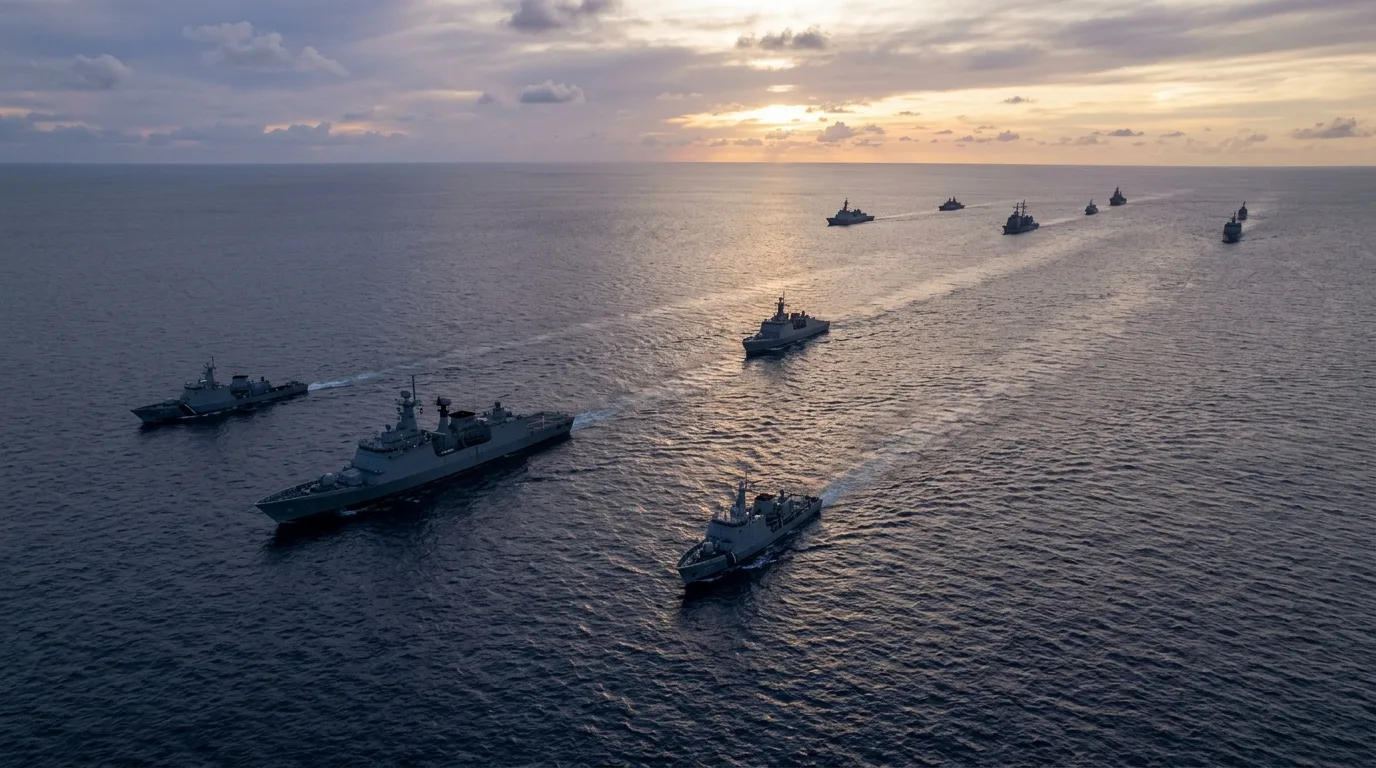
While legal foundations are being strengthened at home, the Philippine Navy is simultaneously showcasing its operational prowess on the global stage during the Rim of the Pacific (RIMPAC) exercises. Recently, the guided-missile frigate BRP Miguel Malvar (FFG-6) participated in the Naval Surface Fire Support (NSFS) Rodeo, where it demonstrated impressive accuracy by landing shells on a virtual target more than 3.5 miles away. This live-fire competition, which involved 14 allied warships, provided a venue to test system performance and communications in accordance with complex joint fire plans. Such participation not only hones the skills of Filipino naval personnel but also fosters interoperability with allied forces, ensuring readiness for a wide range of maritime operations.
Anchoring Philippine Actions In International Law And Cooperation
The integration of legal defense and operational training reflects the government's dual-pronged approach to maritime security—being both diplomatically assertive and operationally prepared. By ensuring that all naval activities and maritime assertions are firmly grounded in international law, the Philippines continues to gain respect and support from the international community. The synergy between the new DOJ maritime unit and the AFP’s active participation in drills like RIMPAC demonstrates a cohesive strategy to preserve maritime gains. Whether through legal advocacy or naval excellence, the nation remains resolute in its mandate to secure its waters and protect the welfare of its fisherfolk and maritime resources.