


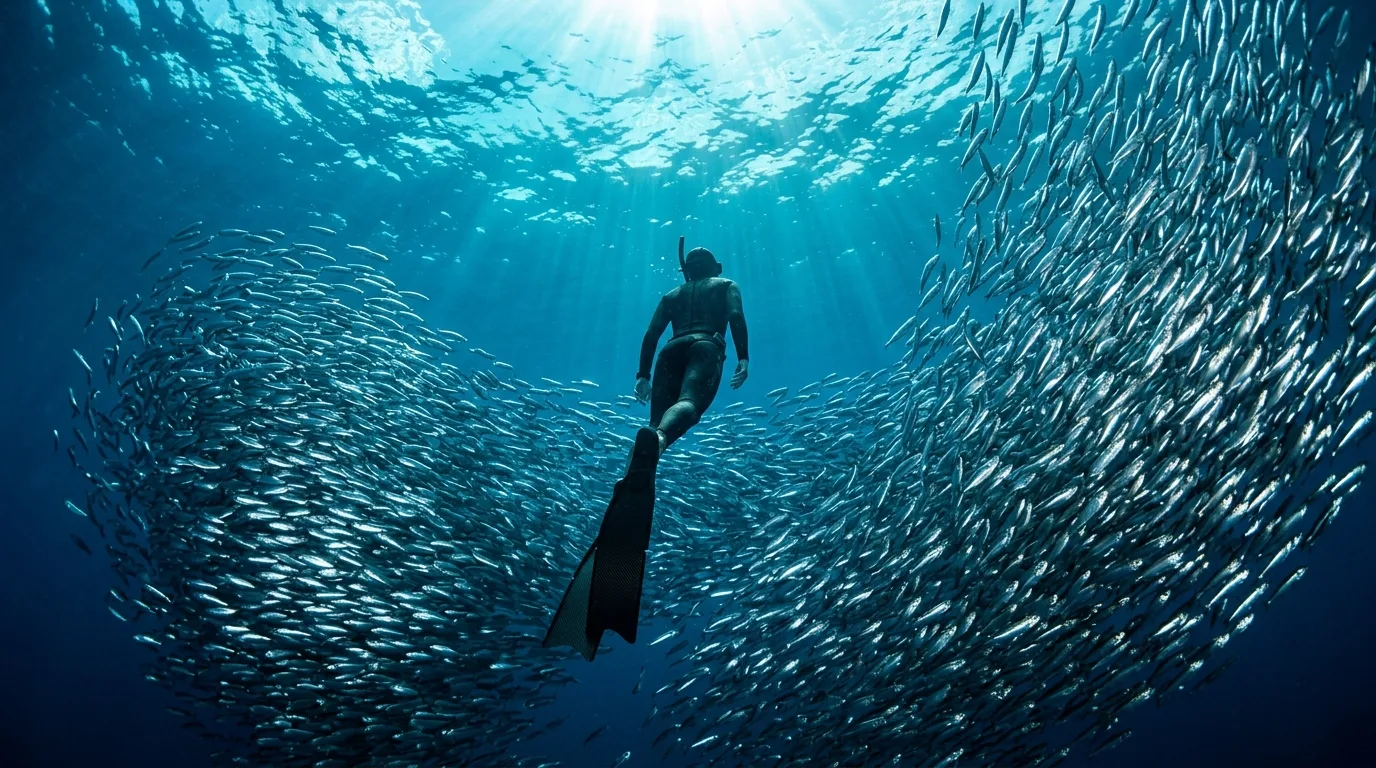
MOALBOAL, Cebu — Off the shores of Panagsama Beach, millions of sardines move as one fluid entity, creating a living underwater hurricane that has captivated divers worldwide. This natural spectacle, known as the Moalboal Sardine Run, now represents Philippine eco-tourism on the international stage at the China-ASEAN Expo 2026.
A Marine Wonder Featured on the World Stage
The China-ASEAN Expo, held annually in Nanning, Guangxi, serves as a platform for trade, investment, and tourism cooperation among Southeast Asian nations. Moalboal's Sardine Run was selected as a flagship entrance feature at the Philippine pavilion, showcasing Cebu's marine biodiversity to global travelers and investors.
This recognition elevates Moalboal's status beyond a backpacker destination. It positions the town as a premier eco-tourism attraction capable of drawing international attention. The sardine run demonstrates how thriving marine life, sustainable conservation, and accessible adventure can harmonize to create unforgettable experiences.
Unmatched Accessibility and Year-Round Presence
Unlike the seasonal sardine run in South Africa, which demands arduous boat journeys, Moalboal's spectacle is resident and accessible year-round. The massive shoal makes its permanent home mere meters from Panagsama Beach. Snorkelers, freedivers, and scuba divers can all witness the phenomenon without extensive training.
The magic begins where the shallow coral flat suddenly drops into a sheer vertical reef wall. Here, the ocean floor disappears, replaced by a dark wall of silver scales. Millions of sardines estimated at around ten million individuals shift in flawless synchronization, blocking sunlight and casting an eerie dusk across the reef.
Swimming Inside the Silver Tornado
To enter the sardine mass is to experience a dimension where human geometry dissolves. The school transforms into towering tornadoes, shifting liquid curtains, and vast silver clouds. Divers who descend into the formation find that sardines do not scatter in panic but part effortlessly, creating a glowing corridor of air and water.
For a few suspended seconds, swimmers are enveloped inside a living sphere of silver. As they ascend, the curtain closes seamlessly behind them. This choreography is a survival mechanism, yet watching it unfold feels like pure art written in the language of the sea.
Turtles and Reef Biodiversity
The sardine run is only one act in Moalboal's underwater symphony. The same reef hosts resident green sea turtles and hawksbill turtles, often floating gracefully just meters from the swirling sardines. Flocks of trumpetfish, hunting trevally, and intricate macro-life dot the coral wall, ensuring every dive reveals new biodiversity.
Because the animals are wild and unprompted by artificial feeding, observing them offers an authentic connection to marine life. This natural ecosystem thrives due to dedicated local stewardship and strict conservation standards maintained by the local government and the Department of Tourism.
Sustainable Tourism for Future Generations
Visitors are paired with trained local guides who advocate responsible ocean ethics. No touching or chasing marine life is permitted, reef-safe sunscreen is mandatory, and zero-litter policies are strictly enforced. Supporting accredited operators directly empowers the community and funds marine sanctuary patrols.
The sardine run remains permanent because the sardines feed naturally on plankton brought by coastal currents. This sustainable model proves that tourism and conservation can coexist, ensuring the silver tornado continues to mesmerize generations of travelers.
