


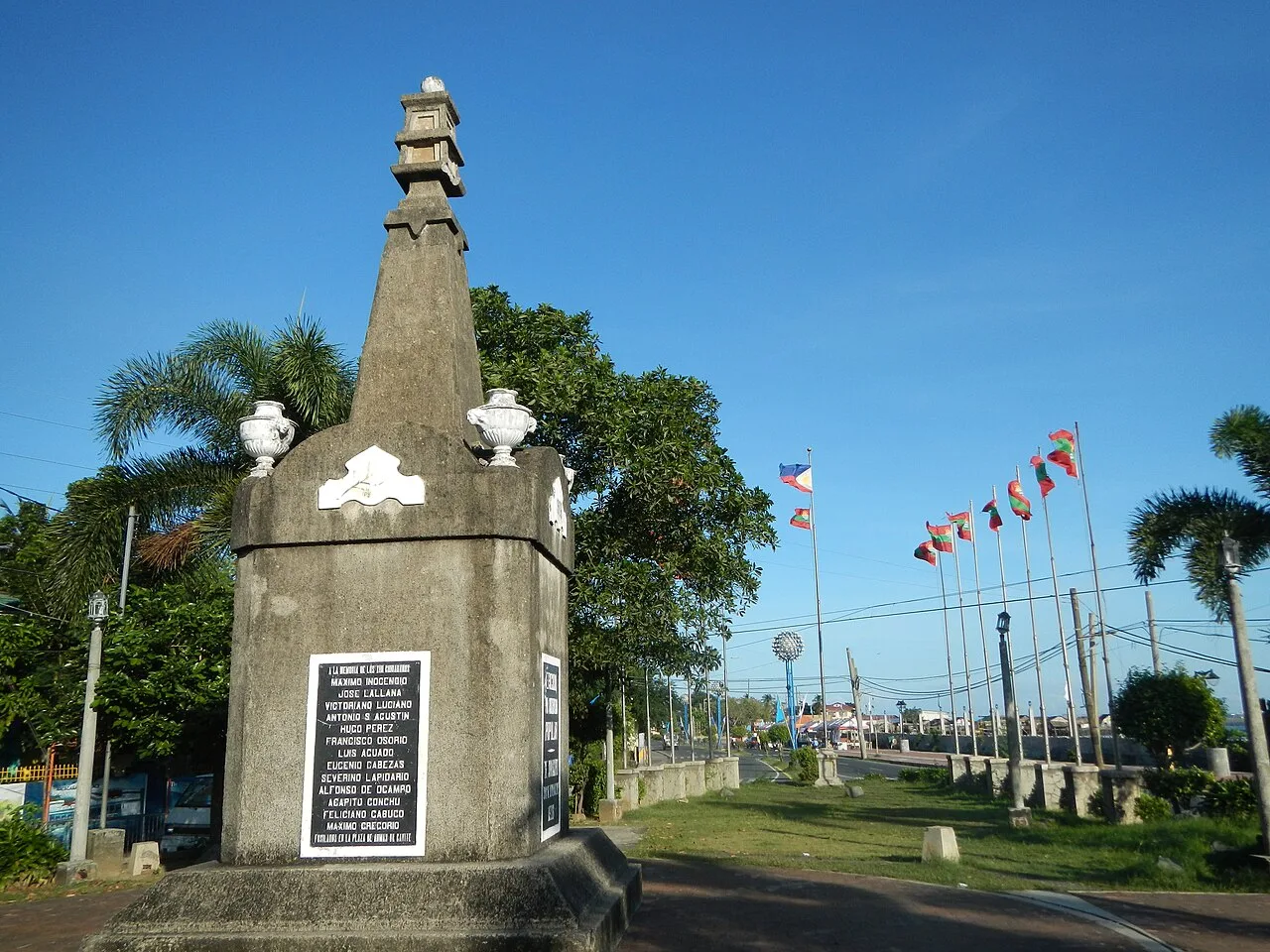
On September 12, 1896, the Spanish colonial government executed thirteen prominent Filipinos by musketry at the Plaza de Armas in Cavite City for their alleged ties to the Katipunan . Their tragic deaths ignited the revolution in the province and left a legacy that endures to this day through the city that bears their name.
The Men Behind the Martyrdom
The Thirteen Martyrs were a diverse group of Caviteños—businessmen, professionals, military men, and ordinary workers who shared a common commitment to the cause of freedom . The list includes Luis Aguado, supply chief of the Spanish arsenal at Fort San Felipe; Eugenio Cabezas, a goldsmith whose shop served as a Katipunan meeting place; Feliciano Cabuco, a hospital clerk whose house hosted revolutionary gatherings; Agapito Conchu, a teacher and artist; and Alfonso de Ocampo, assistant provincial jail warden .
Also among the martyrs were Máximo Gregorio, founder of two Katipunan chapters in Cavite; Máximo Inocencio, the oldest of the group at 63; José Lallana, a tailor whose shop was a revolutionary meeting place; Severino Lapidario, the provincial jail warden who was to lead the uprising; Victoriano Luciano III, a pharmacist and Freemason; Francisco Osorio, a pharmacist and businessman; Hugo Pérez, a physician; and Antonio San Agustín, a bookstore owner whose shop hosted Katipunan meetings . Ten of the thirteen were Freemasons, reflecting the strong connection between Masonry and the revolutionary movement.
The Conspiracy and Its Tragic End
The plan for the uprising in Cavite was ambitious but ultimately undone by betrayal . Emilio Aguinaldo and other Katipuneros had agreed to attack the Spanish arsenal at Fort San Felipe on September 1, but the plan was postponed to September 3. However, a dressmaker named Victoriana Sayat learned of the plot and alerted Spanish authorities .
The Spanish authorities arrested Lapidario, de Ocampo, and Aguado, who were interrogated under torture. De Ocampo, under severe duress, revealed the names of his companions . A military court found them guilty of treason after a four-hour trial on September 11. At 12:45 p.m. the following day, the thirteen patriots were marched out of their cells, taken to the Plaza de Armas outside Fort San Felipe, and executed by musketry . Their bodies were buried in a common grave at the Catholic cemetery in Caridad.
A Legacy Etched in Stone and in a City's Name
In 1906, a monument to the Thirteen Martyrs was erected at the San Roque district of Cavite City, at the head of the San Roque causeway . Their families reinterred the remains of their loved ones at the foot of the monument, which stands at the intersection of M. Valentin Street, Lopez Jaena Road, Zulueta Road, and P. Burgos Avenue . Today, the site is known as the Thirteen Martyrs Centennial Plaza .
The most enduring tribute, however, came in 1954 when the capital of Cavite was transferred from Cavite City to a newly created city near the center of the province . The new capital was named Trece Martires City in their honor, and each of its thirteen barangays was named after one of the martyrs . On May 24, 2004, a new monument to the thirteen patriots was inaugurated in Trece Martires near the City Hall .
