KANANGA, LEYTE — To combat agricultural threats and safeguard regional productivity, the Department of Agriculture Regional Field Office VIII, through the Regional Crop Protection Center (RCPC), successfully executed a specialized training initiative. Deployed as a high-impact cornerstone of local crop protection efforts, the targeted educational campaign brought vital pest management expertise straight to the farming community to reinforce sustainable agricultural practices.
Empowering Farmers Against the Red-Striped Soft Scale Insect
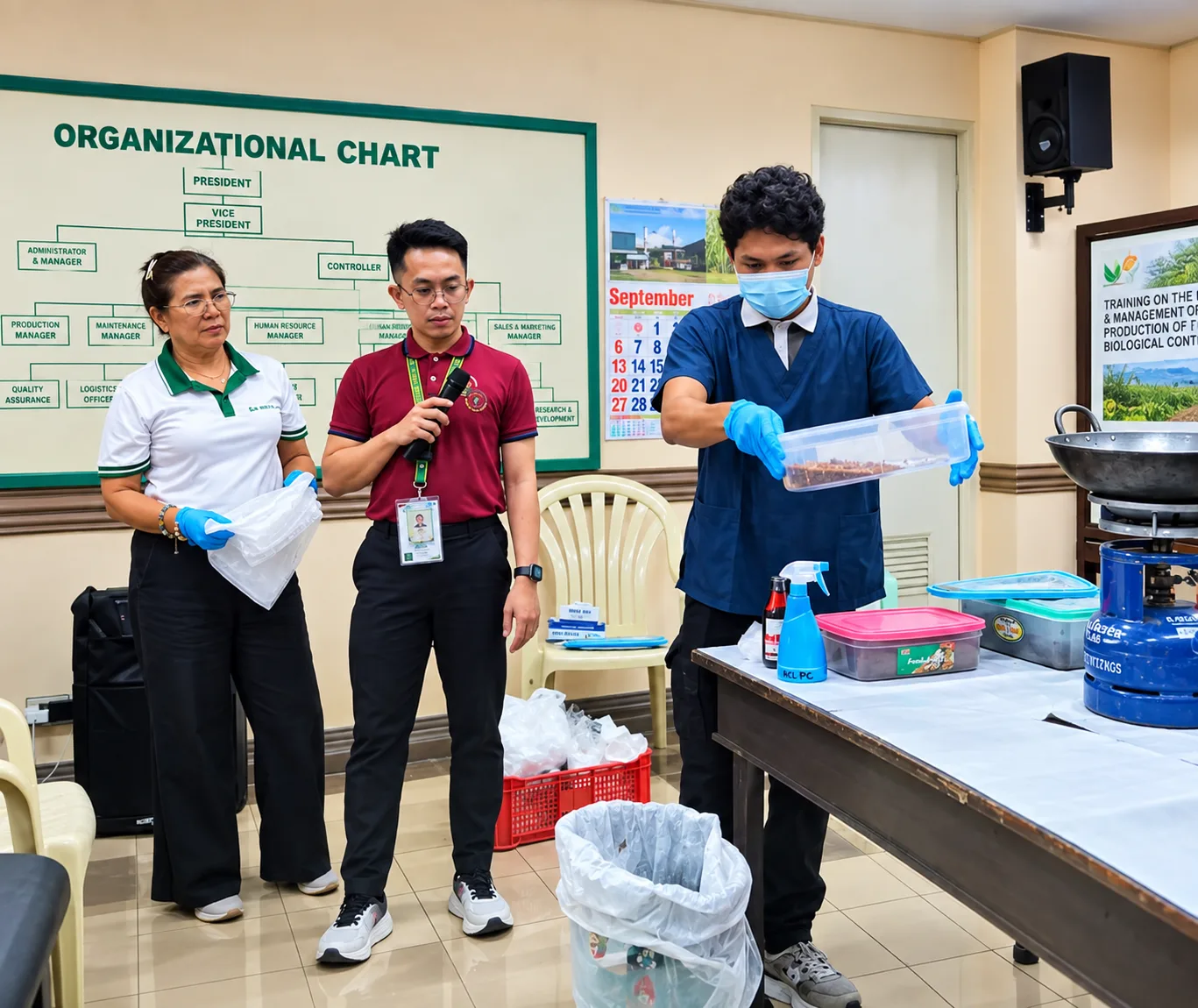
The one-day training program was successfully hosted at the HISUMCO Conference Room in Barangay Montebello, Kananga, Leyte. Spearheaded by DA-RCPC 8 in coordination with the Bureau of Plant Industry-Crop Protection Management Division (BPI-CPMD), the DA-Regulatory Division, the Sugar Regulatory Administration (SRA), and the Ormoc-Kananga Mill District Development Council Foundation, Inc. (MDDCFI), the event catered specifically to twenty-six (26) sugarcane farmers and Agricultural Extension Workers (AEWs) from the LGUs of Carigara, Capoocan, Kananga, and Leyte, Leyte.
The specialized event focused strictly on equipping participants with the knowledge and skills required to identify, monitor, and manage the Red-striped Soft Scale Insect (RSSI), a significant pest affecting sugarcane areas across Leyte. Technical staff from BPI-CPMD led the sessions, with Mr. Jairus J. Abellar, SRS I, discussing RSSI identification and management strategies, while Mr. Melvin C. Banagbanag provided an overview of biological control agents alongside a hands-on demonstration of earwig mass production.
Sustainable Biological Control as a Shield for Sugarcane
Promoting the use of earwigs as a biological control agent (BCA) offers an environmentally friendly and sustainable approach to pest management, helping local growers dramatically reduce their reliance on chemical inputs. Mass-producing and utilizing beneficial predators allows farmers to naturally suppress pest populations, protecting agroecosystems without the escalating costs and environmental wear associated with heavy synthetic pesticide applications.
By fostering practical, farmer-level biological control practices, the training strengthens the capacity of local stakeholders to protect their yields. This multi-agency collaboration leaves behind a more resilient agricultural sector, proving that real food security and crop health are achieved when regional institutions and rural workers unite to champion sustainable innovation.