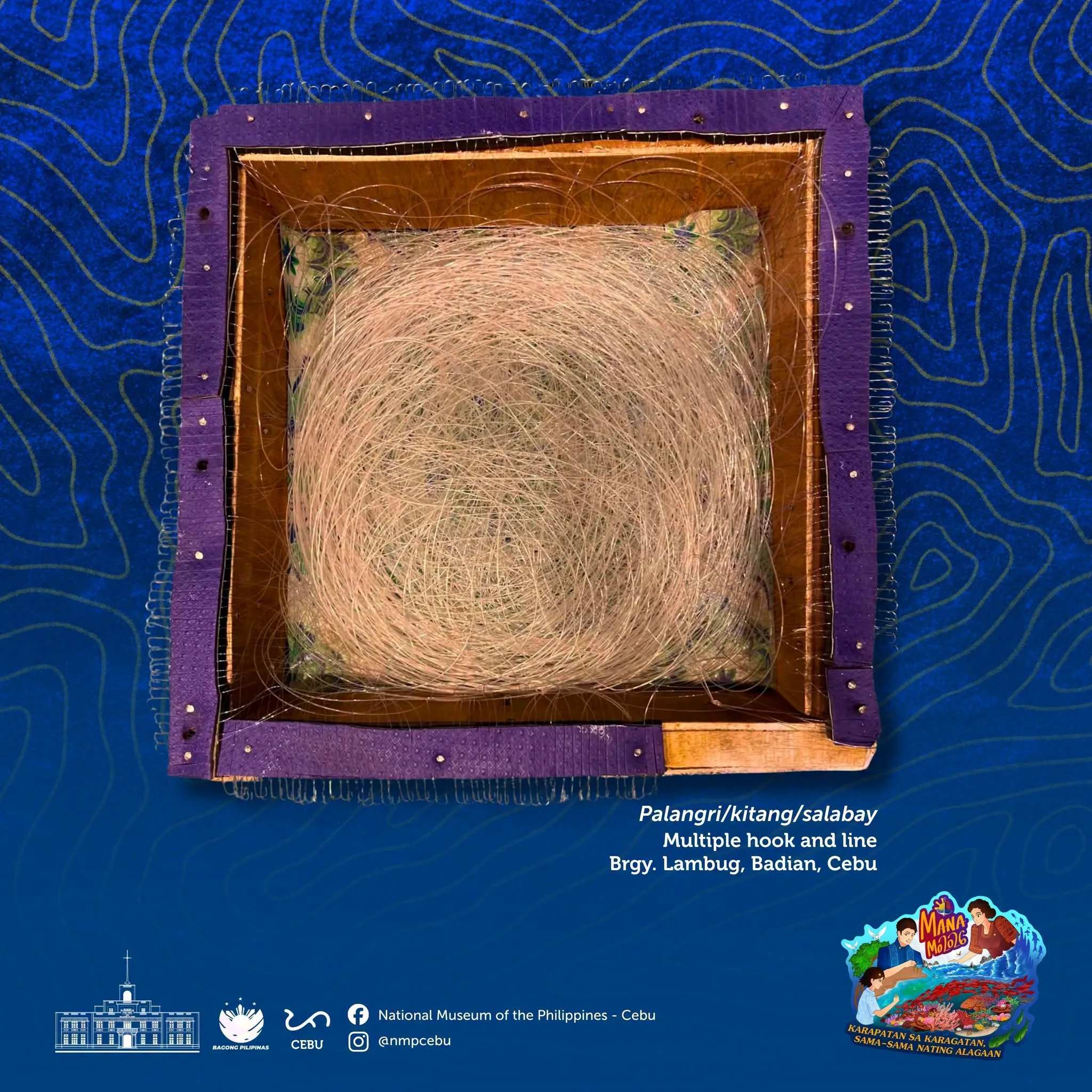
CEBU CITY — The National Museum of the Philippines - Cebu is putting the spotlight on the palangri, a traditional multiple-hook fishing tool, as part of its Maritime Monday series for Maritime and Archipelagic Nation Awareness Month (Mana Mo) 2026. The museum invites visitors to explore this enduring symbol of Cebuano coastal life.
A Traditional Tool Takes Center Stage
The palangri, also known as kitang or salabay, is an essential implement for fishing communities in Cebu. Made from wood, rubber, metal, hooks, and nylon thread, it is used to catch fish like tamarong and bansikol. The National Museum of the Philippines - Cebu is featuring this artifact to highlight the ingenuity of local fishermen.
The display forms part of Gallery 3, "Paglawig: Cultural Movement Across the Seas." This gallery explores the rich boatbuilding and fishing traditions of the region. The palangri serves as a tangible link to the daily lives and skills of coastal communities, particularly those in Barangay Lambug, Badian.
The Craft of Patience and Teamwork
Beyond its practical function, the palangri tells a story of collective effort and perseverance. Preparing one can take up to eight hours and requires the collaboration of several people. Once set out to sea, fishermen wait for hours more, never certain what the catch will bring.
The museum emphasizes that fishing is more than a livelihood; it is a lesson in patience. The display encourages visitors to appreciate the hard work behind each catch and the cultural values it preserves. This traditional method underscores the deep connection between Cebuanos and their marine environment.
Celebrating Maritime Heritage Month
Mana Mo is observed every September under Presidential Proclamation No. 316. This year's theme, "Karapatan sa Karagatan, Sama-sama Nating Alagaan," calls for shared responsibility in protecting Philippine waters. The National Museum of the Philippines - Cebu joins the celebration by showcasing objects that reflect sustainable maritime traditions.
The museum's location, the former Malacañan sa Sugbo, adds historical depth to the experience. Admission is free, making heritage accessible to all. By highlighting artifacts like the palangri, the institution reinforces the importance of cultural preservation in a modernizing world.
Cebu's Deep Sea Connection
For Cebu, an island province, the sea is the foundation of identity and survival. From pre-colonial trade to today's thriving eco-tourism, mastery of the ocean has shaped Cebuano growth. Coastal towns continue to rely on artisanal methods passed down through generations.
The palangri display is a reminder of this living heritage. It connects museum visitors to the real people and communities who keep these traditions alive. It is an invitation to see beyond the beaches and understand the true depth of Cebuano culture.