


A Monument With a Story Behind It
GENERAL SANTOS CITY - The Gen. Paulino Santos, Sr. Monument has its own history worth noticing. GenSan News Online documented an older photograph showing the statue with the Aguman Kapampangan, an association of migrants from Pampanga, gathered around it. The same account explains that the group was believed to have donated the statue to the local government. A later photograph showed the monument during a wreath-laying ceremony connected with the city’s Foundation Day in 2008. Today, the monument stands at Plaza Heneral Santos, giving the city a visible place where its pioneer history can be remembered. Its significance comes not simply from its appearance, but from the stories preserved around it.
Bringing the Past Into View
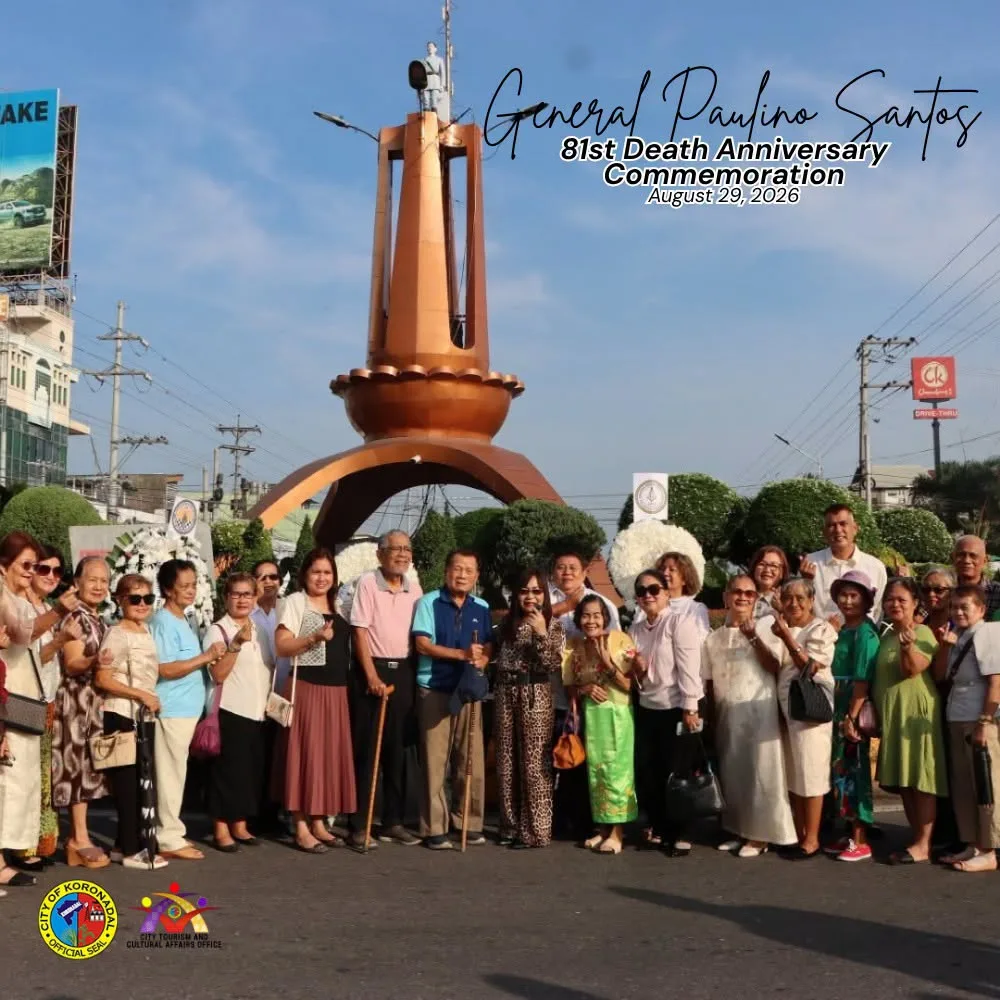
The monument becomes especially meaningful around August 29, the death anniversary of General Paulino Santos. The General Paulino Santos historical archive identifies August 29 as General Paulino Santos Day and preserves photographs of wreaths offered in his memory. Historical records also establish that Santos died on August 29, 1945. In 2026, the anniversary again provided a natural moment to revisit the monument and the story attached to it, without reducing the occasion to a single ceremony. The setting matters: Plaza Heneral Santos places the memorial within an everyday civic space, allowing a historical figure to remain physically present in the middle of the city he helped shape.
From a Statue to a Piece of Living Memory
What makes the monument particularly interesting is how it connects several chapters of General Santos history in one location. The city was named after Santos in 1954, while official local history records that he led the first large batch of National Land Settlement Administration settlers to the shores of Sarangani Bay in 1939. His remains and those of his wife, Elisa, were later brought back to General Santos City in 1991 and entombed at the Bantayog ni Heneral Santos at Plaza Heneral Santos. The monument therefore sits within a much larger story involving migration, settlement, remembrance, and the city's continuing effort to understand where its modern identity came from.
