Maintaining Clean and Comfortable Kitchen Air
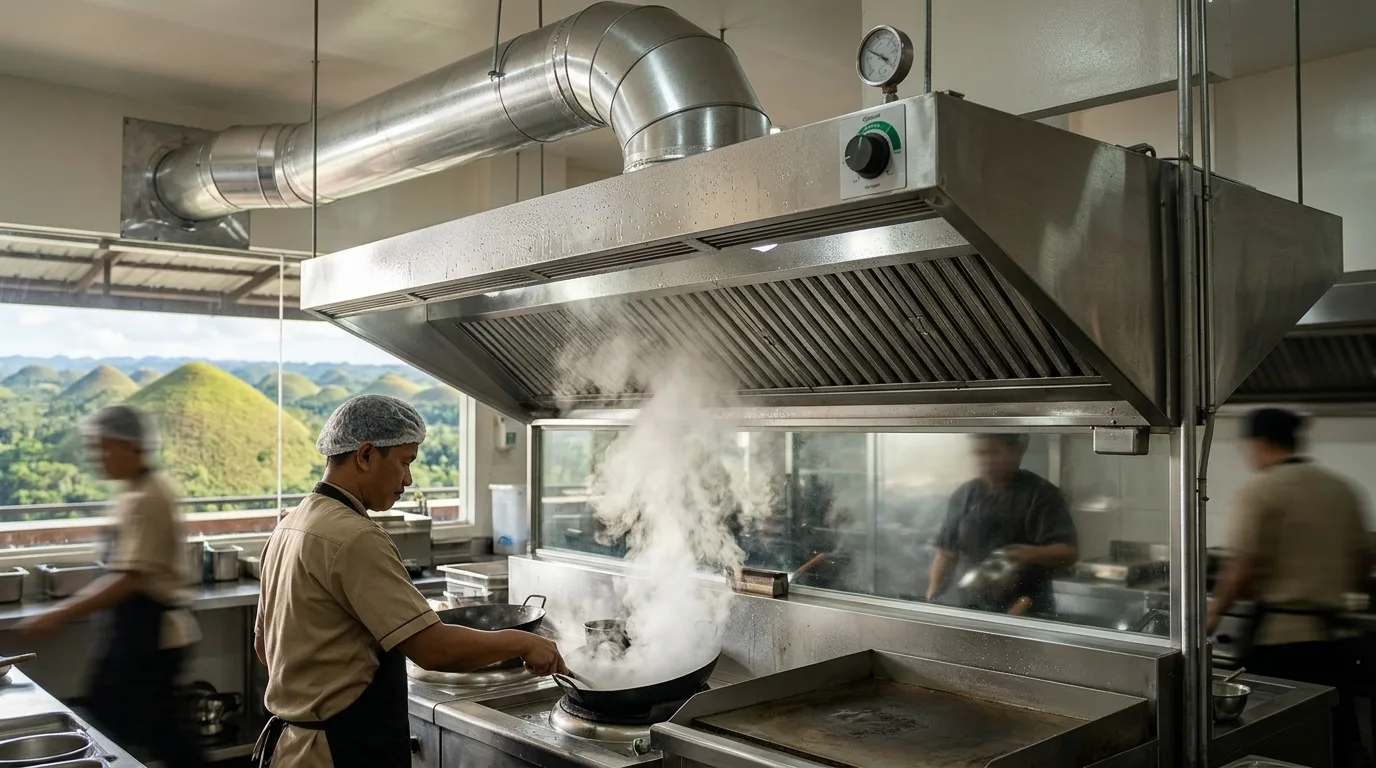
BOHOL - Restaurant kitchens produce smoke, steam, heat, and airborne particles during everyday food preparation. Without adequate ventilation, these can accumulate and make the workspace uncomfortable for cooks and other employees. Exhaust hoods and properly positioned ventilation systems help capture and remove cooking emissions before they spread throughout the kitchen or dining area. Cleaner air also helps reduce lingering food odors, creating a more pleasant environment for employees and customers.
Supporting Employee Safety and Equipment Performance
Good ventilation helps manage excess heat generated by stoves, ovens, grills, and other cooking equipment. A cooler and more comfortable workspace can help employees perform their tasks without unnecessary heat exposure. Grease-laden vapors must also be properly captured because grease buildup in exhaust hoods and ducts can create a fire hazard if maintenance is neglected. Regular cleaning, inspection, and servicing of ventilation equipment are therefore important parts of restaurant safety practices. Proper airflow also helps prevent unnecessary strain on kitchen equipment caused by excessive heat.
Making Ventilation Part of Restaurant Planning
For restaurant owners planning a new food business or renovating an existing kitchen, ventilation should be considered early in the layout and equipment selection process. Exhaust hoods should be appropriate for the cooking appliances, while exhaust outlets and replacement air systems should be positioned to support effective airflow. Owners should also schedule routine filter cleaning, grease removal, and professional system inspections. By investing in suitable ventilation and consistent maintenance, restaurants can create a healthier working environment, support food service operations, and provide a more comfortable experience for both staff and diners.