The Philippines has secured a major boost to its domestic energy reserves following significant offshore natural gas discoveries off the coast of Palawan. Unveiled during the Malampaya Phase 4 development project, the discovery of the Malampaya East-1 (MAE-1) and Camago-3 wells marks a critical milestone in strengthening the nation's energy grid. With subsea infrastructure now connected, these new offshore assets promise to stabilize electricity supplies for millions of households while reducing reliance on foreign fuel imports.
Unlocking 222 Billion Cubic Feet of High-Productivity Gas
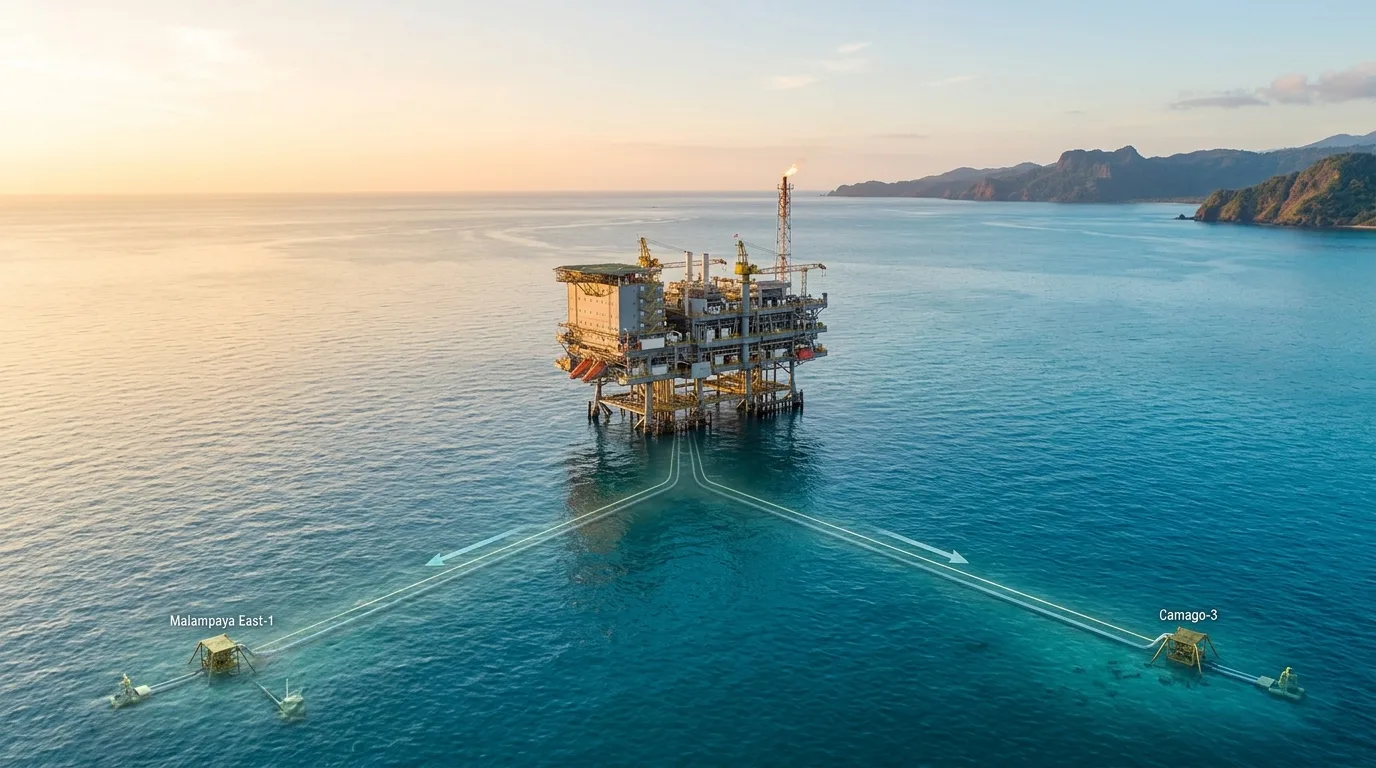
The offshore campaign began in January 2026 with the discovery of the Malampaya East-1 (MAE-1) well, located approximately five kilometers east of the primary production field. Initial testing on MAE-1 yielded roughly 60 million cubic feet of natural gas per day from an estimated 98 billion cubic feet in place, matching the high productivity rates of original Malampaya wells. Momentum grew further in March 2026 with the successful drilling and testing of the nearby Camago-3 well, which yielded even larger recoverable deposits. Together, these two wells hold an estimated 222 billion cubic feet of natural gas reserves, generating an estimated 14 billion to 31.4 billion kilowatt-hours of energy—enough potential electricity to support millions of homes annually.
Connecting Pipelines to Extend Malampaya’s Lifespan to 2034
To rapidly integrate these newly tapped resources into the national power grid, subsea pipeline installations connecting MAE-1 and Camago-3 directly to the existing Malampaya production platform were completed in June 2026. Environmental and energy authorities are targeting the fourth quarter of 2026 for the first official commercial gas delivery from these Phase 4 wells. Crucially, the addition of these combined reserves extends the projected depletion timeline of the Malampaya gas field from 2027 out to 2034. Looking ahead, energy operators are already preparing for the next exploration phase through the upcoming Bagong Pag-asa-1 well.
Balancing Energy Security Demands with Environmental Stewardship
From an energy security perspective, expanding indigenous gas extraction offers vital protection against volatile international fuel markets. In 2025, imported liquefied natural gas (LNG) accounted for 55% of the nation's natural gas supply, while indigenous production at Malampaya covered the remaining 45%. However, because natural gas remains a fossil fuel, energy analysts emphasize that production must be paired with strict environmental safeguards, rigorous methane leak management, and responsible supply chain oversight. Maximizing the long-term benefit of these offshore resources requires balancing natural gas production alongside the continuous expansion of solar, wind, and other low-carbon renewable energy initiatives.