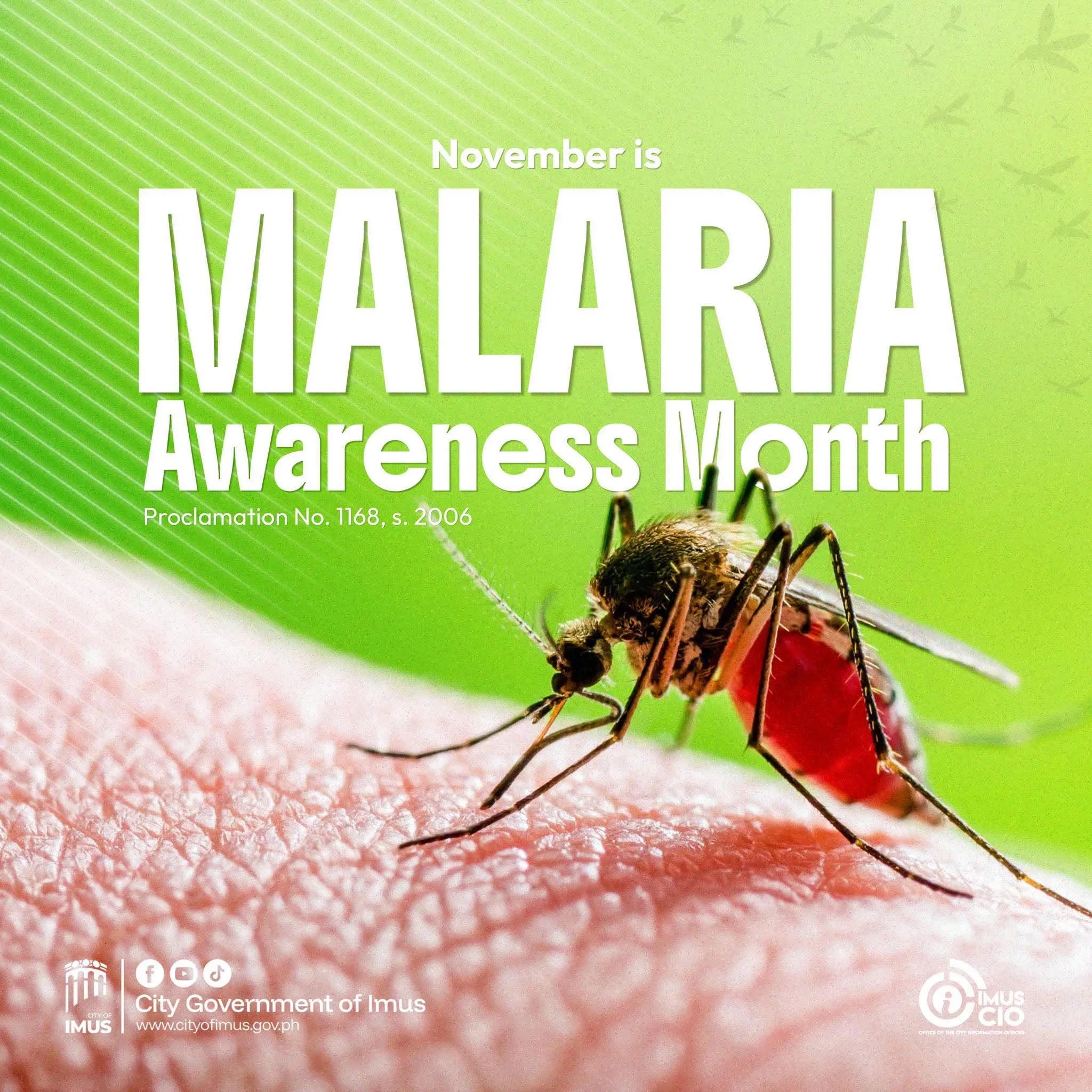
PROVINCE OF CAVITE — November is Malaria Awareness Month, and for Caviteños, it's a moment to appreciate a hard-won victory—and to make sure it stays that way. Under Proclamation No. 1168, s. 2006, the entire month of November is dedicated to raising awareness about malaria prevention and control, with the Department of Health leading the campaign. It's a nationwide observance, but its meaning is especially significant for regions that have successfully eliminated local transmission. And Cavite is one of them.
A National Success Story in Progress
The Philippines has made remarkable progress against malaria. According to the Department of Health, more than 90% of the country is now free from malaria transmission. Central Luzon, including Pampanga, was declared malaria-free in 2023, following Bataan in 2017, Bulacan and Pampanga in 2018, Tarlac in 2019, Aurora in 2022, and finally Nueva Ecija and Zambales in 2023. Today, only Palawan reports active local malaria transmission—a dramatic shift from 2006, when malaria was endemic in 65 of the country's 79 provinces. For Cavite, this means the risk of locally acquired malaria is extremely low, but it doesn't mean the threat is gone.
Understanding How Malaria Spreads
Malaria is caused by a parasite transmitted through the bite of an infected female Anopheles mosquito. These mosquitoes typically breed in slow-moving, partly shaded streams and are commonly found in remote, forested, and mountainous areas. While local transmission has been eliminated in Cavite, the mosquito vector still exists, and with travel and human movement, the risk of reintroduction is real. Symptoms can appear 10 to 15 days after being bitten and include recurring fever, chills and sweating, headache, body aches, and in some cases nausea, vomiting, or diarrhea. If left untreated, malaria can become severe and potentially fatal, making early diagnosis and prompt treatment critical.
Prevention Steps That Still Matter
Even in malaria-free areas, the Department of Health recommends maintaining preventive measures—especially because the same mosquitoes that transmit malaria can also carry other diseases like dengue. These measures include keeping surroundings clean and eliminating mosquito breeding sites, using mosquito nets or insecticide-treated nets, wearing long-sleeved clothing and long pants preferably in light colors, applying mosquito repellent, using window screens, and seeking immediate medical consultation if symptoms appear after traveling to malaria-prone areas. Cavite's malaria-free status is a public health achievement built on years of surveillance, case detection, free diagnostic testing, and community education. Maintaining it requires continued vigilance, because elimination is not the same as eradication, and travelers can reintroduce the disease. This November, take a moment to learn the symptoms, practice prevention, and appreciate the public health workers who made Cavite's malaria-free status possible.