


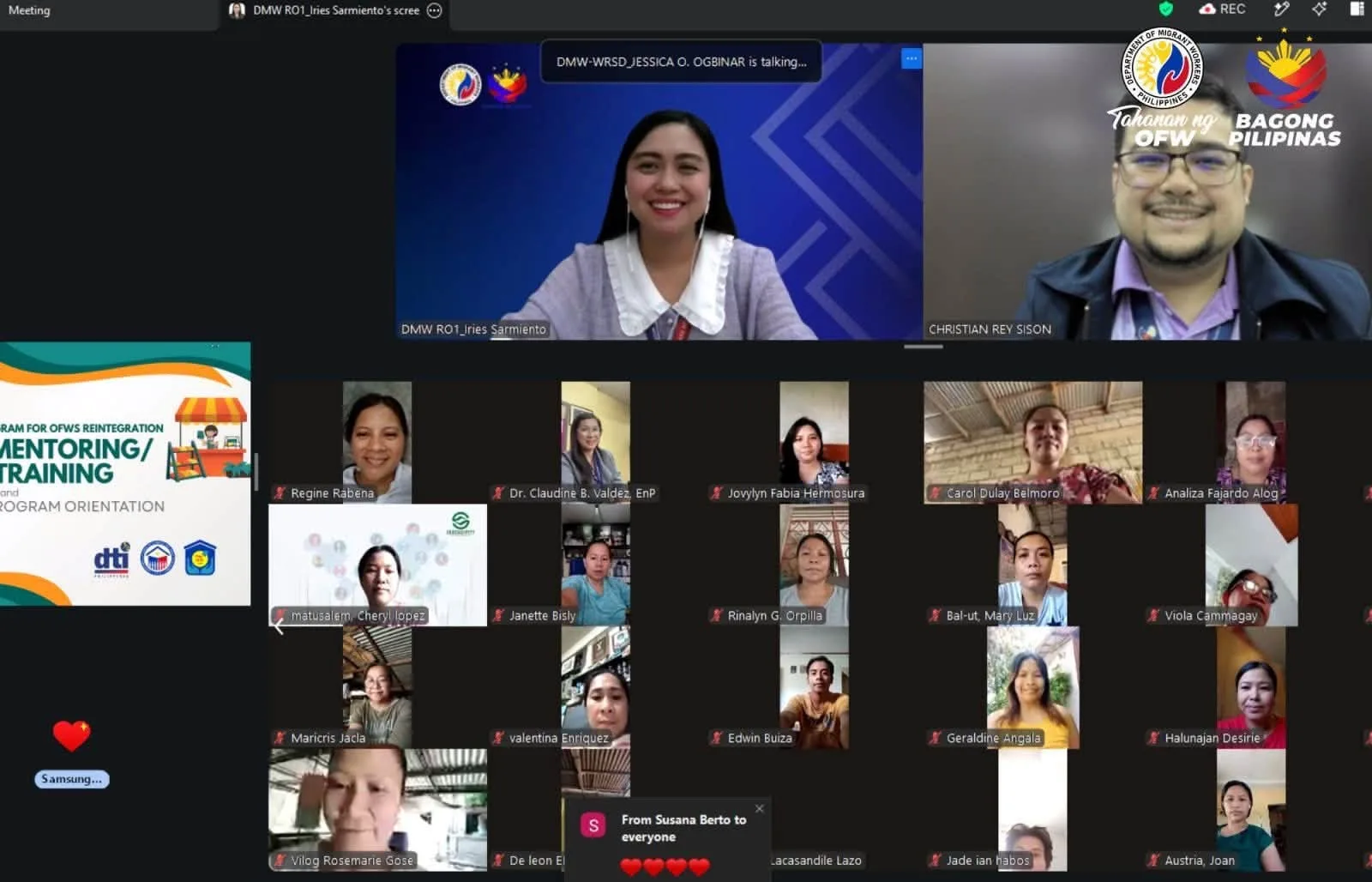
PHILIPPINES — The Department of Migrant Workers Regional Office I gathered 135 former overseas Filipino workers on July 22, 2026, for a comprehensive virtual training covering financial literacy, small business management, and affordable housing programs. The Zoom session aimed to equip returning workers with the tools to build stable lives and secure permanent homes.
A Pathway to Homeownership
A key component of the training was an orientation on the Expanded Pambansang Pabahay para sa Pilipino (4PH) Program, delivered by DHSUD Region I and Pag‑IBIG Fund La Union. Participants learned about socialized housing options designed specifically for low‑income and returning workers. The session also covered Pag‑IBIG’s subsidized interest rates, which can go as low as three percent annually for qualified borrowers.
For many OFWs, the dream of owning a home is the primary motivation for working abroad. The orientation connected that dream to concrete government programs that make it attainable. By understanding the application process, documentary requirements, and financing schemes, the participants can now turn years of sacrifice into a permanent address for their families.
Building Businesses, Building Futures
The training also included the Financial Awareness Seminar–Small Business Management Training, conducted in partnership with the Department of Trade and Industry La Union. Participants learned how to evaluate market opportunities, manage cash flow, and separate personal finances from business capital. These skills are critical for those planning to launch micro‑enterprises with their livelihood grants.
Digital marketing mentoring equipped the returning workers with practical skills to promote their products online. Trainers guided them through social media selling, online payment platforms, and digital customer engagement. This knowledge ensures that their businesses remain competitive and visible in an increasingly e‑commerce‑driven market.
Government Support for a Fresh Start
DMW Regional Director Christian Rey O. Sison encouraged the participants to use the knowledge gained as the foundation for lasting economic independence. He emphasized that the training aims to transform the fruits of their overseas labor into sustainable livelihoods. The multi‑agency collaboration demonstrates a whole‑of‑government approach to reintegration.
The activity forms part of the Enhanced Livelihood Program for OFW Reintegration, which pairs seed capital with mandatory capacity‑building. With the training completed, the 135 beneficiaries will soon receive their livelihood grants to start or expand their home‑based enterprises. The combination of business skills and housing access gives returning OFWs a realistic path to a dignified life at home.
