


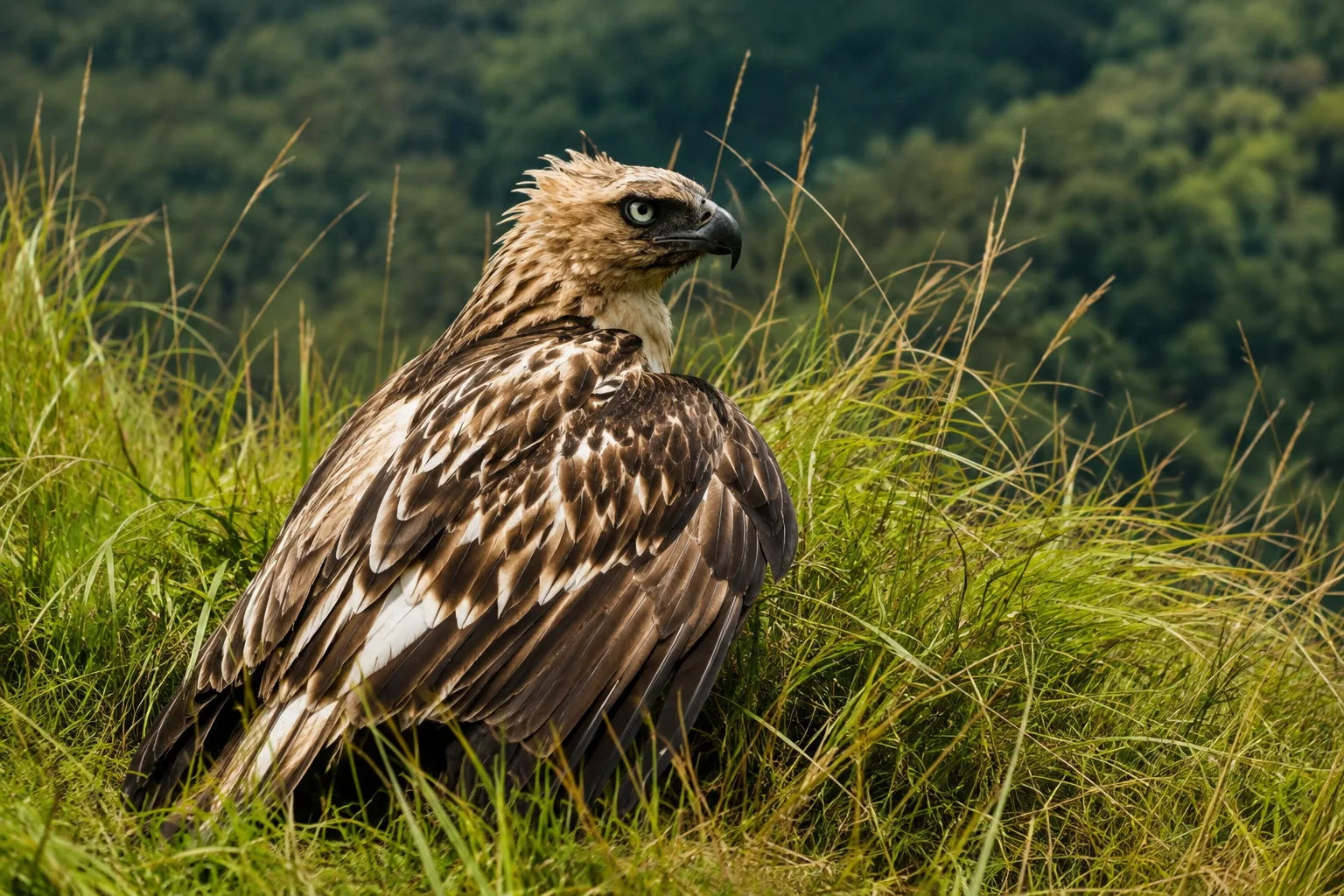
LEYTE, PHILIPPINES — In a major breakthrough for Philippine wildlife conservation, researchers have documented the first-ever active nest of the South Philippine Hawk-Eagle (Nisaetus pinskeri) on Leyte Island. The discovery, announced by the Philippine Eagle Foundation (PEF), allowed field researchers to track and record the complete nesting cycle of the globally endangered raptor for the very first time in scientific history.
Tracking the Complete Nesting Cycle
The South Philippine Hawk-Eagle is an elusive bird of prey endemic to a select few islands in the central and southern regions of the country. While previous sightings were limited to soaring adults or young birds that had already left their nests, field researchers successfully monitored this nesting pair from the ground up:
Nest Building & Laying: Researchers observed the pair constructing the nest and followed the female as she incubated a single egg.
Hatching: The egg successfully hatched in March following a two-month incubation period.
Fledging: After weeks of care and growth, the young hawk-eagle made its historic first flight on May 17.
Closing Knowledge Gaps for Future Conservation
Conservationists highlighted that documenting the entire sequence—from nest construction and egg incubation to hatching and fledging—provides critical baseline data on a species about which very little is known. The PEF emphasized that these groundbreaking observations will directly inform targeted protection strategies, help safeguard the raptor's remaining forest habitat, and offer renewed hope for the survival of the endangered species on Leyte and beyond.
