


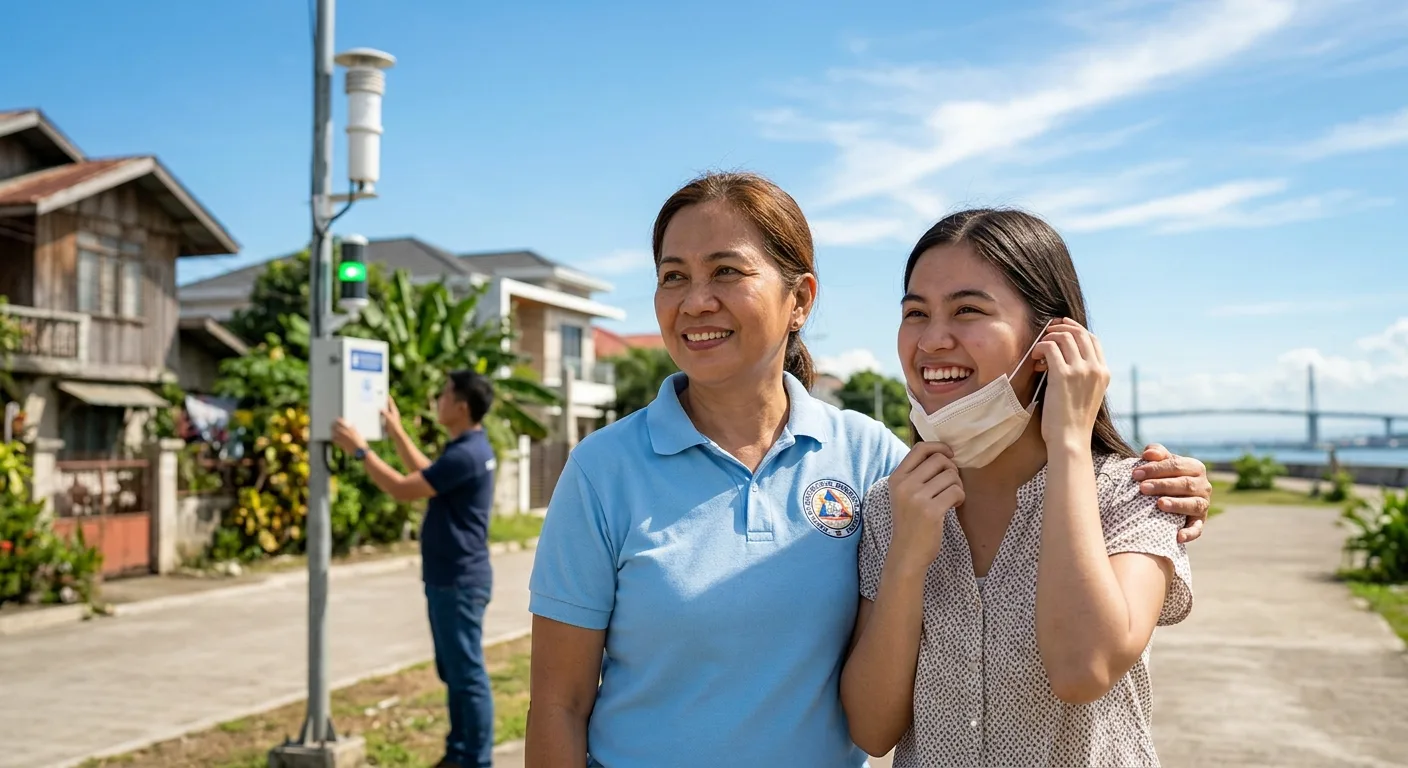
Cebu — The city is finally seeing clear skies again! After a tense period of volcanic haze triggered by the eruption of Mount Kanlaon, the Environmental Management Bureau (EMB-7) officially reported that air quality across the province has returned to safe, "good" levels as of July 10, 2026. This positive development comes as a massive relief to residents, particularly in areas like Toledo and Talisay City, where fine particulate matter had previously raised concerns about respiratory health.
A Quick Return to Good Air Quality
The improvement in air quality marks a rapid recovery following the moderate eruption of Mount Kanlaon on the morning of July 9, 2026. During the peak of the event, fine volcanic ash—measured as PM10 particles—had drifted eastward toward Cebu, carried by strong southwest monsoon winds and enhanced by Typhoon Inday (Bavi). By Friday afternoon, however, monitoring stations in key cities like Toledo reported that particulate concentrations had plummeted back into the safe category. Local officials and disaster risk reduction teams have lauded the public’s cooperation in following safety protocols, such as minimizing outdoor exposure and wearing protective face masks, which helped mitigate health impacts while the air cleared.
Monitoring Lingering Risks
While the return to "good" air quality is a significant milestone, authorities are not letting their guard down just yet. The EMB-7 and the Provincial Disaster Risk Reduction and Management Office (PDRRMO) continue to monitor volcanic emissions, warning that lingering volcanic gases could still influence local air conditions if wind patterns shift again. Residents are still encouraged to remain observant, particularly those with pre-existing respiratory conditions or those living in areas where trace amounts of ash may have settled. Disaster response units remain on standby, ensuring that any new environmental data is shared immediately to maintain the safety gains achieved over the last 24 hours.
A Resilient Response to Regional Challenges
The successful management of this volcanic event highlights Cebu’s robust disaster preparedness and inter-agency coordination. By quickly implementing class suspensions and distributing N95 masks, the local government successfully navigated the health risks associated with the Kanlaon eruption. This experience serves as a powerful example of how localized environmental monitoring and prompt public communication can prevent widespread health emergencies. As Cebu settles back into normalcy, the province remains committed to maintaining these high standards of environmental vigilance, ensuring that both residents and the local agricultural sector are well-protected against the unpredictable nature of volcanic unrest.
