


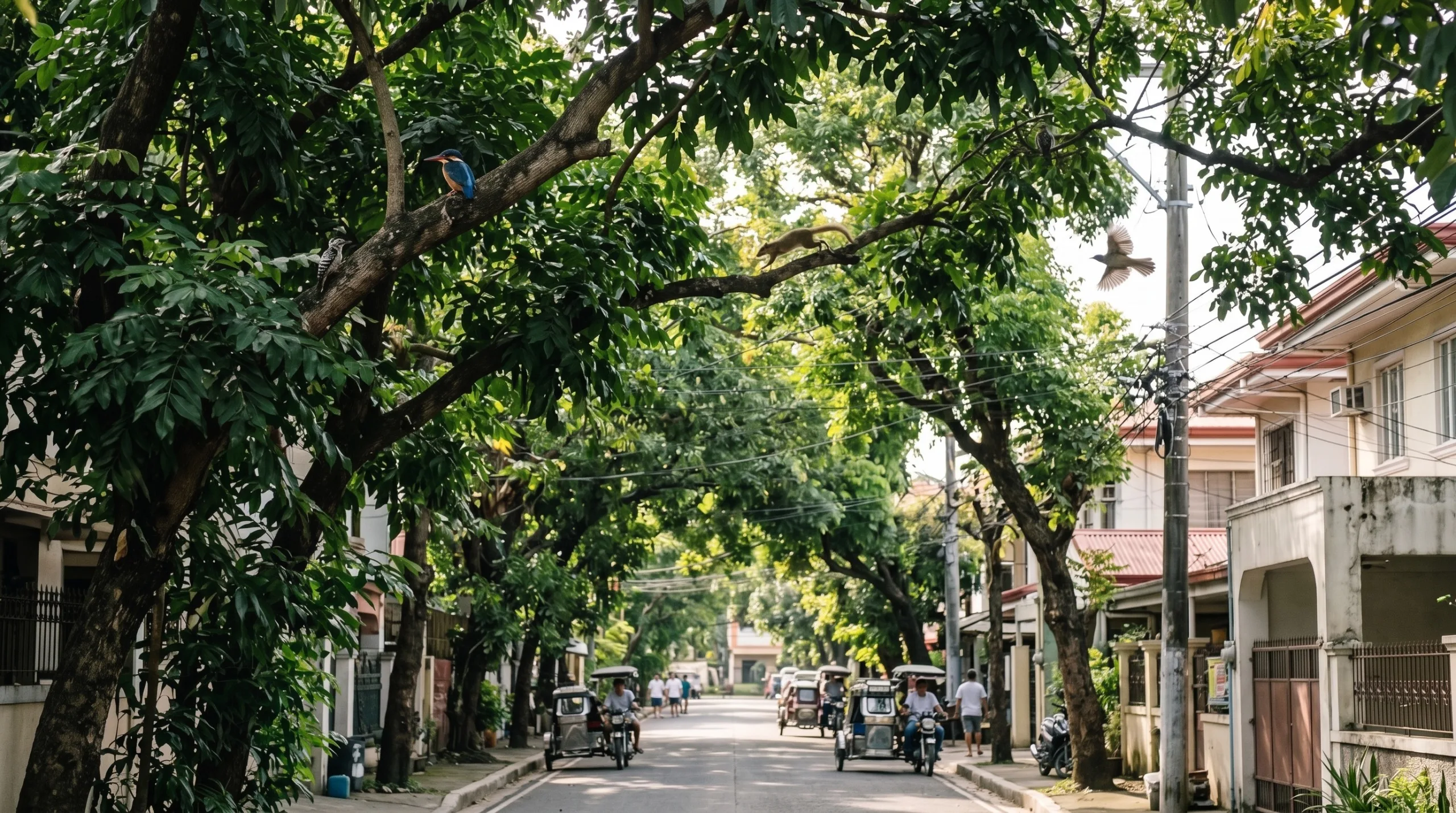
A Tree Can Be More Than Shade
BACOLOD - Urban trees provide obvious benefits for people, including shade, cooler surroundings, and more pleasant streets. But their branches, leaves, flowers, and bark can also provide food and shelter for wildlife. Birds may use trees as resting or nesting sites, while butterflies, bees, and other insects can visit flowering plants nearby. When several trees and green spaces are located close enough together, they can provide a series of stopping points instead of leaving animals surrounded by continuous concrete and traffic. This makes even relatively small patches of greenery worth considering when cities plan their streets and public spaces.
Connected Greenery Creates More Opportunities
Wildlife does not always need a huge forest to move through a city. A connected network of trees, gardens, parks, waterways, and planted areas can provide different habitats along an urban route. This idea is closely related to ecological corridors, which help connect separated habitats and support the movement of species. In Bacolod, maintaining vegetation around public spaces and choosing appropriate native or locally suitable plants could help make urban greenery more useful for biodiversity. The result would not necessarily look like a traditional wildlife corridor—it could simply be a series of green spaces that give urban species more opportunities to move, feed, and shelter.
Building a City Where Nature Still Has a Route
Creating wildlife-friendly streets does not mean putting nature ahead of people's needs. It means considering both when planning urban development. Trees can be selected and maintained with biodiversity in mind, flowering plants can support pollinators, and existing mature trees can be protected where practical. Residents can contribute too by planting suitable vegetation, avoiding unnecessary pesticide use, and keeping green spaces connected rather than completely isolated. As Bacolod continues to grow, its streets could become more than routes for vehicles and pedestrians. With thoughtful planting and planning, they could also become small links in a living network that helps wildlife find its way through the city.
