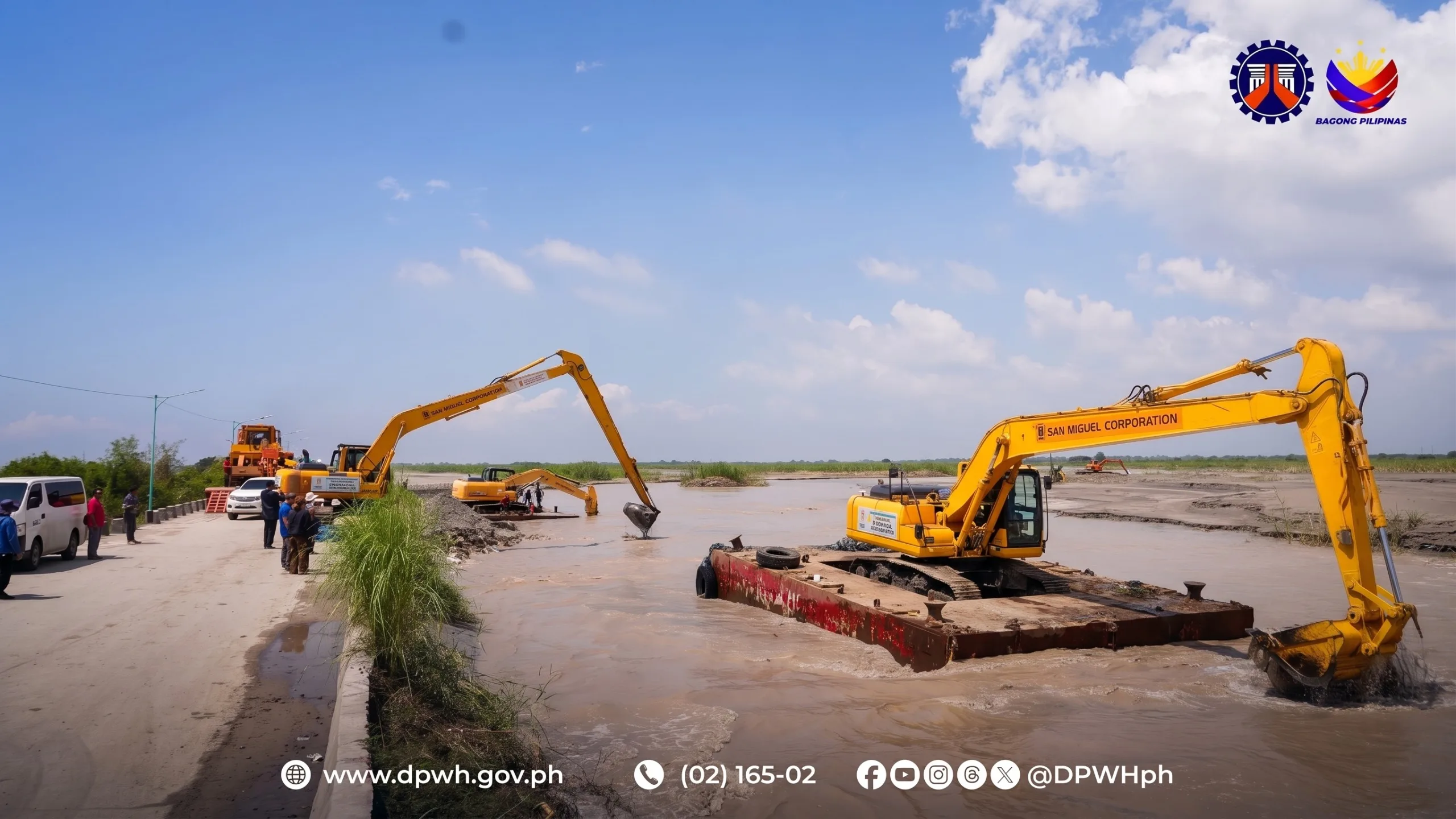
PAMPANGA, PHILIPPINES - The Department of Public Works and Highways (DPWH) officially commenced dredging operations along the Gugu River today, marking the first time the critical waterway has been desilted in 15 years. The urgent infrastructure intervention aims to protect thousands of local residents from severe flooding during the rainy season. The Gugu River, which stretches along the Bacolor-Sto. Tomas-Minalin Tail Dike, serves as a primary catchment basin for stormwater in the province. Over the years, heavily accumulated silt and debris have severely compromised its water-holding capacity.
Mandate from the Presidency
The project was launched following a direct directive from President Ferdinand Marcos Jr. to intensify the government's flagship "Oplan Kontra Baha" anti-flooding initiative. DPWH Secretary Vince Dizon led a high-level inspection of the heavy equipment deployed at the site. Joining him during the inspection were Pampanga Vice Governor Dennis Pineda and Minalin Mayor Philip Naguit. During the site visit, Secretary Dizon emphasized that the government is expediting immediate engineering interventions for highly vulnerable low-lying communities. "We are mobilizing all available heavy assets to restore the depth of the Gugu River," Dizon said. "This is a critical defense line against monsoon floods for Minalin and neighboring municipalities."
Comprehensive Mitigation
In addition to dredging the clogged catchment basin, Secretary Dizon directed regional engineering offices to fast-track repairs on the damaged portions of the tail dike, which suffered breaches during the recent southwest monsoon (habagat). Local leaders welcomed the long-awaited project. Governor Pineda and Mayor Naguit expressed gratitude to the national administration, noting that restoring the channel's capacity will significantly lower the risk of perennial agricultural and residential damages in Pampanga. The dredging of the Gugu River is part of a broader flood management strategy that includes immediate measures like FlexMac barriers and pumping systems, medium-term detention basins, and long-term infrastructure projects such as the Central Luzon-Pampanga Floodway. The initiative reflects the government's commitment to addressing the province's chronic flooding through a comprehensive, multi-layered approach.