


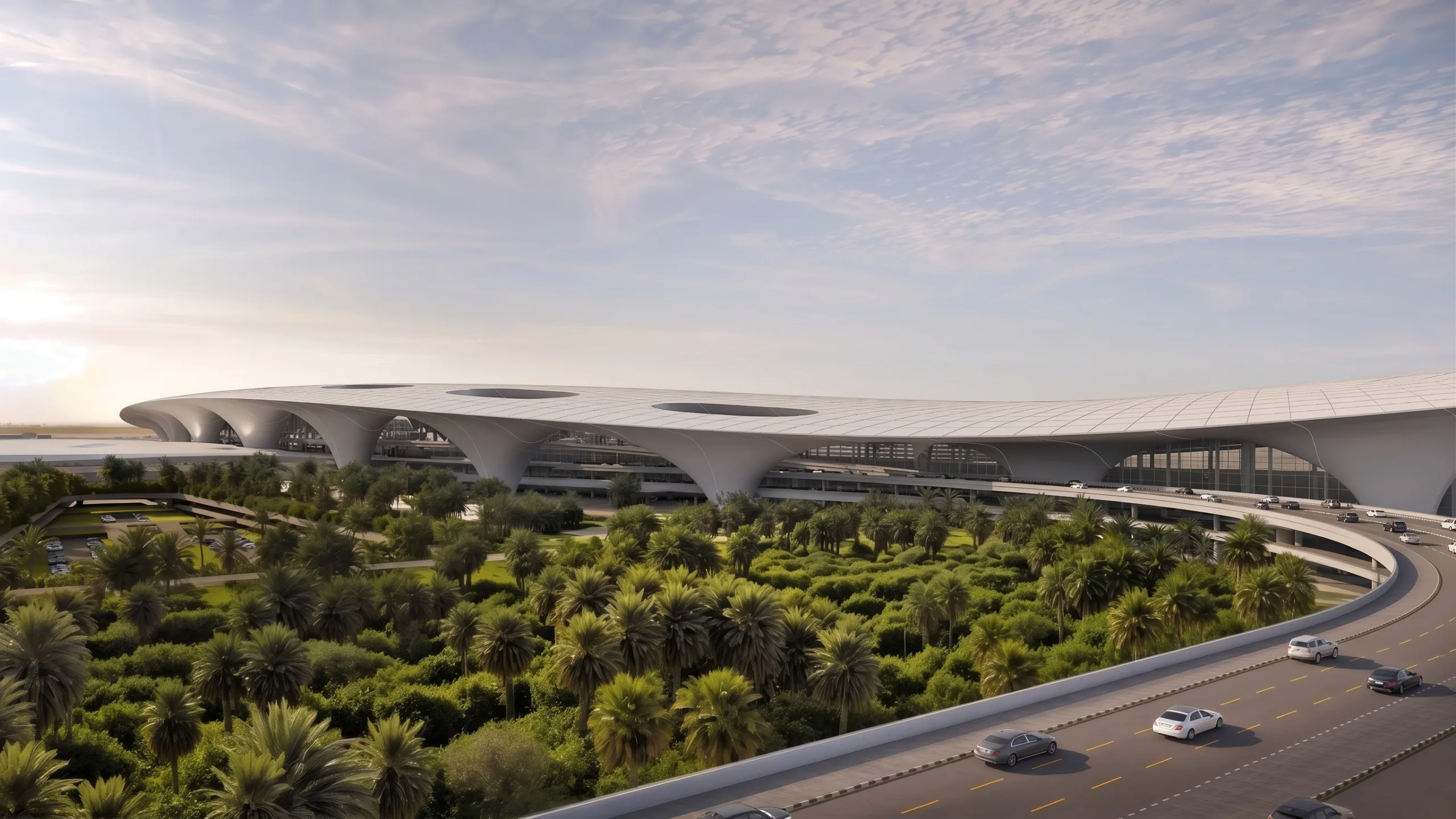
DUBAI — The planned transition of Emirates and major airline operations from Dubai International Airport to Al Maktoum International Airport by 2032 will significantly reshape the daily routines, career prospects, and living arrangements of Overseas Filipino Workers across the emirate.
A New Hub Rising in Dubai South
Al Maktoum International Airport is set to become the world's largest aviation hub, with capacity exceeding 260 million passengers and 12 million tonnes of air cargo upon completion. The project has entered a large-scale construction phase, with contracts valued at AED13 billion currently under execution and preparations underway to award strategic packages worth over AED55 billion in the next phase.
His Highness Sheikh Hamdan bin Mohammed bin Rashid Al Maktoum affirmed that the development reflects Dubai's ambitious vision for advanced infrastructure supporting sustainable economic growth. The project forms a key pillar of the Dubai Economic Agenda D33, designed to attract high-value investments and create economic opportunities for decades.
Commute Disruptions for Northern Dubai Residents
Many OFWs reside in older Dubai neighborhoods such as Deira, Karama, and Bur Dubai, or commute from Sharjah and Ajman. These areas sit close to DXB, making the current airport highly accessible. Reaching DWC in Dubai South will require longer commutes via taxi, bus, or future Metro extensions.
Conversely, OFWs living or working in Jebel Ali, Dubai Investment Park, and Dubai South will benefit from a much closer hub. The geographic shift means workers may need to reconsider their housing choices as the transition approaches. Southern Dubai neighborhoods could see growing demand from aviation and logistics employees seeking proximity to the new airport.
Expanding Job Opportunities for Filipino Workers
The mega-hub expansion will create massive hiring demand across ground handling, cabin crew, customer support, engineering, and freight operations. These sectors already employ a strong Filipino workforce. The development also requires extensive staffing in airport retail, food service, facility management, and construction over the next decade.
The on-site workforce, currently around 9,000, is expected to rise to approximately 120,000 at peak construction capacity. Total work hours have already exceeded 10 million over the past 15 months. These figures signal sustained employment opportunities for skilled Filipino workers in the aviation and hospitality sectors.
Improved Flight Options and Fare Competition
DXB's capacity bottleneck often limits prime flight slots. The larger layout at DWC should allow airlines like Emirates, flydubai, Philippine Airlines, and Cebu Pacific to add more direct routes and higher frequency to Manila, Cebu, and Clark. Increased airport capacity and low-cost carrier integration could translate into more competitive ticket prices during peak travel seasons.
For OFWs planning balikbayan visits during Christmas or summer breaks, the expanded capacity may ease airport congestion and improve flight availability. The integrated multimodal connectivity linking air, rail, and road networks will further enhance travel convenience.
Preparing for the Transition
With the full passenger transition scheduled around 2032, OFWs have ample time to adapt living arrangements, career plans, and travel routines. Workers may consider gradually shifting toward southern Dubai communities as rental demand and OFW hubs migrate closer to the new airport.
The project's progress reflects Dubai's commitment to maintaining world-class service standards throughout the transition. Filipino workers stand to benefit from the expanded opportunities this historic infrastructure project will bring.
