A Protected Area Gives Marine Life Room to Recover
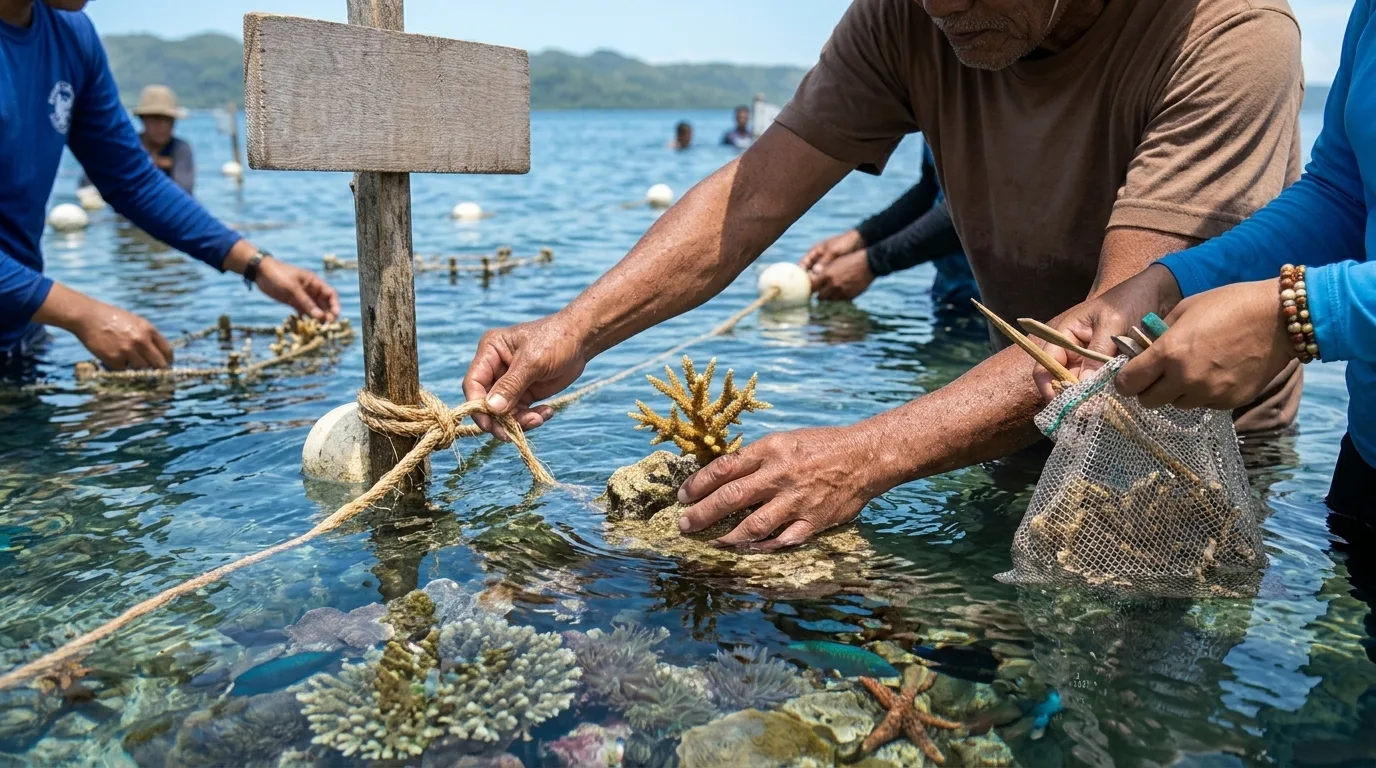
BOHOL - Established in 2001 and institutionalized through Municipal Ordinance No. 08 in 2003, the Sta. Filomena Marine Sanctuary covers 11.5251 hectares of protected coastal waters. Fishing and other extractive activities are prohibited within its designated core and buffer zones, allowing fish and other marine organisms to breed and grow with less human disturbance. A habitat assessment conducted in 2018 reported high fish density and biomass in the area, with species including anchovies, rabbitfish, mackerel, and several types of tuna and scad. These findings highlight the sanctuary’s contribution to local fisheries and the importance of maintaining its protected status.
Community Patrols Help Keep the Sanctuary Safe
The protection of the sanctuary involves an eight-member Bantay Dagat team under Albur’s Municipal Agriculture Office, with personnel assigned to day and night patrol shifts. The barangay also helps report possible violations to the municipal government, Coast Guard, and police. These efforts support restrictions against destructive practices such as compressor fishing, which can damage coral reefs and harm marine habitats. Beyond enforcement, continued public awareness is important in helping residents and visitors understand why fishing and other prohibited activities must be kept out of the protected area.
Healthy Coastal Ecosystems Support Local Livelihoods
Marine conservation in Albur is connected to the wider Alburquerque-Loay-Loboc Protected Landscape and Seascape, which protects mangroves, wildlife, coastal waters, and cultural heritage. The Sta. Filomena sanctuary is also part of Bohol’s giant clam restocking efforts: 100 giant clams were introduced in October 2022, and the latest assessment recorded 32 survivors. Healthy mangroves and seawater are also important to the traditional production of asin tibuok, an artisanal sea salt associated with Albur’s cultural heritage. By continuing patrols, monitoring marine life, and involving local communities in conservation, Albur can help protect both its natural resources and the livelihoods and traditions connected to them.