


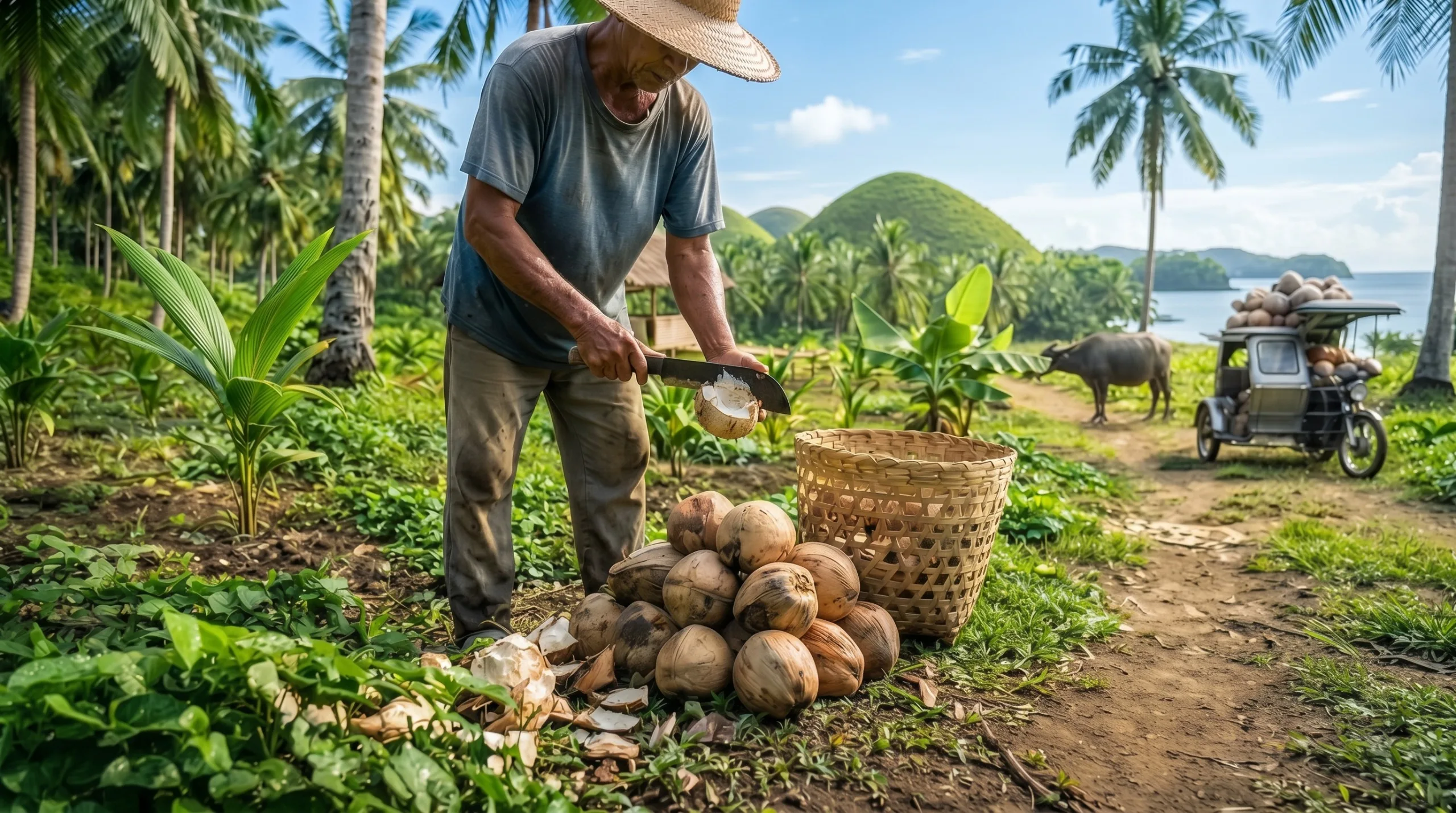
The Daily Responsibilities Behind Coconut Production
BOHOL - A coconut farm requires consistent attention long before its fruits reach buyers and processors. In Bohol, maintaining a productive farm can involve checking young seedlings, clearing excessive weeds, monitoring soil conditions, removing competing vegetation, and inspecting coconut palms for signs of damage or disease. Farmers also need to consider spacing, drainage, and the condition of the surrounding land. These responsibilities become particularly important during dry periods, when water availability can affect young plants and overall farm management. In March 2026, the Agricultural Training Institute–Regional Training Center VII conducted a three-day coconut production and management training for 33 farmers in Calape, introducing participants to good agricultural practices, seednut selection, and choosing suitable coconut varieties. The training highlights how practical knowledge can help farmers care for their crops throughout the growing cycle.
Harvesting Requires Timing, Labor, and Planning
Harvesting is another important part of coconut farming, requiring workers to identify mature nuts and handle them safely. Depending on the intended use, coconuts may be sold as whole nuts or processed into products such as copra and virgin coconut oil. After harvesting, farmers may need to collect, sort, transport, and store the nuts before selling them to traders or processors. The work does not end when the coconuts leave the trees because their quality, handling, and transportation can influence their value in the market. Bohol’s coconut industry includes a wider production chain involving farmers, traders, processors, distributors, and retailers. Understanding these connections helps explain why farm maintenance and harvest planning are important not only for individual growers but also for businesses that rely on coconut-based products.
Supporting Coconut Farms and Rural Communities
Maintaining coconut farms also means thinking about long-term productivity, farm income, and the next generation of growers. Replacing aging or unproductive palms, selecting appropriate planting materials, and exploring additional sources of income can help farmers plan for changing agricultural conditions. In 2026, the Philippine Coconut Authority and local partners continued initiatives related to coconut planting, farmer training, and industry development in Bohol. Farmers interested in improving their practices can explore technical guidance through the Agricultural Training Institute, the Philippine Coconut Authority, and the Office of the Provincial Agriculturist. With careful maintenance, informed crop management, and stronger connections to markets, coconut farms can continue supporting household livelihoods and contributing to Bohol’s agricultural economy.
