


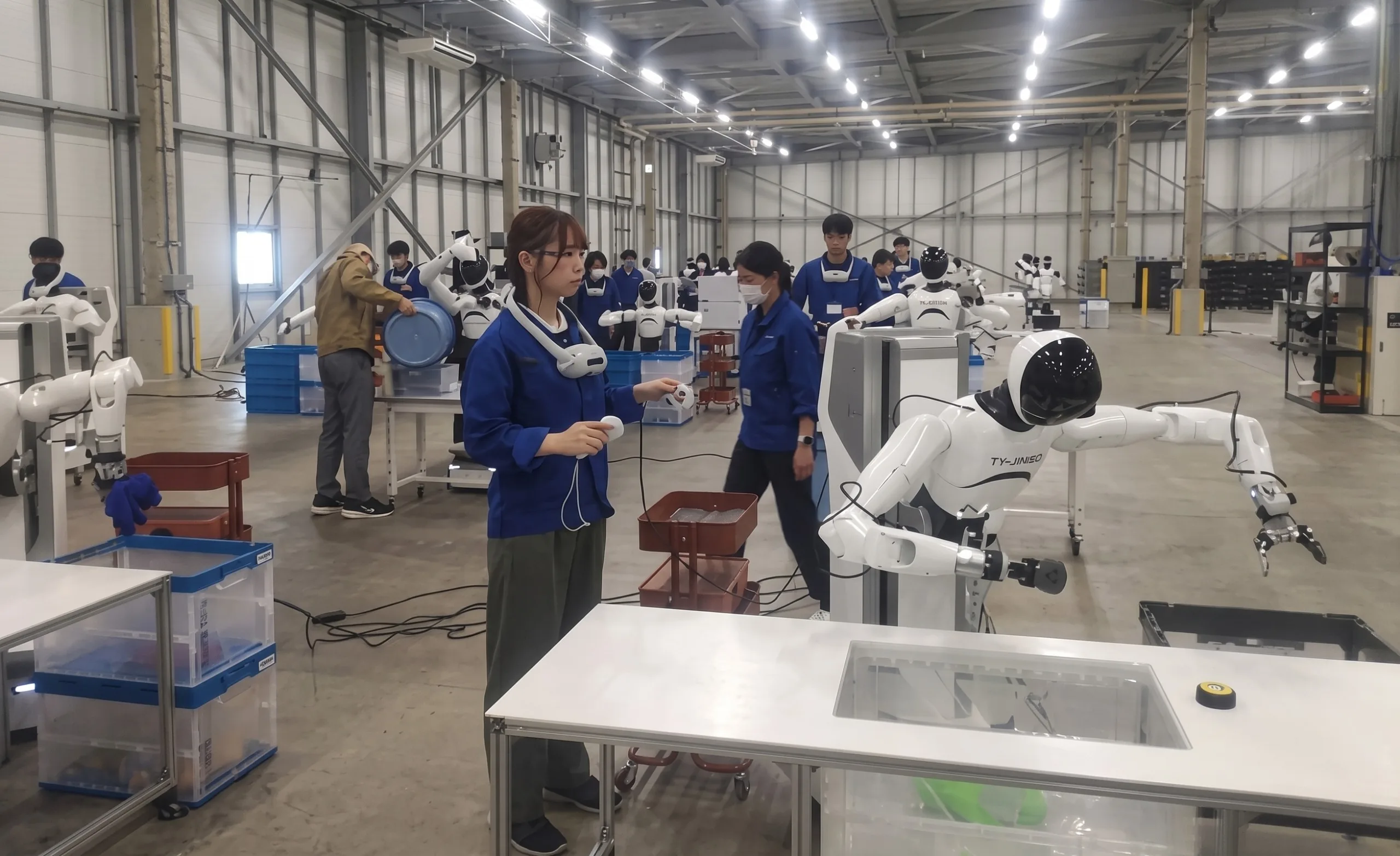
TOKYO — A consortium of Japanese companies has opened a first-of-its-kind data center in Chiba Prefecture dedicated to training humanoid robots for factory and logistics work. The J-HRTI facility is accelerating automation in Japan, creating both immediate opportunities for Filipino tech workers and long-term challenges for OFWs in traditional roles.
A New Kind of Factory Floor
The facility, located east of Tokyo, can house up to 40 humanoid robots sourced from China. Operators wearing virtual reality headsets control the machines, teaching them to perform human tasks by collecting vast amounts of work data. This pooled approach allows companies like Tsumura and Yamazen to tackle automation collectively.
The consortium aims to deploy these robots for simple tasks like material transport within this fiscal year. The driving force is Japan's shrinking workforce, which makes it harder to secure workers for essential industries. Automation is no longer a distant future—it is being installed now.
Ripples for OFWs in Japan
Japan has long relied on Filipino workers for factory assembly, warehouse logistics, and retail jobs. As robots take over material transport and basic physical tasks, the demand for entry-level manual labor will likely decline. This shift poses a real risk for OFWs whose incomes depend on these sectors.
However, robots cannot replace human warmth and complex decision-making. Healthcare workers, nurses, and specialized technicians from the Philippines will remain in high demand. Their roles will evolve, requiring them to work alongside robotic assistants rather than be replaced by them entirely.
The Rise of Remote Physical Labor
A new and unexpected opportunity is emerging in the Philippines: robot teleoperation hubs. Instead of moving to Japan, young Filipinos are being hired to remotely control Japanese factory robots through VR headsets. When autonomous systems encounter errors, Filipino operators step in virtually to correct them.
This "BPO 2.0" model keeps workers closer to their families while earning tech-driven incomes. It represents a shift from physical migration to digital labor export. The work is new but growing, offering a bridge between traditional OFW deployment and a tech-enabled future.
The Upskill Imperative
The paradox is clear: Filipino teleoperators are teaching robots to do human tasks. As these AI systems become more autonomous, the need for human backup operators will decrease. Workers who rely on teleoperation alone may find themselves displaced again.
To stay ahead, the Philippine labor force must pivot toward robotics maintenance, AI systems engineering, and specialized caregiving. Educational institutions must update curricula to prepare the next generation. The transition must be strategic and deliberate to secure long-term employment.
A Window of Opportunity
Japan's automation drive creates a narrow window for the Philippines to reposition itself. The demand for skilled technicians and robot supervisors will grow before full autonomy arrives. This is the moment to invest in workforce development and technical training.
For OFWs and their families, the message is clear: the future of work is shifting. Adaptability, continuous learning, and a focus on high-value skills will determine who thrives in this new landscape. The Philippines can turn this disruption into an opportunity with the right preparation.
