


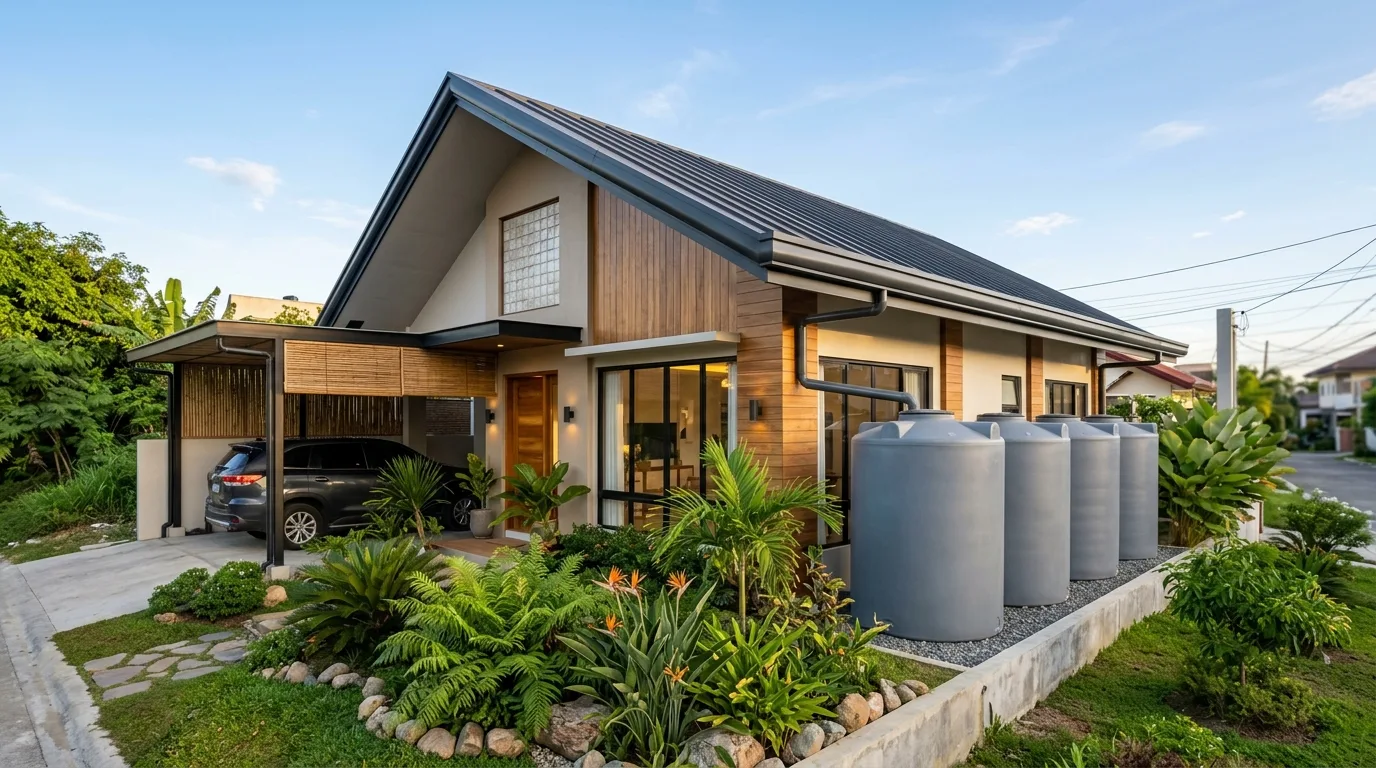
LAPU-LAPU CITY, Cebu — Homeowners in this island city can now earn a 5‑percent discount on their real property tax for three years simply by installing a rainwater catchment system. The incentive is part of “Sawra ang Ulan,” a program that turns every roof into a water source and every homeowner into a conservation partner.
A Tax Break That Pays for Itself
The City Engineer’s Office will inspect and certify the rainwater systems of qualified households. Once certified, the property tax discount kicks in, effectively offsetting the cost of installing gutters, pipes, and storage tanks over the three‑year incentive period. For middle‑ and upper‑income families, the savings can fully cover the initial hardware investment.
Lapu‑Lapu City Disaster Risk Reduction and Management Office head Nagiel Bañacia said the tax incentive was designed to change how residents view rainwater. He noted that earlier efforts to distribute free water containers failed to gain traction, prompting a shift toward financial motivation. The city is betting that a direct reduction in property tax will drive wider adoption than simple giveaways.
Cash Prizes for Communities and Households
For low‑income and marginalized barangays, the city runs an annual competition with significant cash prizes. The winning community receives ₱250,000, while the top individual household earns ₱50,000. Barangays must field at least three participating households to qualify for the community prize.
Bañacia explained that rainwater is cleaner and easier to treat than groundwater, making it a practical solution for an island that imports most of its water from mainland Cebu. The contest and tax incentive together form a two‑track strategy that reaches both ends of the economic spectrum. The program is implemented in partnership with the Department of Science and Technology Region 7.
Solving Two Problems at Once
Lapu‑Lapu City faces a dual challenge of water scarcity and seasonal flooding. Capturing rain at the roof level before it hits storm drains reduces the volume of runoff that clogs streets during typhoons and monsoon downpours. The same water that would otherwise cause flooding becomes a free supply for toilet flushing, gardening, and laundry.
The program supports United Nations Sustainable Development Goal 6 on clean water and sanitation. Republic Act 6716, enacted in 1989, already mandates rainwater collectors in all barangays, giving the city a strong legal foundation. Operations Chief Rafael Rodrigo Luche of the Office of Civil Defense Region 7 praised the initiative as a best practice that other local governments should replicate.
A Selling Point for Homeowners
For the real estate market, the property tax discount adds a tangible financial benefit to owning a home in Lapu‑Lapu City. A certified rainwater system not only lowers annual tax bills but also signals that a property is part of a forward‑thinking, resilient community. Brokers can highlight the incentive as a value‑added feature that reduces the long‑term cost of homeownership.
The three‑year discount window gives homeowners ample time to recoup their installation expenses, after which the system continues to provide free water. This long‑term savings potential makes properties with existing catchment systems more attractive to buyers. As the program matures, certified rainwater harvesting could become a standard feature that distinguishes homes in the city.
