


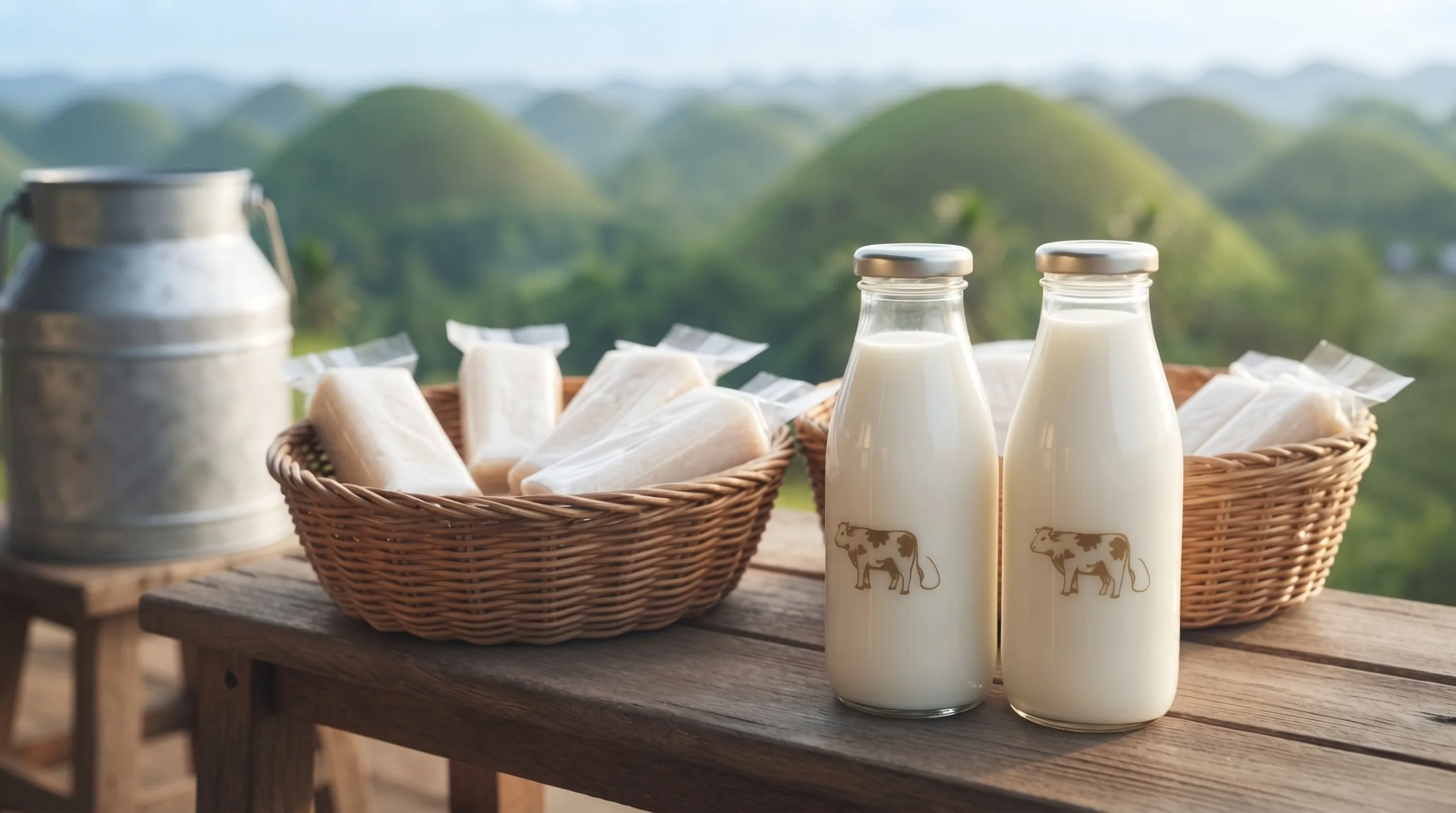
Carabao Milk Provides Additional Income for Farmers
BOHOL - Dairy farming is creating another source of income for farmers in Bohol, with carabao milk providing regular earnings without requiring major changes to traditional animal-raising practices. According to the Office of the Provincial Veterinarian, a milking carabao produces an average of four liters of milk per day. A farmer with two milking carabaos could earn around PHP500 a day from raw milk, potentially adding approximately PHP15,000 to monthly household income. A carabao can produce milk for around nine to 10 months before its calf is weaned, while calves can also provide additional income depending on their breed and purpose.
Government Feeding Programs Provide a Reliable Market
One of the biggest advantages for Bohol's dairy farmers is the steady demand created by government feeding programs. The Masustansyang Pagkain para sa Batang Pilipino Act (Republic Act No. 11037) institutionalized the National Feeding Program and encourages the use of locally produced milk in meals for children in public day care centers, kindergartens, and elementary schools. Through programs supported by agencies including the National Dairy Authority and Philippine Carabao Center, farmers have a ready market for their milk instead of having to search for individual buyers. This creates a stronger connection between agricultural production and public nutrition while keeping more economic activity within local farming communities.
Milk Processing Strengthens Food Safety and Livelihoods
Because raw milk can spoil quickly and may contain harmful microorganisms if improperly handled, dairy development programs also focus on food safety and processing. Around 600 farmer-adopter families in Bohol have received training in backyard milk processing and food safety, while milking parlors have been established to improve collection practices. Milk collection teams gather fresh milk from farmers and transport it to processing facilities, where it undergoes pasteurization to reduce disease-causing microorganisms while retaining most of its nutritional value. These systems help make locally produced milk suitable for use in institutional feeding programs while giving farmers a more organized pathway from production to market.
