


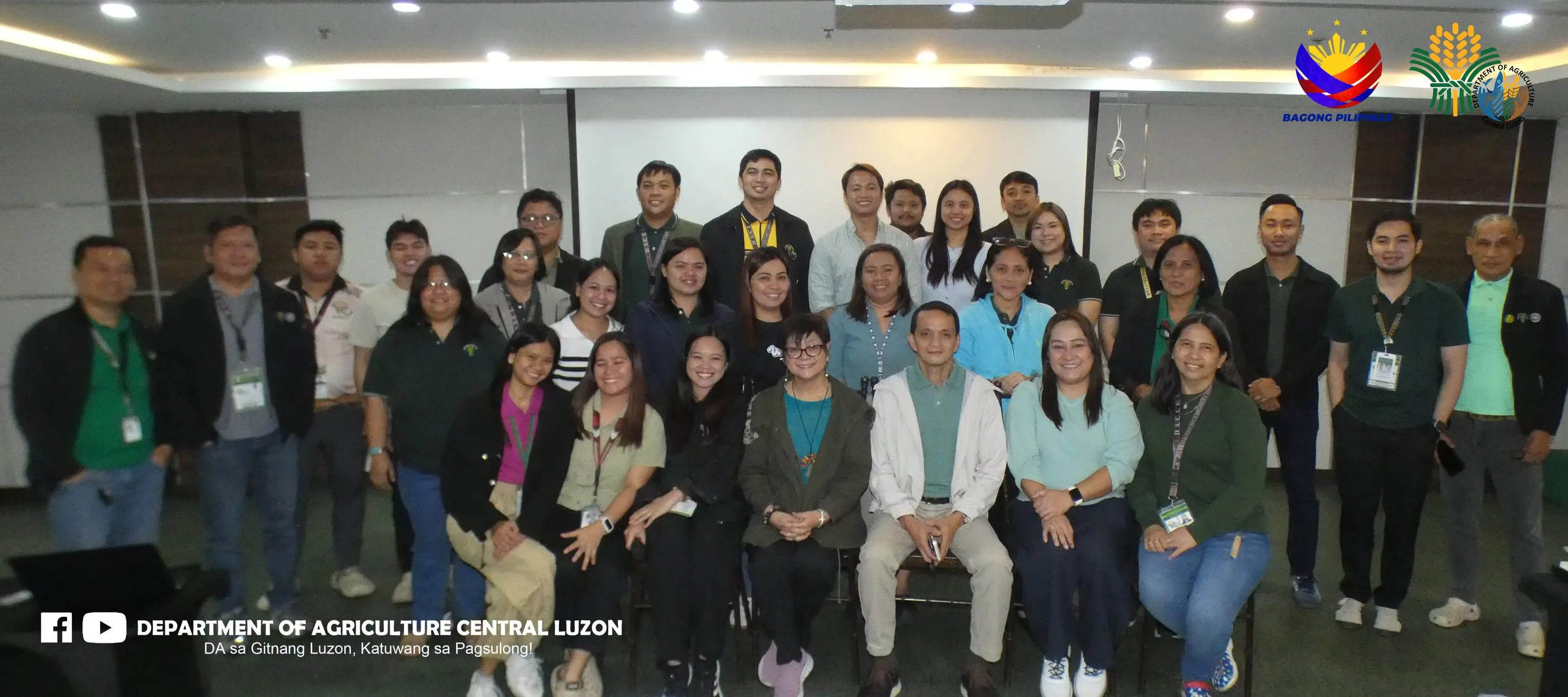
ANGELES CITY, PAMPANGA - The Department of Agriculture - Regional Field Office III (DA-RFO III) successfully concluded a three-day training titled "Measure What Matters: Using Data to Tell Your Success - A Results-Based Training on Monitoring and Evaluation Phase II" from August 18 to 20, 2026, at a venue in the city. The activity, organized by the Monitoring and Evaluation Section (MES) of the Planning, Monitoring, and Evaluation Division (PMED), aimed to equip participants with practical skills in tracking project outcomes, ensuring that agricultural programs in Central Luzon are grounded in reliable data and measurable results. The training was led by subject matter specialist Dr. Evelyn A. Esquejo, who guided participants through the core principles of effective monitoring and evaluation.
From Data Collection to Evaluation Planning
The training was structured to provide a comprehensive understanding of the M&E process. Day 1 focused on revisiting the M&E Framework, developing a Data Collection Plan, examining sample M&E forms, and discussing various data collection methods, including an in-depth look at Data Quality issues. Day 2 shifted focus to Data Analysis, Visualization, and Reporting, highlighting the critical differences between Data Analysis and Data Analytics, alongside principles of Evaluation Design and Learning. Day 3 culminated in the practical application of these concepts with the formulation of an Evaluation Plan and Evaluation Grid, the development of evaluation questions and instruments, and discussions on Evaluation Governance, process risks, and ethical considerations.
Strengthening Agricultural Programs Through Evidence-Based Decisions
The intensive program underscores the Department of Agriculture's commitment to evidence-based decision-making for the region's agricultural development. By equipping participants with the skills to measure, analyze, and communicate their project's success effectively, the training ensures that future agricultural programs are not only well-designed but also rigorously monitored and evaluated for their impact. This initiative supports Central Luzon's position as a major agricultural hub, helping to optimize resource allocation and improve the delivery of services to farmers and communities across the region.
