


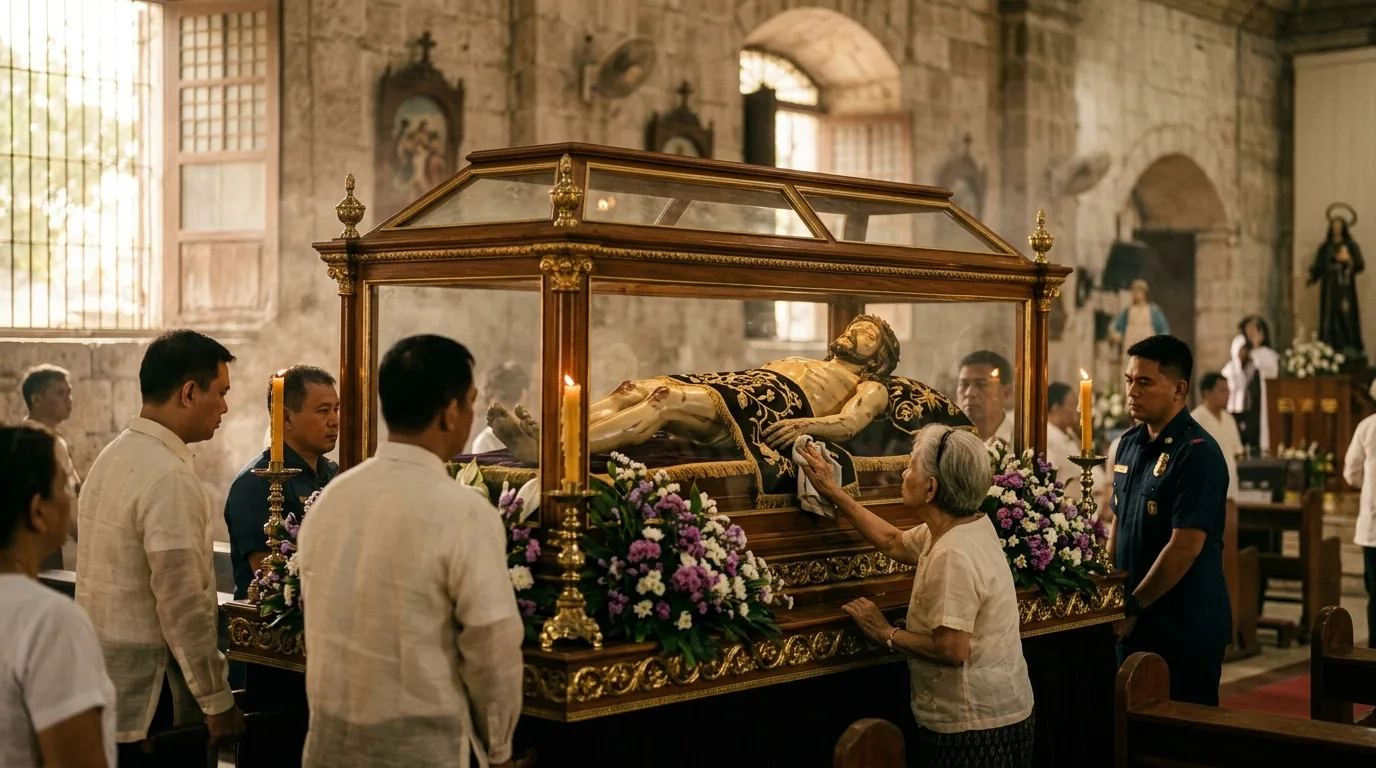
"Nang si Kristo’y Namatay" is a 300-page cultural coffee table book documenting the profound spiritual traditions surrounding the Santo Entierro (Dead Christ) images across Cavite. Authored by historian Dr. Jeffrey Lubang, designed by Marboy Sayno, and published by Architect Romeo Sayoc Cord Cruz, the book uncovers the unique heritage of 23 towns tied by a singular devotion.
A Cultural Documentation of Faith and Heritage
The book captures the Santo Entierro tradition that has been observed in Cavite for centuries, with the Montoya-Sayoc-Dominguez clan of Imus City serving as one of the families that has kept this sacred practice alive . Architect Romy Sayoc Cord Cruz, a sixth-generation descendant, traces the family's observance to old documents dating back to 1878, written by his great-great-grandfather Emeterio Dominguez, which recorded the expenses for the Santo Entierro materials .
The Santo Entierro tradition reflects Cavite's rich religious and cultural heritage. While the province is known as the birthplace of Philippine independence, it is also a stronghold of religious traditions including "Pabasa ng Pasyon," "Penitensya," and "Santo Entierro" . The Diocese of Imus has also launched heritage programs to preserve Cavite's Catholic legacy, emphasizing the importance of protecting the historical, architectural, and spiritual identity of local parishes.
The Book's Creators and How to Order
Dr. Jeffrey Lubang, the author, is a historian with documented works on Cavite's cultural heritage, including "Anting-anting sa Kabite" and academic research on the province's local beliefs and traditions . Architect Romeo Sayoc Cord Cruz, the publisher, is himself a descendant of the Montoya-Sayoc-Dominguez clan that has preserved the Santo Entierro tradition for generations . He has emphasized the importance of carrying traditions forward, saying, "It's not only about maintaining a tradition—it's about passing down a part of who we are to the generations after us" .
