CITY OF SAN FERNANDO, PAMPANGA — Flooding has long been a painful reality for Pampanga and other low-lying provinces. But a new model inspired by the Megaworld Capital Town Rainwater Park is offering a bold solution — one that turns excess rainwater from a threat into an asset. And it could be the blueprint for a more flood-resilient Philippines.
The Big Idea: Store Water, Don't Fight It
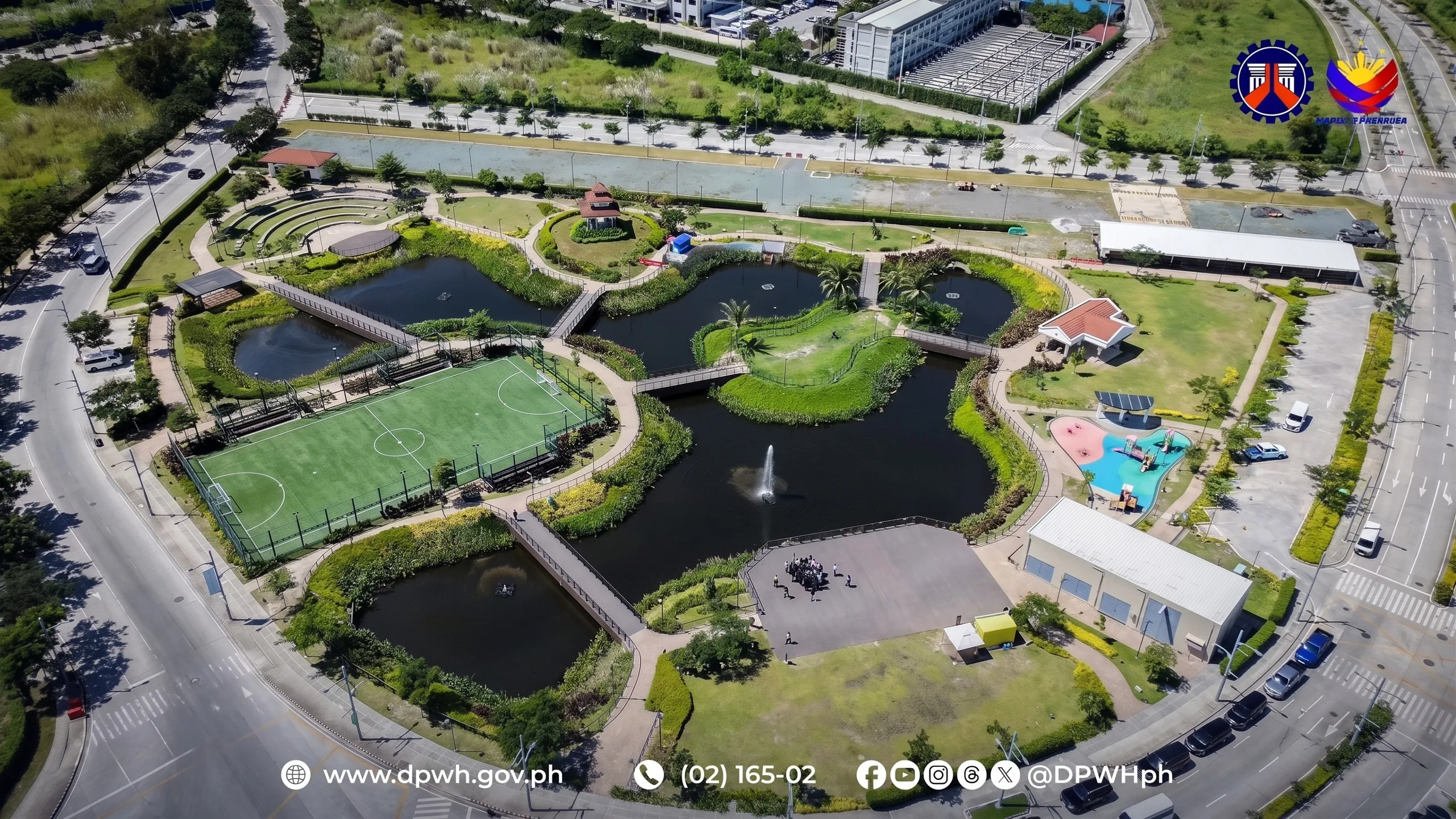
Instead of letting rainwater rush into streets and homes, this design captures and stores it — and the numbers have grown significantly since the park's initial launch. The two-hectare Capital Town Rainwater Park, located inside Megaworld's 35.6-hectare township in San Fernando, originally held up to 7,500 cubic meters of water, with a capacity of 3.7 million gallons or roughly six Olympic-sized pools . Following a recent inspection by DPWH Secretary Vince Dizon, Megaworld revealed plans to convert an underground detention structure to hold an additional 5,000 cubic meters, raising the facility's total capacity to 20,000 cubic meters for rainwater storage and gray water recycling during severe dry spells . The park functions as a detention basin, catching excess water and gradually releasing it into the nearby Santo Niño Creek, while the stored water is reserved for reuse during El Niño or dry seasons .
A Public Space With Purpose — and a National Blueprint
Beyond flood control, the park doubles as a vibrant public recreation area, featuring landscaped gardens, a man-made lagoon with fountains, a mini football field, a children's playground, an amphitheater, and a viewing deck . Since opening in May 2025, it has attracted around 200,000 visitors monthly, proving that smart infrastructure can serve multiple purposes at once . The initiative's success has not gone unnoticed at the national level. After inspecting the facility on October 20, 2026, DPWH Secretary Dizon announced he will recommend mandatory stormwater detention basins for private real estate developments nationwide under updated building and land development codes, coordinating with the Department of Human Settlements and Urban Development to draft the guidelines . "We need to move from reactive flood control to proactive water management," Dizon said, emphasizing that mandatory retention facilities allow the country to capture peak floodwaters during storms while retaining that same water for non-potable recycling during dry spells . For a province that knows the cost of flooding all too well, this model offers something different: a proactive, sustainable, and community-centered approach that addresses flooding, water scarcity, urban heat, and lack of public spaces — all at once.