


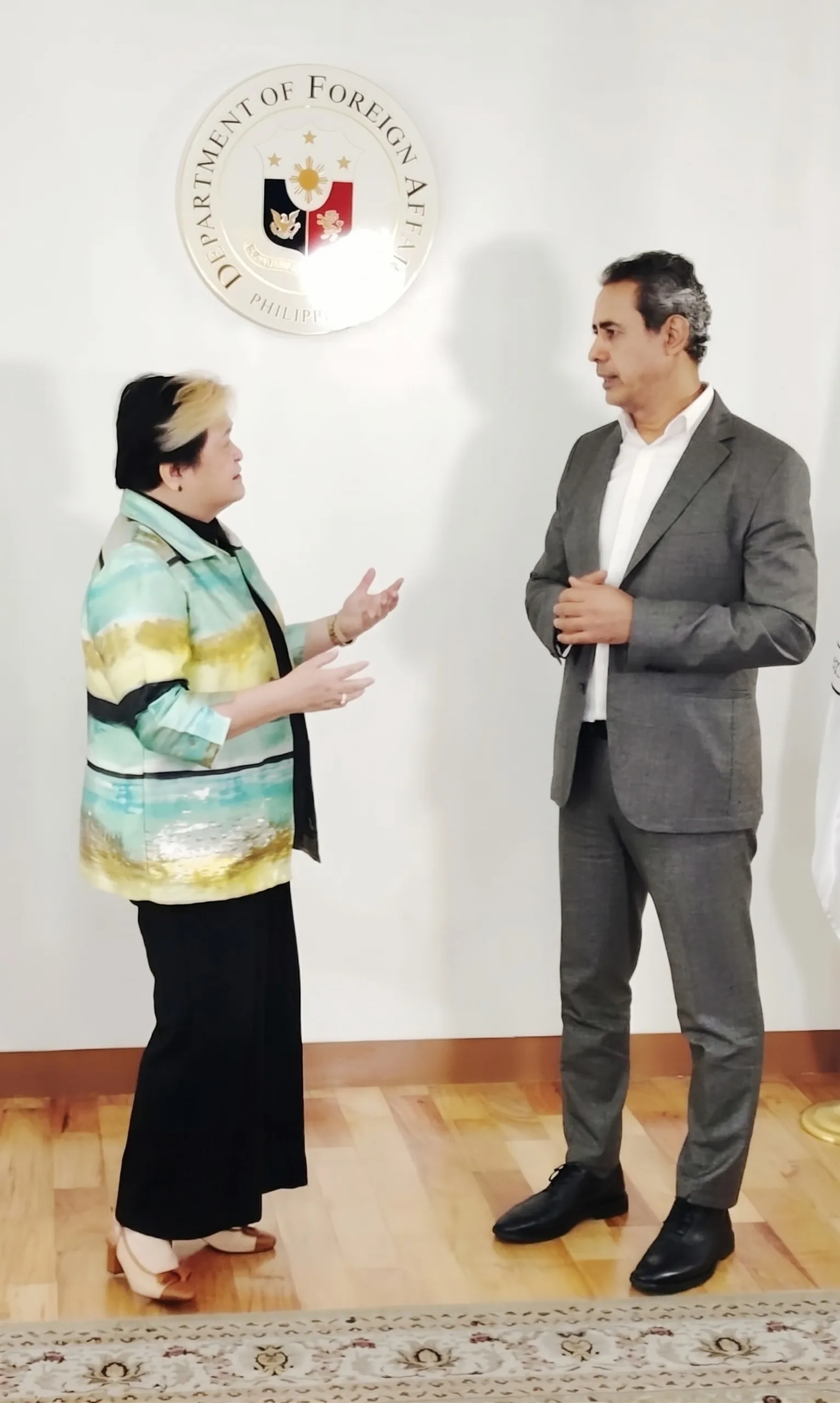
PHILIPPINES — The Philippines is seeking to broaden its relationship with Saudi Arabia beyond oil and overseas workers, Foreign Affairs Secretary Theresa Lazaro said, as Middle East instability increasingly threatens the safety of over two million Filipinos in the Gulf. The shift aims to build a wider economic partnership covering investment, healthcare, and technology.
A Relationship Built on More Than Oil
Energy and labor have long anchored Philippine ties with Saudi Arabia and the Gulf Cooperation Council. The government now wants to expand into healthcare, digitalization, and technology. Lazaro noted that Saudi Arabia has become a leader in these fields, and the Philippines sees potential for deeper collaboration.
The Foreign Affairs Secretary emphasized that the relationship must evolve beyond traditional pillars. The Philippines is also in preliminary talks with Saudi Arabia on a strategic oil storage facility. Lazaro welcomed the concept, saying Saudi support for stockpiling would help shield the country from supply shocks.
Middle East Instability Hits Home
The US-Iran war over the past six months has taken a toll on Philippine energy and food security. The blockade of the Strait of Hormuz disrupted fuel supplies and drove up electricity and commodity prices. Agriculture also suffered, as the country relies on fertilizers imported from the Middle East.
Lazaro acknowledged that the conflict has become a national security concern. She stressed that Middle East events always affect the Philippines. The war has directly impacted the welfare of OFWs, whose protection remains a core pillar of Philippine foreign policy alongside national security and economic security.
Mindanao Eyes Middle East Investment
The Philippines wants Middle Eastern countries to play a larger economic role in the Bangsamoro Autonomous Region in Muslim Mindanao. Infrastructure, education, and healthcare are priority sectors. Lazaro said the region's natural resources make it attractive for investment.
She expressed hope that the recent parliamentary elections would stabilize Mindanao. Lasting peace would open doors for foreign investors who previously hesitated due to security concerns. The government sees the Middle East as a natural partner given cultural and religious ties.
Balancing Global Powers
Manila continues to balance ties with Washington, its only treaty ally, and Beijing, its largest trade partner. Lazaro said the Philippines segregates the South China Sea dispute from other aspects of bilateral relations. The country's national interest dictates its foreign policy, not allegiance to any superpower.
On the proposed Board of Peace for post-war Gaza, Lazaro said the concept is good in principle, but logistics and resources remain concerns. The Philippines has not yet decided on the invitation, focusing instead on its ASEAN chairmanship. Manila maintains its long-standing support for a two-state solution.
