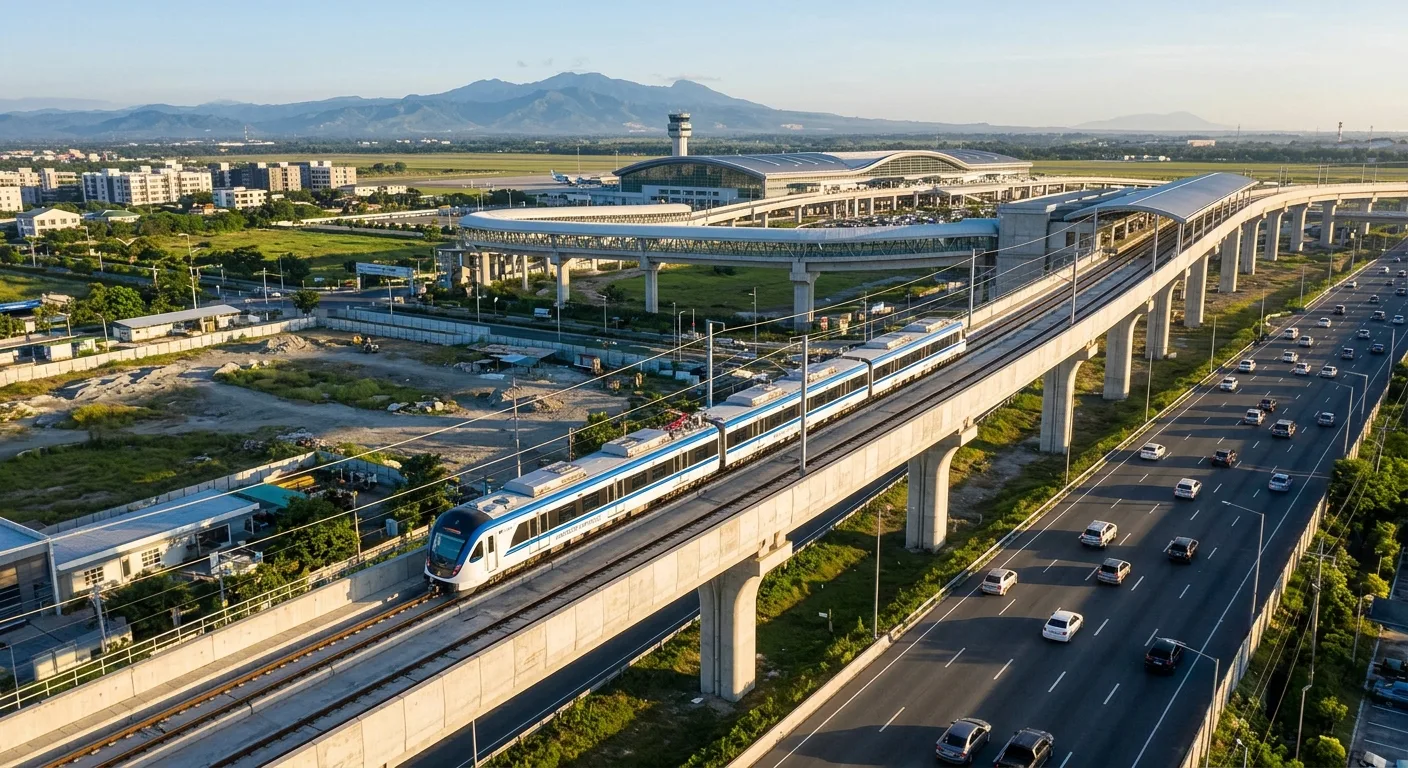
The North-South Commuter Railway (NSCR) project is a 147-kilometer urban rail transit system featuring an Airport Express line designed to link Makati and Clark International Airport in just 55 minutes . Once fully operational, this modern railway will transform how Kapampangans and commuters travel between Central Luzon and Metro Manila, drastically reducing travel time and providing a reliable alternative to road transport.
A Game-Changing Connection for Kapampangans
The NSCR is a 147-kilometer elevated railway connecting Tarlac, Pampanga, Metro Manila, and Laguna . With a design speed of up to 160 kilometers per hour , it will be one of the fastest rail systems in the country. The Airport Express service will offer a 55-minute non-stop ride from Makati to Clark International Airport, eliminating the unpredictable travel times of road trips that can take two to three hours or more during peak traffic.
The Clark Station, currently under construction within the Clark Freeport and Special Economic Zone, is designed for direct airport integration with an elevated walkway connecting the railway to the passenger terminal . This seamless transfer eliminates transit friction between Makati's business district and Clark's growing aviation hub, making the airport a more accessible gateway for business and leisure travelers alike.
Capacity and Regional Impact
The NSCR will feature 35 stations, including 31 elevated, three at-grade, and one underground . It will offer two types of train services: commuter trains with 51 train sets capable of carrying 2,242 passengers each, and Limited Express trains with seven train sets accommodating 386 passengers each . Full operations are targeted for 2032, with the system designed to serve up to 1 million passengers daily .
For Kapampangans, this project promises more than just faster travel. Improved connectivity supports regional growth, eases traffic congestion, and creates economic opportunities by linking Central Luzon more closely to Metro Manila's financial and commercial centers. The Clark International Airport, which already served 2.75 million passengers in 2025—a 14% increase from the previous year—will benefit significantly from improved accessibility .