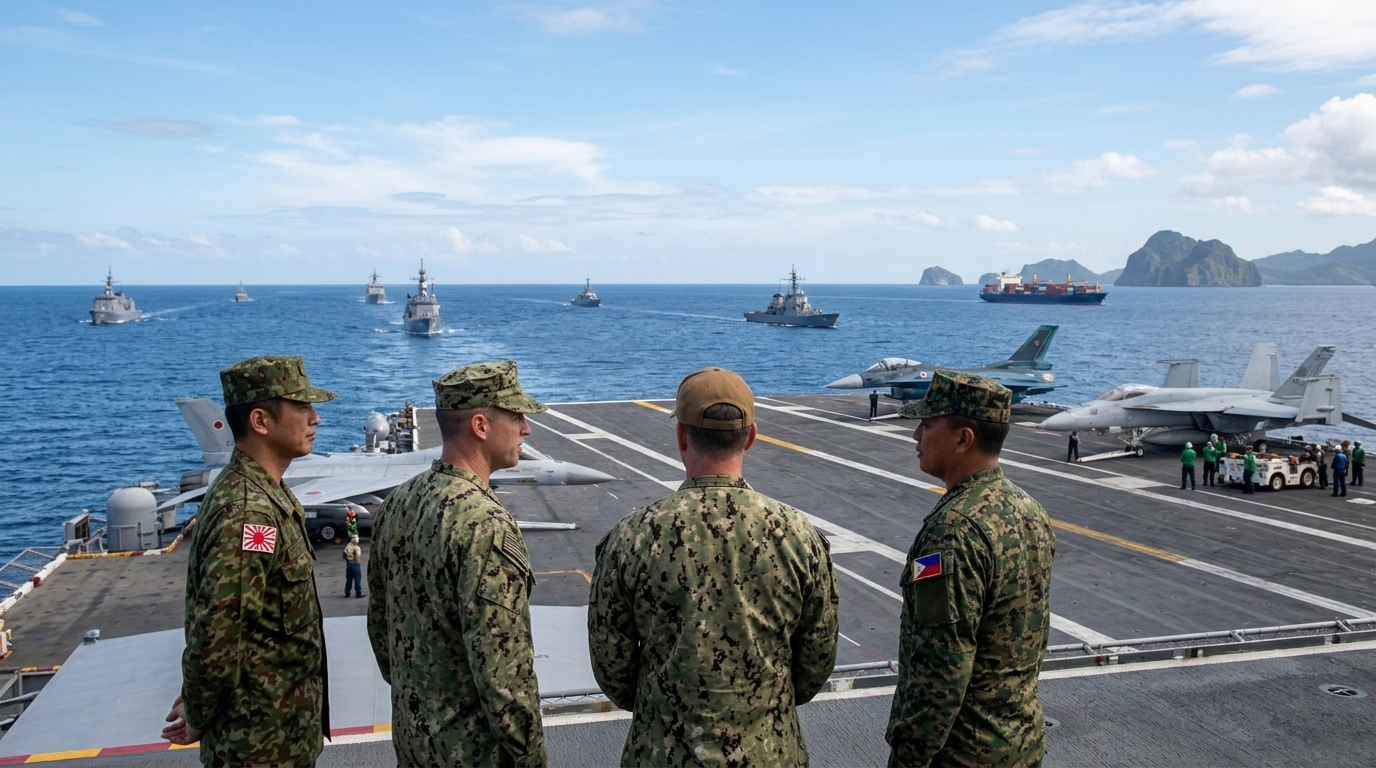
In a significant development for regional security, Japan is reportedly expanding its military role in joint exercises conducted with the United States and the Philippines. This move, highlighted by Japan's Asahi Shimbun, signals a deepening of trilateral defense cooperation amidst evolving geopolitical landscapes in the Indo-Pacific. While specific details regarding the scale and nature of Japan's expanded participation remain to be fully disclosed, the announcement underscores a growing commitment among the three nations to enhance interoperability and collective defense capabilities.
Strengthening Maritime Security and Regional Stability
The US-Philippines joint exercises, traditionally focused on strengthening the long-standing alliance between Washington and Manila, now see Japan taking on a more prominent role. This expansion is perceived as a strategic alignment designed to reinforce maritime security, particularly in contested waters, and to ensure a free and open Indo-Pacific. For the Philippines, a nation with crucial maritime interests and a significant diaspora, these evolving alliances carry substantial weight, impacting its strategic positioning and long-term stability.
Protecting Trade Routes and Seafarer Livelihoods
For the millions of Filipinos, both in the Philippines and those working overseas, this expanded military cooperation carries profound implications. Enhanced regional stability, underpinned by strong alliances, can directly contribute to a secure environment conducive to economic growth and trade. The Philippines, a major maritime nation, relies heavily on secure sea lanes for its economy, including the safe passage of goods and the livelihood of its vast contingent of Filipino seafarers. Any measure that strengthens maritime security can thus indirectly safeguard the economic interests of the nation and its global workforce. Conversely, increased tensions or instability in the region could pose risks to trade routes, investment, and even the safety of overseas Filipino workers (OFWs) in neighboring countries, making these diplomatic and military developments crucial to monitor.
Navigating Geopolitical Resilience and Future Prosperity
Filipinos should recognize that these developments are part of a broader shift in regional power dynamics, directly influencing the Philippines' national security posture. While the immediate impact on daily life may not be apparent, the strengthening of strategic alliances like this aims to create a more predictable and secure environment. This security, in turn, underpins the economic conditions that support jobs at home and the opportunities for OFWs abroad. Staying informed about these geopolitical shifts is essential for understanding the long-term trajectory of the Philippines' role in the global arena and how it might affect the nation's prosperity and the well-being of its citizens.