


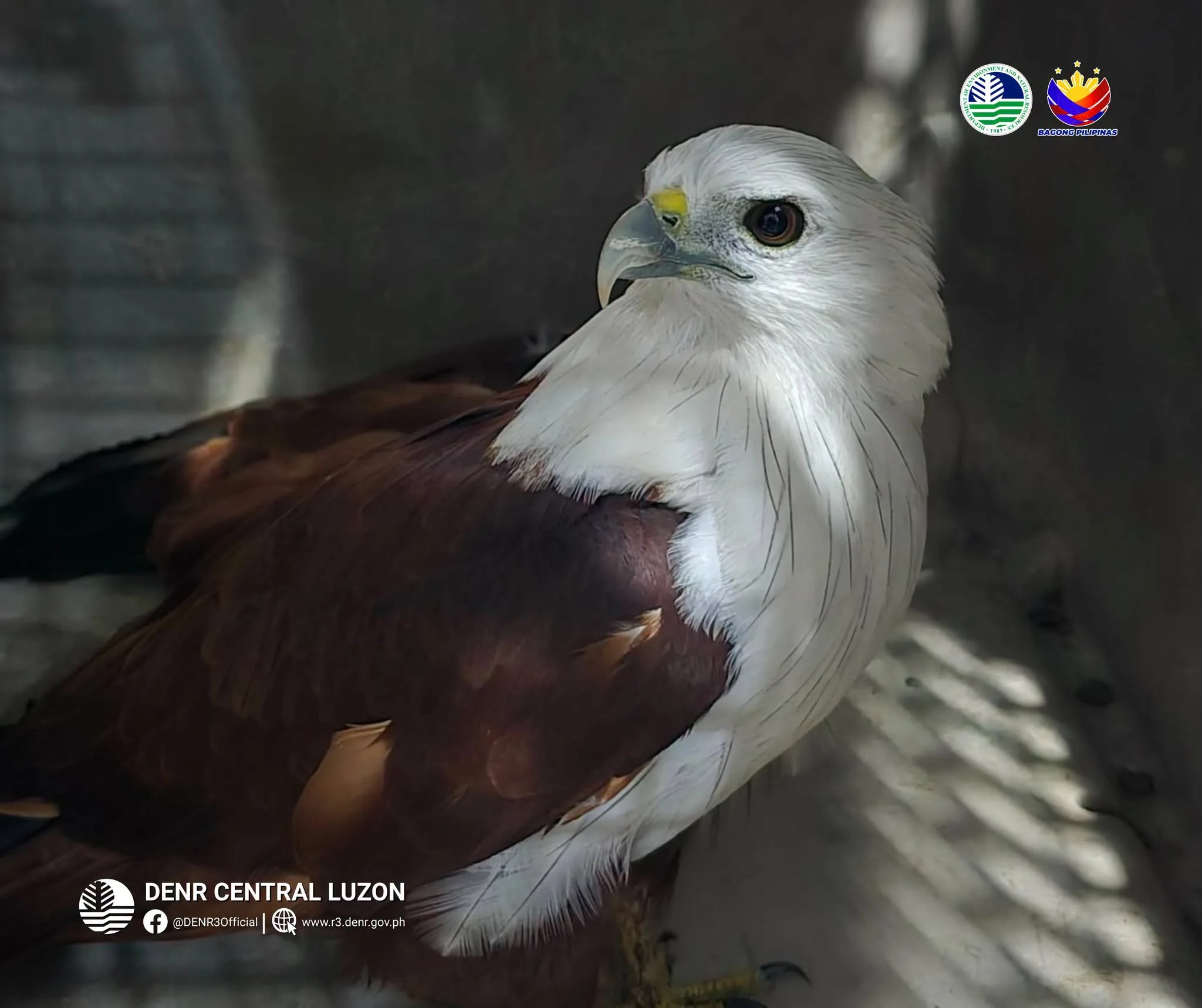
SAN FERNANDO, PAMPANGA - Personnel from the City Government of Baliwag turned over three healthy Brahminy Kites to the Department of Environment and Natural Resources after the birds were recovered in Barangay Sabang. Wildlife Enforcement Officers conducted a physical assessment and found the birds active, healthy, and uninjured, leading to their successful release at Biak-na-Bato National Park in San Miguel, Bulacan.
A Community Effort for Wildlife Protection
The successful rescue and release of the three Brahminy Kites began when a concerned citizen surrendered the birds to the City Government of Baliwag. The birds were then promptly turned over to the DENR Community Environment and Natural Resources Office in Baliwag, headed by Dennis Vergara. After being found fit for release, the raptors were transported to Biak-na-Bato National Park, a protected area known as a sanctuary for various endemic and indigenous wildlife species .
The Brahminy Kite is classified as Least Concern by the International Union for Conservation of Nature, but it remains fully protected under Philippine law through Republic Act No. 9147, the Wildlife Resources Conservation and Protection Act . This rescue shows how simple actions by citizens can help protect wildlife species.
Public Encouraged to Report Wildlife Sightings
DENR Regional Executive Director Ralph Pablo emphasized the importance of public vigilance and prompt coordination with environmental authorities in ensuring that displaced wildlife are properly assessed and safely returned to their natural habitat. He also expressed appreciation for the concerned citizen and local government personnel who helped facilitate the birds’ turnover to the DENR .
The DENR has reiterated that the collection, hunting, possession, or trade of wildlife without the required permits or authority is prohibited under Republic Act No. 9147, which provides for the conservation and protection of wildlife and their habitats . The public is encouraged to report sightings of displaced or injured wildlife to the nearest DENR office or appropriate environmental authorities to help ensure their proper handling and safe return to their natural habitat.
