A Historic Residence With a National Connection
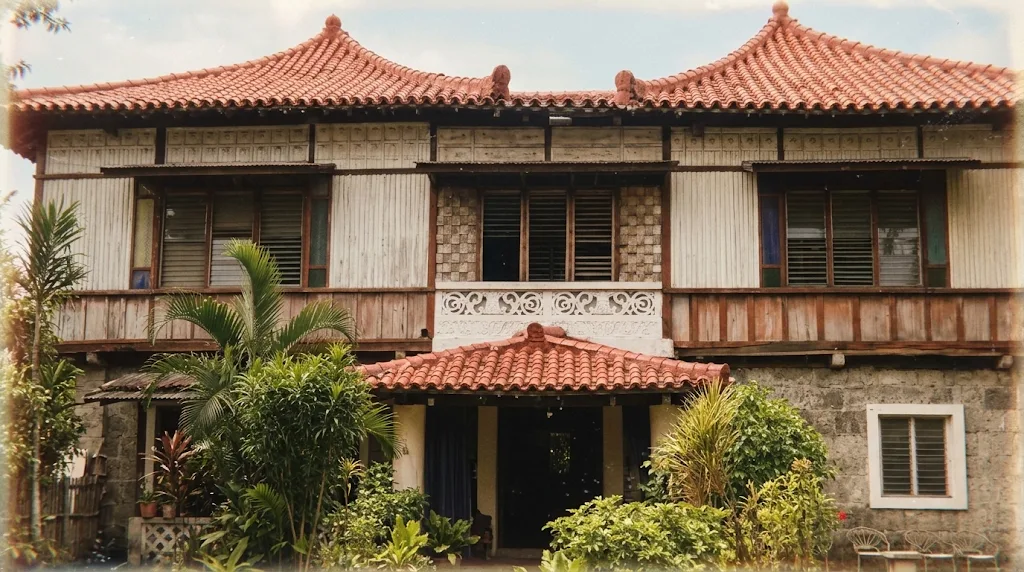
BOHOL - Beldia House traces its beginnings to 1858, when Don Esteban Butalid, a wealthy businessman and gobernadorcillo during the Spanish colonial period, commissioned its construction. Beyond serving as a family residence, the property also functioned as a provisional municipio or temporary municipal hall of Tagbilaran before another municipal building was established on higher ground. Its historical significance extends to the family of Dr. José Rizal. According to Boholano historian Jes Tirol (1992), Don Manuel Timoteo Hidalgo, husband of Rizal's sister Saturnina, stayed in the house for approximately four months during his exile in Bohol in 1889. There is also a historical possibility that Rizal visited the residence during his reported tour of Bohol in 1894, although this personal visit has not been established as a certainty.
Architectural Features That Reflect Its Age
The house stands out for its distinctive curving gambrel roof covered with clay tiles, a design with Chinese architectural influences that is considered unusual among Bohol's ancestral homes. Its lower level features massive coral-stone walls, while the upper floor has a wooden structure and a prominent floating gallery or volada. Another notable feature is the original main entrance, located along a side wall that once faced an old road. Its Neo-Classical details include coral-stone pilasters with Composite capitals, a three-centred arch, and a classically proportioned architrave. The original U-shaped floor plan also featured an interior courtyard, which has since been roofed over and converted into the present main entrance. Although later renovations changed several parts of the upper floor, including its windows and wooden panels, the residence retains much of its historic architectural character.
From the Butalid Family to the Beldia Legacy
The property acquired the name Beldia House in 1971 when Judge Antonio Beldia purchased it from the Butalid-Calceta-Gallares family corporation. He later gave the house to his wife, Mercedes Fernandez, which explains its other name, Villa Mercedes. Today, the property remains communally owned by the descendants of Judge Beldia. Its continued presence in Sitio Ubos makes it an important part of Tagbilaran's built heritage, connecting generations through its architecture and historical associations. More than an old residence, Beldia House represents the stories of prominent Boholano families, the city's early local government, and a chapter in the history of the family of the country's national hero. Preserving places like this helps keep the people, memories, and cultural identity of Bohol alive for future generations.