


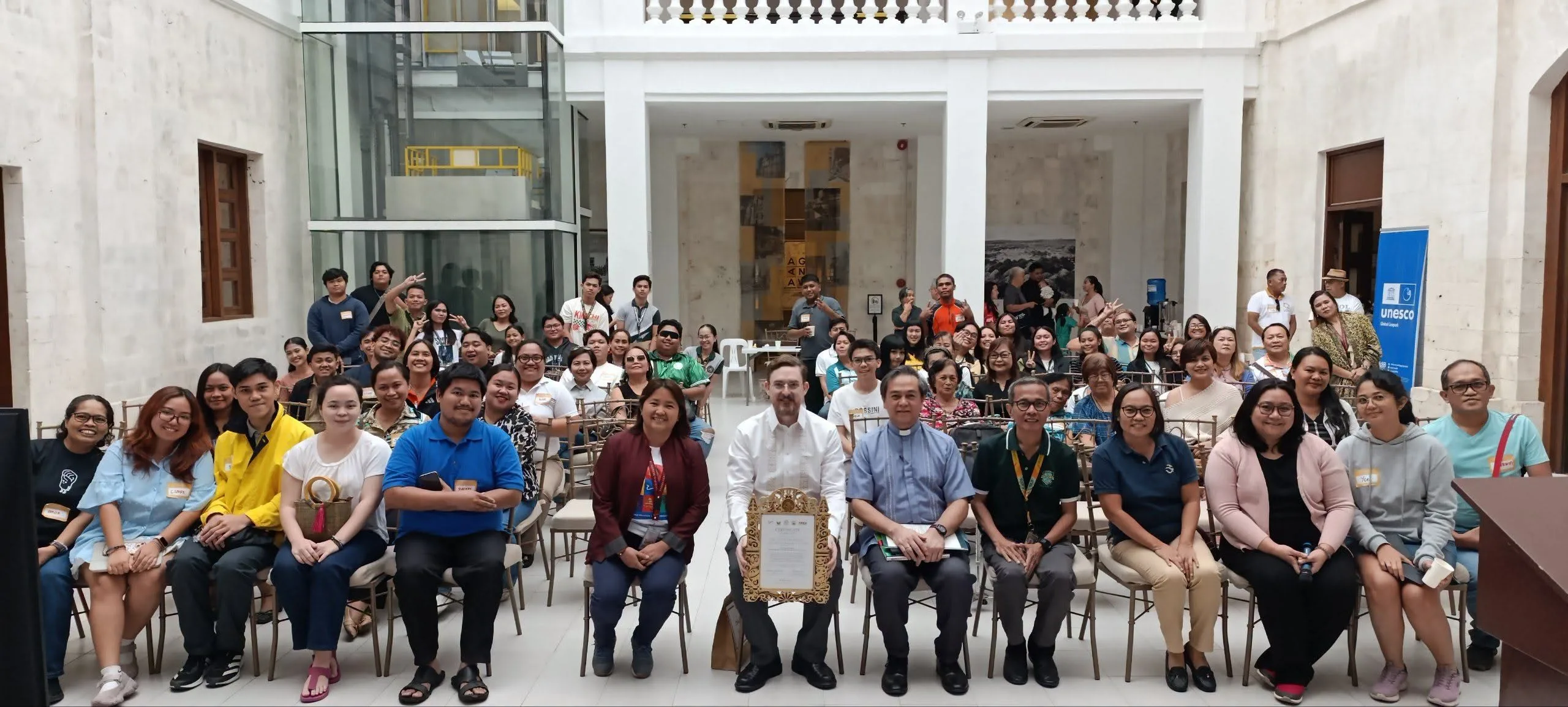
BOHOL, PHILIPPINES — The National Museum of the Philippines–Bohol became a living choir loft on July 31, 2026, as centuries‑old sacred manuscripts were read aloud for the first time in generations. The public lecture “The Cantorales of Bohol” turned archival preservation into a moving auditory experience, offering visitors a rare journey into the island’s Spanish colonial musical soul.
Unveiling Centuries‑Old Sacred Manuscripts
Dr. David Kendall, a historical musicologist from La Sierra University, guided the audience through the delicate pages of four surviving cantorales—oversized choir books handwritten by Boholano church musicians in the 1800s. These fragile manuscripts contain the Latin chants and Mass settings that once filled stone churches across the province. Kendall explained that each book tells a story of faith, artistry, and community identity preserved against tropical decay.
The lecture highlighted the so‑called Bohol School of Sacred and Liturgical Music, a distinct local tradition that flourished during the Spanish colonial period. Participants learned how these choir books were positioned on a central stand, allowing an entire choir to sing from a single massive volume. The event underscored that these are not mere museum artifacts but functional scores waiting to be heard again.
A Living Demonstration of Historical Chants
The highlight came when Kendall invited attendees to sing directly from the ancient notations. Voices rose in unison for the Misa de Trompas (1826) and the Misa Baclayana, two liturgical works that had not been publicly performed in well over a century. The museum’s gallery walls reverberated with melodies that once defined Boholano worship, bridging a temporal gap of almost two hundred years.
Choir members and heritage advocates experienced firsthand the intricate melismas and solemn cadences of colonial sacred music. Kendall’s demonstration proved that preservation extends beyond digitization; it lives in the act of communal performance. For tourists and locals alike, the session transformed an academic lecture into a participatory cultural immersion.
Linking Organ, Choir, and Community
Rev. Fr. Milan Ted D. Torralba, chair of the Diocese of Tagbilaran’s Commission for the Cultural Heritage of the Church, connected the cantorales to Bohol’s historic pipe organs. He explained that the choir books were originally designed to accompany instruments still standing in churches such as Baclayon, Loay, and Maribojoc. This integrated musical ecosystem formed the backbone of parish life for generations.
Fr. Torralba urged choir directors and youth groups to embrace these traditions, ensuring that the cantorales remain a living heritage rather than a forgotten relic. His appeal resonated with the audience, many of whom were active church musicians. The lecture thus became a call to action, linking conservation directly to community revitalization.
Heritage Tourism and the Geopark Vision
Governor Aris Aumentado’s administration, through the Bohol Center for Culture and Arts Development and the BACH Council, co‑organized the event as part of the province’s broader cultural tourism strategy. Bohol’s status as the country’s first UNESCO Global Geopark is anchored not only on geological wonders but also on intangible assets like sacred music. The lecture demonstrated how historical documentation can attract niche travelers seeking authentic, educational experiences.
The collaboration with the National Museum and the Diocese of Tagbilaran illustrates a successful model of public‑private‑religious partnership. As Bohol continues to recover and expand its tourism offerings, the cantorales add a distinctive layer that sets the island apart from typical beach destinations. The event proved that the sound of history, when carefully preserved, can be as compelling as any landscape.
