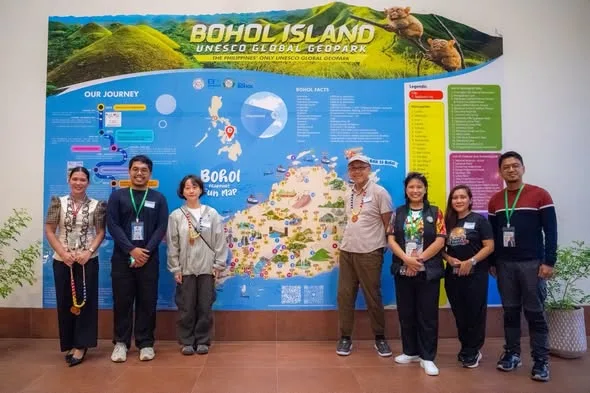
TAGBILARAN CITY, Bohol — UNESCO evaluators Sungok Ju and Nire Kagaya landed at Bohol-Panglao International Airport on August 3, 2026, to begin the first revalidation of the island’s global geopark status. Their arrival kicks off a crucial review that will determine whether Bohol retains its prestigious title.
A Global Distinction Under Review
Bohol made history in May 2023 as the Philippines’ first and only UNESCO Global Geopark. The designation recognized the island’s unique geological formations, rich biodiversity, and vibrant cultural heritage. However, the title is not permanent; UNESCO requires every geopark to undergo rigorous revalidation every four years.
The evaluation team was warmly received by Bohol Island Geopark Manager Joanne Pinat, Resident Geologist Karl Michael Din, and Technical Advisor Mohamad Farid Zaini. Over the coming days, the evaluators will inspect key geosites, assess conservation programs, and meet local communities. Their verdict will either extend Bohol’s status, issue a warning, or revoke the title.
Why This Matters for Tourism
The UNESCO stamp is a powerful magnet for travelers seeking authentic, nature‑based experiences. Since earning the designation, Bohol has seen a surge in eco‑tourism, with visitors drawn not only to the Chocolate Hills but also to lesser‑known sites like the Danajon Double Barrier Reef. The revalidation directly impacts the livelihoods of thousands who depend on tourism.
A successful revalidation strengthens Bohol’s brand as a world‑class destination. Tour operators, resort owners, and local guides all benefit from the global recognition. The mission also shines a spotlight on Bohol’s commitment to balancing development with environmental protection, a quality increasingly valued by modern travelers.
A Journey Through 150 Million Years
Bohol’s landscape tells a story that began 150 million years ago. Over 1,700 cone‑shaped Chocolate Hills rise from the central plains, while caves, sinkholes, and pristine reefs reveal the island’s geological past. UNESCO evaluators will inspect these sites to ensure they are protected from destructive activities like illegal quarrying.
Beyond the rocks, the geopark embraces cultural landmarks. Centuries‑old coral stone churches, traditional music, and indigenous Eskaya communities form part of the heritage tapestry. The evaluators will look for evidence that these cultural assets are preserved and integrated into sustainable tourism circuits. This holistic approach sets UNESCO geoparks apart from ordinary national parks.
Community at the Heart
A geopark is not a museum; it is a living landscape where people work, farm, and welcome guests. Evaluators will visit barangays to see how local residents benefit from the designation. Women‑led souvenir workshops, community‑guided cave tours, and farm‑to‑table dining experiences are now part of Bohol’s tourism ecosystem.
Governor Aris Aumentado’s Strategic Change Agenda places community welfare at the center of geopark management. The province has invested in training programs, small business grants, and infrastructure that spreads tourism income beyond Panglao’s beach resorts. The evaluators’ conversations with locals will measure whether the geopark truly delivers on its promise of inclusive growth.
A Pledge to Protect and Promote
The revalidation mission is both a test and an opportunity. It challenges Bohol to prove that global recognition translates into tangible improvements for its people and environment. The Provincial Government remains confident, citing strengthened partnerships with national agencies, academic institutions, and civil society.
Regardless of the outcome, the very process of revalidation reinforces a culture of accountability and continuous improvement. For tourists, it guarantees that Bohol’s wonders are managed responsibly, ensuring that future generations can experience the same awe‑inspiring landscapes. The island now awaits the evaluators’ final report, ready to show the world that its geological treasure remains in good hands.