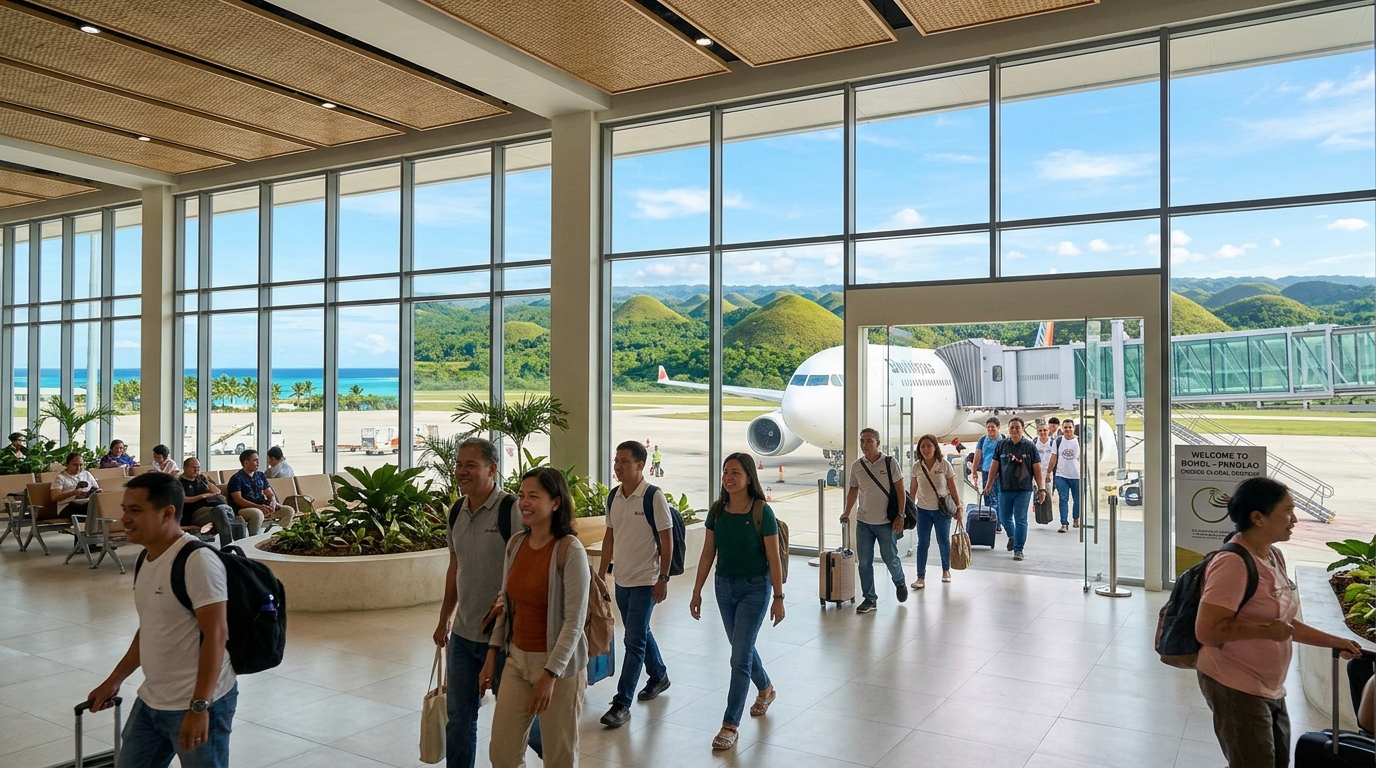
Bohol — The aviation sector in Bohol is experiencing a robust period of growth, with the Bohol-Panglao International Airport (BPIA) serving as a critical hub for the region's increasing travel demands. Recent data from the first quarter of 2026 shows that BPIA and its sister gateway, Laguindingan, have successfully accommodated over one million domestic passengers, underscoring the strong appeal of these regional hubs. This surge in traffic highlights the growing confidence of Filipino travelers in exploring different provinces and reinforces the airport's role in facilitating regional mobility. The facility remains a cornerstone of the province's tourism strategy, providing a seamless experience for visitors entering the UNESCO Global Geopark.
Sustaining Demand Through Regional Travel
The consistently high passenger volumes reflect a broader trend of increased domestic exploration across the Philippines. Travelers are increasingly choosing Bohol as a primary destination, drawn by its world-class natural sites and the unique cultural experiences offered within the geopark. Airport management is proactively responding to these numbers by continuing with phased infrastructure improvements designed to enhance overall operational efficiency and comfort. These efforts ensure that the gateway can effectively handle the needs of a modern traveling public.
A Gateway to a Global Geopark
The recognition of Bohol as a UNESCO Global Geopark has served as a powerful catalyst for increased interest from both local and international visitors. This designation has placed the island firmly on the map for those seeking nature-based and educational tourism, further bolstering the airport's importance. By providing a reliable and efficient entry point, the airport supports the various sectors of the economy that rely on tourism. As passenger numbers continue to trend upward, the province is well-positioned to maintain its status as a premier Philippine destination.