


Fisherfolk groups in Cebu and Bohol turned their fresh catch into processed and value-added products as part of efforts to increase income and strengthen local fisheries.
Five fisherfolk associations took part in the initiative under the Special Area for Agricultural Development (SAAD) Phase II Program of the Bureau of Fisheries and Aquatic Resources Regional Office 7 (BFAR-7).
The groups were the Hinablan Farmers and Fishermen Association (HIFAFISA), Ginatilan Fisherfolk Association (GIFA), and Makugihong Mananagat sa Arbor (MAMSA) of Cebu, as well as the Tabon Seaweeds Fisherfolk Association (TASFA) and Sto. Niño Fisherfolk Association (SNFA) of Bohol.
Fish Products Added More Value to Local Catch
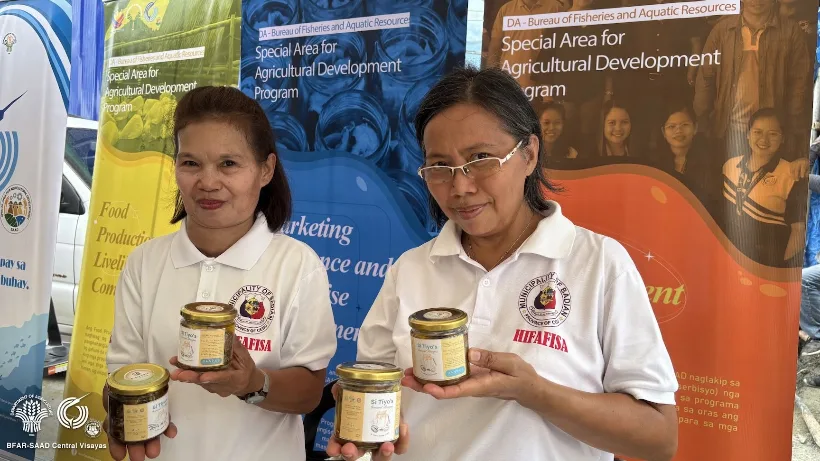
HIFAFISA, GIFA, and MAMSA developed different processed fish products after receiving fish processing and product development training through the SAAD Phase II Program. Their products included bottled bangus or milkfish, bottled bulan-bulan or tarpon, tilapia tempura, tilapia sausage, and tilapia balls. By processing their catch into ready-to-sell products, the fisherfolk groups explored additional sources of income while making better use of their harvest.
Meanwhile, TASFA and SNFA supplied freshly harvested blue swimming crab and tilapia to the market.
Fisherfolk Gained Access to More Buyers
BFAR-7 helped the fisherfolk associations connect with consumers through Kadiwa ng Pangulo market days. The market activities allowed the groups to sell their products directly to consumers, reducing their dependence on traders and giving them opportunities to reach more buyers.
One of the participating groups, HIFAFISA, sold its bottled bangus products during a Kadiwa ng Pangulo market day in Cebu City.
BFAR-7 Invested in Fisheries Infrastructure
Aside from training and market support, BFAR-7 also invested in fisheries infrastructure to help improve production and reduce losses. BFAR-7 Regional Director Mario N. Ruinata said the agency supported projects such as hatcheries, climate-resilient fish cages, fishponds, and post-harvest facilities. These projects were intended to increase fish production, improve the fisheries value chain, and minimize losses after harvest.
Building a Stronger Fisheries Sector
Ruinata said the fisheries sector continued to face challenges caused by climate change and the degradation of natural resources. He emphasized that the success of fisheries programs depended on cooperation among government agencies, fisherfolk groups, and other partners.
The support provided to fisherfolk associations in Cebu and Bohol demonstrated how training, infrastructure, and market opportunities helped local fishing communities develop new income sources. Through the SAAD Phase II Program, fisherfolk gained opportunities to transform their catch into higher-value products while contributing to a stronger and more sustainable fisheries industry in Central Visayas.
