Taking Precautions Against Extreme Heat
BACOLOD - A reported heat index of 41°C falls within PAGASA's Extreme Caution category, where heat-related discomfort and illnesses become a greater concern, especially during prolonged outdoor exposure. Residents should drink enough water throughout the day, wear lightweight clothing, and reduce strenuous activities during the hottest hours. Those who work outdoors can take regular breaks in shaded or cooler areas. Families should also pay attention to children, older adults, and people who may have difficulty recognizing or communicating signs of heat exhaustion.
Recognizing Signs of Heat-Related Illness
Knowing the warning signs of heat-related illness can help residents respond before a condition becomes serious. Heavy sweating, muscle cramps, weakness, dizziness, headache, and nausea may indicate heat exhaustion. Moving the affected person to a cooler place, loosening unnecessary clothing, and providing cool water if they are fully conscious can help while arranging medical assistance. Confusion, fainting, seizures, or very high body temperature may indicate heat stroke, which is a medical emergency requiring immediate attention. Residents should not wait for symptoms to worsen before seeking help.
Preparing for Sudden Rain and Thunderstorms
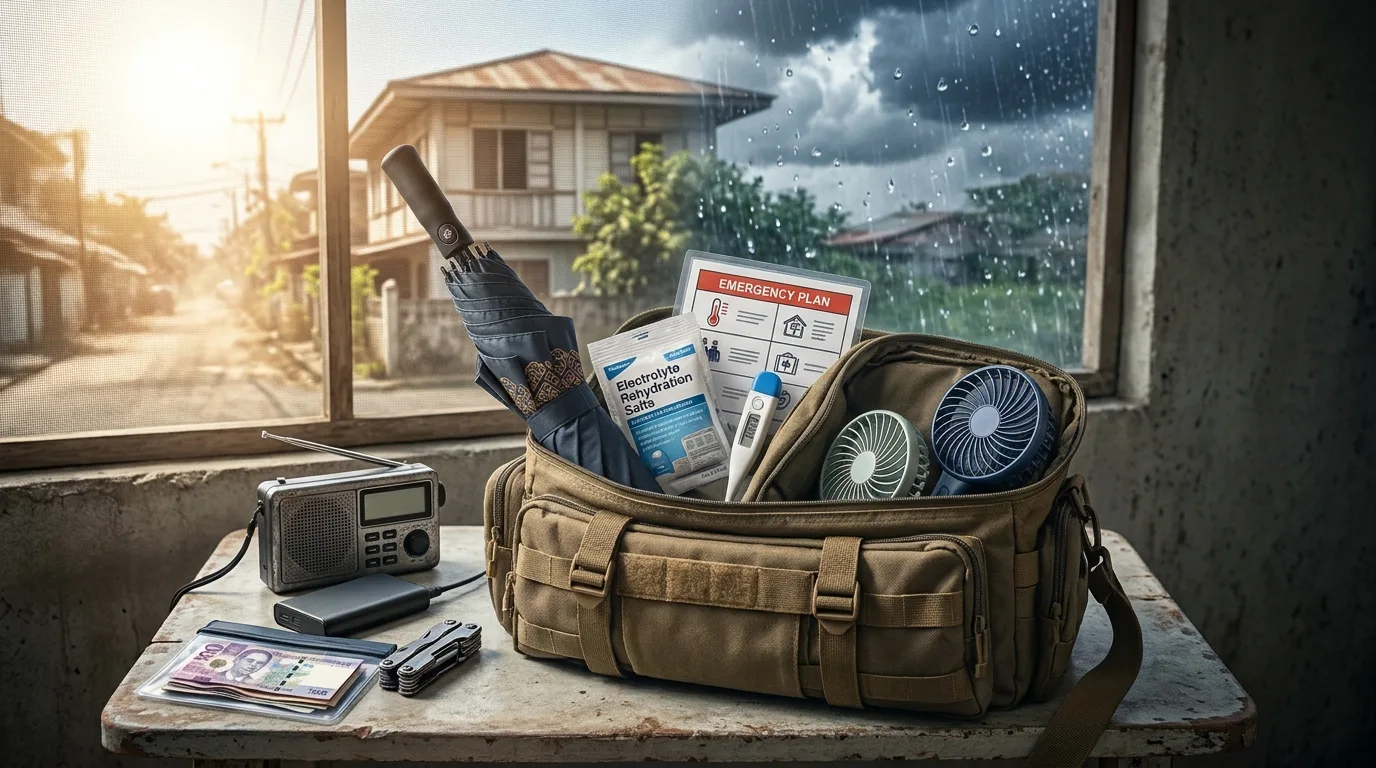
Possible thunderstorms call for additional precautions, particularly for people traveling or working outdoors. Residents should monitor official weather bulletins, bring rain protection when necessary, and avoid flooded roads and waterways. When thunder is heard, people should move indoors to a substantial building or enclosed vehicle and stay away from open spaces, isolated trees, and exposed structures. Households can also secure loose outdoor objects and keep emergency supplies accessible. For urgent assistance, residents may contact the national emergency hotline at 911.