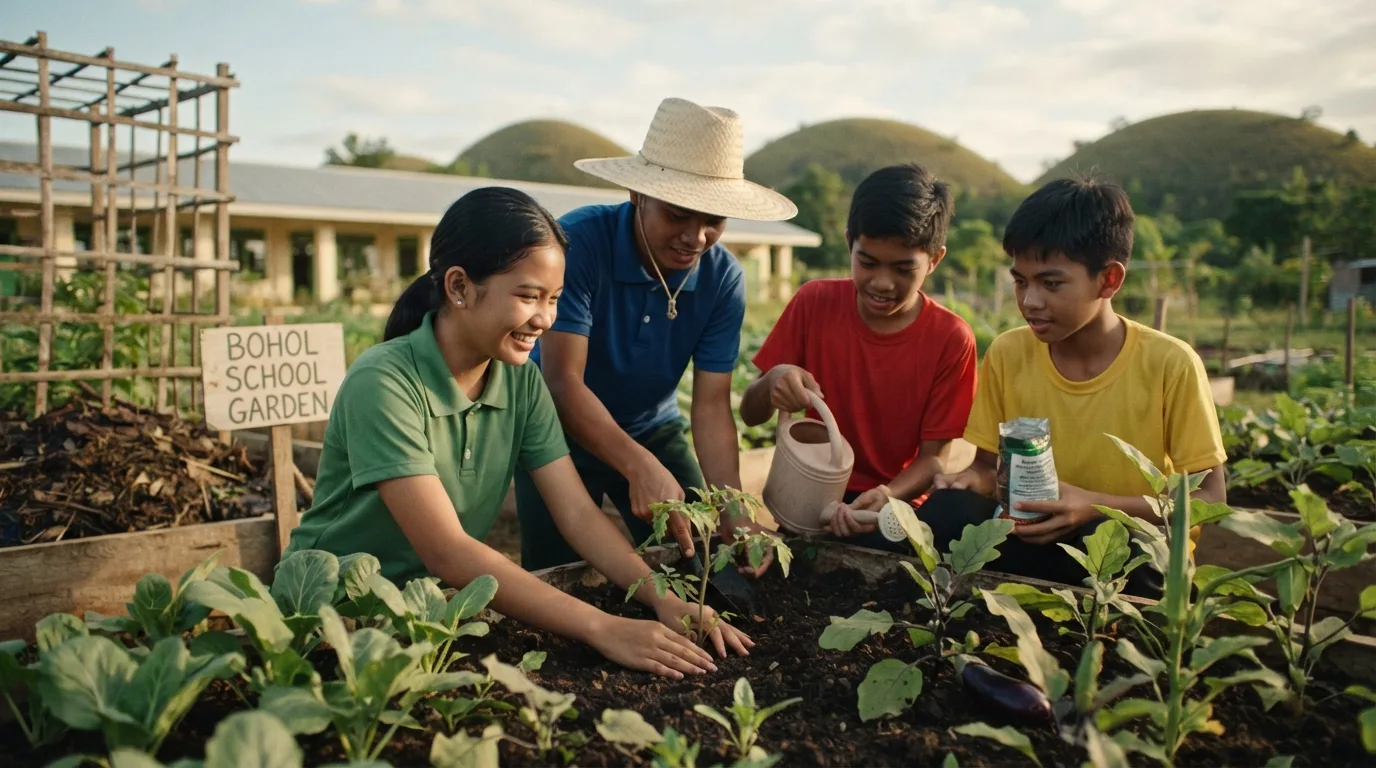
Turning Classroom Lessons Into Practical Experiences
BOHOL - A school garden allows students to observe the stages of plant growth instead of learning about them only through books and illustrations. Teachers can guide learners in preparing soil, planting seeds, watering crops, removing weeds, and monitoring changes as plants develop. These activities introduce basic agricultural concepts such as germination, plant nutrition, sunlight requirements, soil health, and pest management. Students can also compare different growing methods, record plant growth, and use their observations in science, mathematics, and environmental studies. Through regular participation, they gain practical knowledge while understanding that growing food requires patience, careful attention, and consistent effort.
Building Appreciation for Food and Local Farming
School gardens can help children understand where their food comes from and why farmers play an important role in communities. Growing vegetables such as pechay, eggplant, tomatoes, okra, and other crops suited to the local climate can introduce students to familiar agricultural products. Teachers can discuss the importance of healthy soil, sufficient water, proper planting schedules, and responsible harvesting while students care for their crops. Schools may also invite local farmers or agricultural technicians to demonstrate planting techniques, explain common crop challenges, and share practical farming knowledge. These interactions can strengthen students’ appreciation for agriculture and help them recognize farming as an important livelihood and a possible future career.
Encouraging Teamwork and Environmental Responsibility
Maintaining a school garden gives students shared responsibilities that encourage cooperation, discipline, and respect for their surroundings. Classes can organize gardening schedules, assign tasks, and work together to maintain planting areas without placing the entire responsibility on a few learners. Gardens can also demonstrate environmentally responsible practices such as composting suitable biodegradable materials, conserving water, reusing safe containers, and avoiding unnecessary chemical use. Schools should provide appropriate tools, safe working conditions, teacher supervision, and a realistic maintenance plan to keep gardening activities manageable throughout the academic year. With support from families, barangays, agricultural offices, and community volunteers, school gardens can become lasting learning spaces that encourage students to value food production, environmental care, and the people who help feed their communities.