


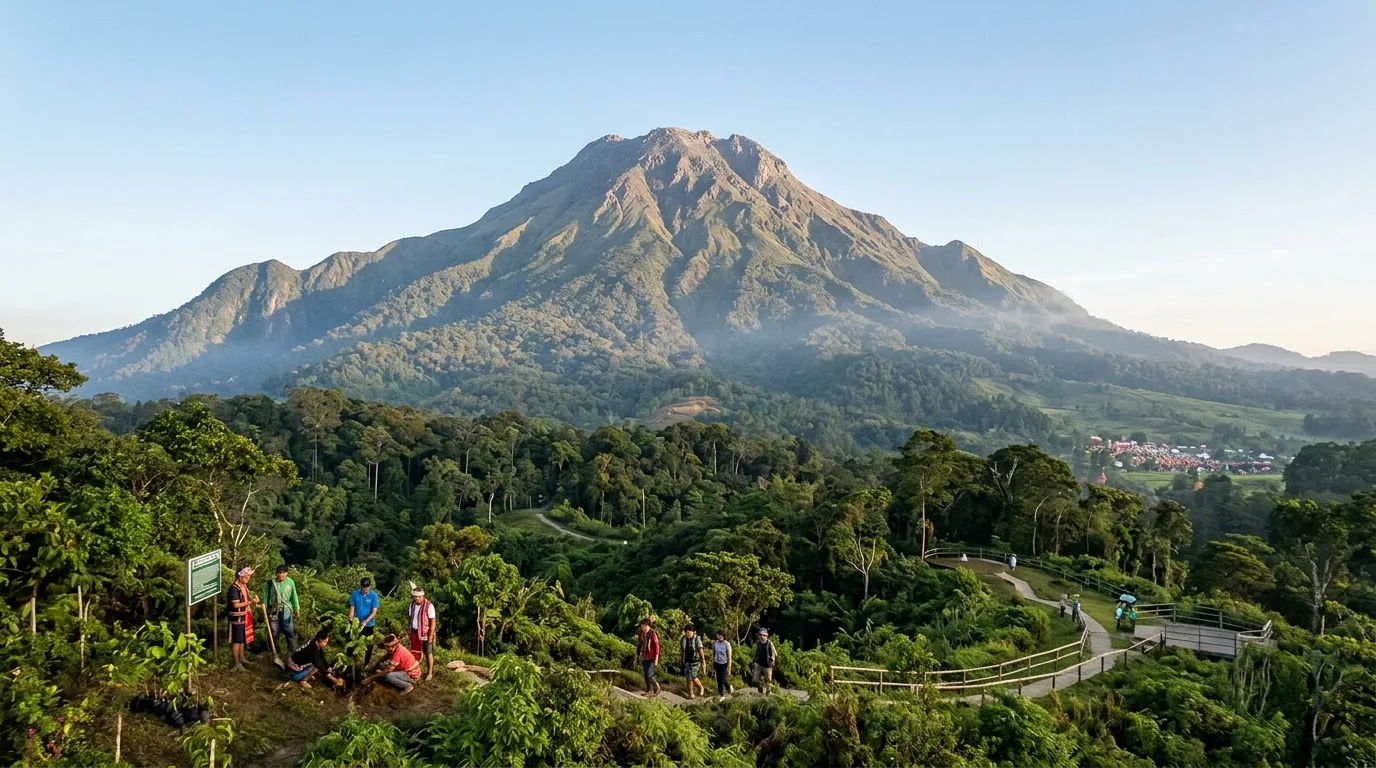
Davao — The dream of securing international recognition for the Philippines’ highest peak is heating up as Mt. Apo Natural Park (MANP) gears up for its formal UNESCO Global Geopark validation mission. With the mission scheduled for August 16–21, 2026—conveniently aligning with Davao’s vibrant Kadayawan Festival—the Department of Environment and Natural Resources (DENR) is expressing strong optimism that the country’s premier biodiversity hotspot will soon join the prestigious UNESCO network. If successful, this designation would not only cement Mt. Apo’s status as a site of international geological significance but also catalyze improved conservation efforts, community-led protection, and sustainable tourism for the entire Mindanao region.
A Multidisciplinary Path to Recognition
The bid for UNESCO Global Geopark status is a rigorous, multi-year process that evaluates more than just a mountain’s physical beauty; it looks at how a region manages its geological assets through holistic protection, education, and community engagement. Protected Area Superintendent Clint Michael Cleofe confirmed that a two-member international evaluation team—comprising specialists from France and China—will conduct on-site inspections to assess how MANP balances tourism with the preservation of its indigenous cultural heritage. UNESCO places immense weight on the sacred relationship between the mountain and the Indigenous Peoples (IPs) who call it home, and the validation mission will closely examine how these communities are integrated into the park’s stewardship. The preparation process has been exhaustive, involving close collaboration between DENR regional offices in Davao (Region XI) and Soccsksargen (Region XII), as the park spans multiple cities and municipalities.
Biodiversity Boost: Rare Discoveries Strengthen the Bid
Bolstering the park’s application is a recent string of scientific breakthroughs that have reignited interest in Mt. Apo’s ecological importance. In July 2026, researchers rediscovered Ophiorrhiza biflora, a tiny Philippine endemic flowering plant that had not been documented in the area for 122 years. This remarkable find, coupled with the 2025 rediscovery of the rare Agalmyla calelanensis, serves as living proof of the forest’s enduring health and underscores the importance of the ongoing biodiversity monitoring programs mandated by the park’s management. These scientific milestones have provided the DENR with powerful evidence to present to the UNESCO evaluators, highlighting Mt. Apo not just as a landmark, but as a thriving, scientifically vital ecosystem that warrants global protection.
Building a Resilient Future for the Highest Peak
Should the evaluation be successful, Mt. Apo would become the second UNESCO Global Geopark in the Philippines, following the Bohol Island UNESCO Global Geopark. Local government units surrounding the mountain, including Davao City, Digos City, and the Municipality of Sta. Cruz, have already passed ordinances declaring Mt. Apo a "geological monument," signaling a unified political front in support of the bid. This recognition is expected to unlock new avenues for funding, research grants, and technical assistance, all of which will be instrumental in addressing long-standing environmental challenges like illegal logging and encroachment. By positioning Mt. Apo within the UNESCO network, the nation is setting a clear trajectory for sustainable development, ensuring that the legacy of the country’s highest peak remains intact for future generations.
