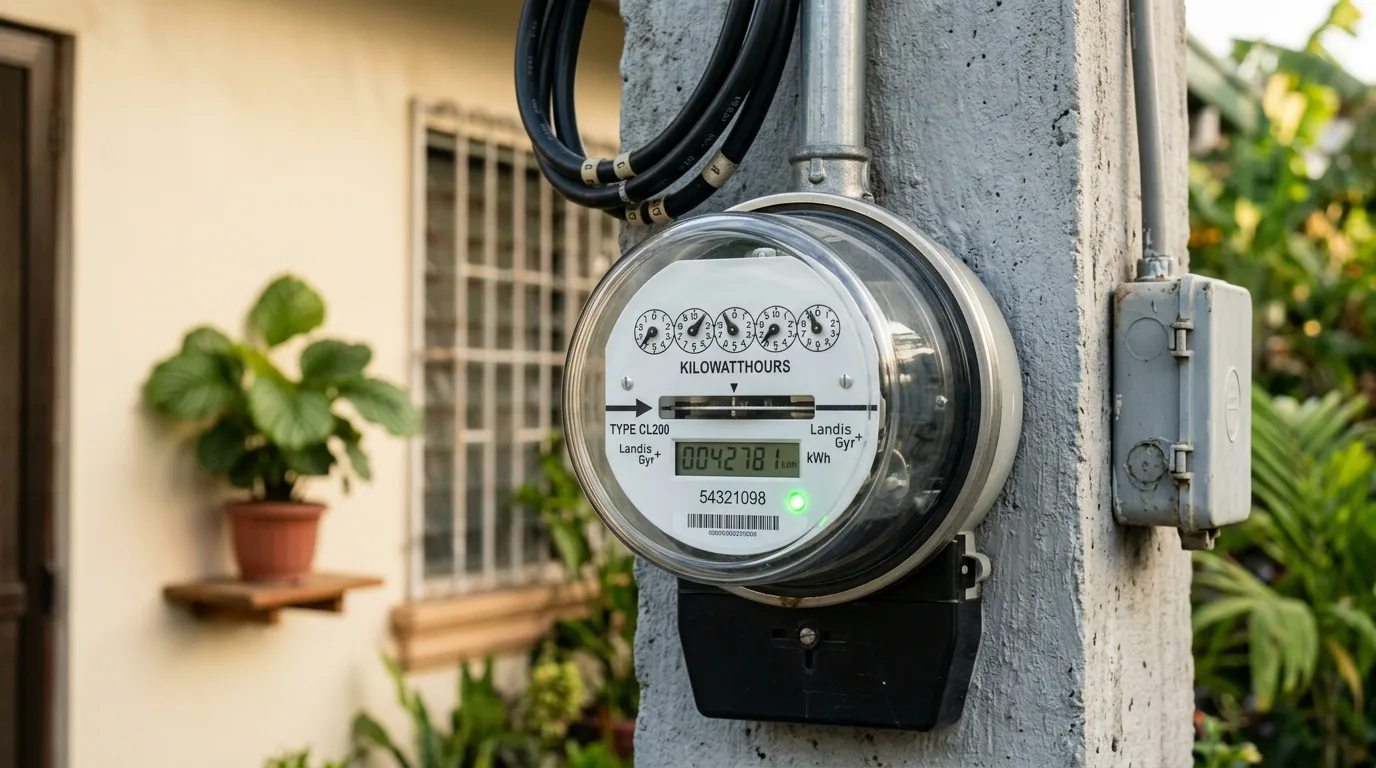
DAVAO — The Bureau of Internal Revenue has removed the 12-percent value-added tax on the allowable system loss charge in electricity bills, a move that will directly reduce monthly power costs for consumers across Davao Region. The directive, issued through Revenue Memorandum Circular No. 97-2026, takes effect immediately.
A Directive for Practical Relief
The circular formally recognizes the allowable system loss charge within the Energy Regulatory Commission's approved cap as a government-mandated pass-through cost. This means the charge is excluded from the gross sales of generation companies, the National Grid Corporation of the Philippines, and distribution utilities for VAT purposes.
BIR Commissioner Charlito Martin R. Mendoza said the measure fulfills the agency's commitment to act once the regulatory framework was finalized. He emphasized that the initiative aligns with President Ferdinand Marcos Jr.'s directive to pursue measures that provide tangible benefits to consumers under existing laws.
What This Means for Davao Consumers
For residents served by Davao Light and Power Company and regional electric cooperatives such as NORDECO and DASURECO, the practical effect is straightforward: VAT will no longer be imposed on the allowable system loss portion of the electricity bill. This translates to a lower total amount passed on to households, commercial establishments, and industrial consumers.
The system loss charge itself remains billed, as it represents electricity lost during transmission and distribution that utilities must recover. However, the 12-percent tax on that specific charge has been eliminated, providing proportional relief based on individual consumption levels.
Implementation and Billing Adjustments
Distribution utilities have been directed to separately identify the allowable system loss charge on all billing statements, invoices, or equivalent documents to qualify for the VAT exclusion. Power sector participants have 60 days from the effectivity of the ERC resolution to adjust their billing formats and reflect the system loss charge as a government-mandated charge not subject to VAT.
Consumers can expect to see the system loss charge as a separate line item in their electricity bills as late as mid-November. The VAT treatment will apply prospectively to billings and transactions occurring after the resolution takes effect, rather than retroactively to past charges.
A Step Toward Broader Reforms
The BIR circular builds on earlier actions clarifying VAT exclusions for other government-mandated charges such as the Lifeline Subsidy and the Green Energy Auction Allowance. Mendoza stressed that while administrative tax adjustments alone cannot solve overall energy costs, the agency will continue using its authority to reduce household expenses wherever the law permits.
The Department of Energy earlier estimated that removing VAT on system loss charges may lower power costs for consumers by about 5 to 10 percent. The ERC noted that system losses cost approximately ₱50 billion annually, and removing VAT from the charge could save consumers up to ₱6 billion a year.