


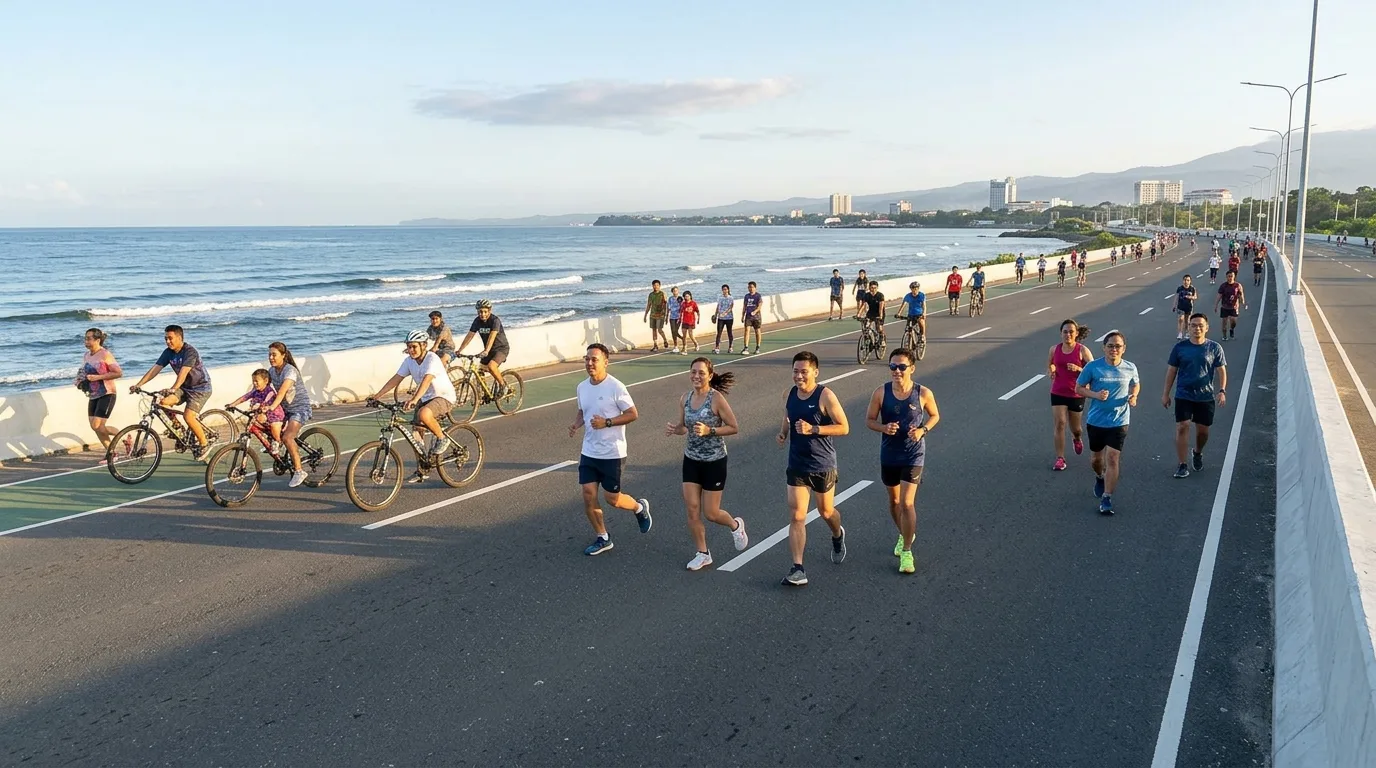
Davao — The City Government of Davao, through the Sports Development Office (SDD), has officially expanded its weekly Car-Free Sunday initiative to include the scenic route stretching from the Roxas portion of the Coastal Road down to Bago Coastal Road. Taking effect on July 26, 2026, the expanded highway closure operates every Sunday from 4:00 a.m. to 8:00 a.m. to provide a wider, more secure environment for wellness and recreational activities. This milestone follows the completion of vital construction works by the Department of Public Works and Highways (DPWH) and a comprehensive safety assessment by local municipal authorities.
Providing Secure Open Spaces for Fitness Enthusiasts
The newly widened route welcomes a diverse community of runners, joggers, walkers, and cyclists, transforming a major thoroughfare into an inclusive public recreation zone. SDD Head Michael Denton P. Aportadera highlighted that opening this extensive section gives residents greater freedom and accessibility to engage in healthy outdoor exercises without vehicular hazards. With motorized traffic completely suspended during the designated morning window, participants can safely enjoy the refreshing coastal breeze and scenic views along the highway.
Enforcing Guidelines and Promoting Responsible Road Sharing
To ensure a harmonious experience for everyone, city officials have strongly urged all participants to observe proper lane discipline, exercise mutual courtesy, and strictly avoid reckless racing or unsafe stunts. Attendees are also reminded to follow instructions from traffic marshals on duty and maintain the cleanliness of the coastal area at all times. Fostering this culture of shared responsibility ensures that the weekly program remains a safe, orderly, and enjoyable environment for families, athletes, and casual visitors alike.
Championing Active Lifestyles and Sustainable Urban Mobility
The successful expansion of the Car-Free Sunday program underscores Davao City's ongoing commitment to promoting active lifestyles, improving public health, and reducing urban carbon emissions. By transforming major infrastructure corridors into pedestrian-friendly zones on weekends, the local government continues to champion sustainable urban mobility and community-centric public spaces. As hundreds of residents gather weekly to embrace fitness and recreation, the initiative stands as a shining model for progressive, health-oriented city planning across the region.
