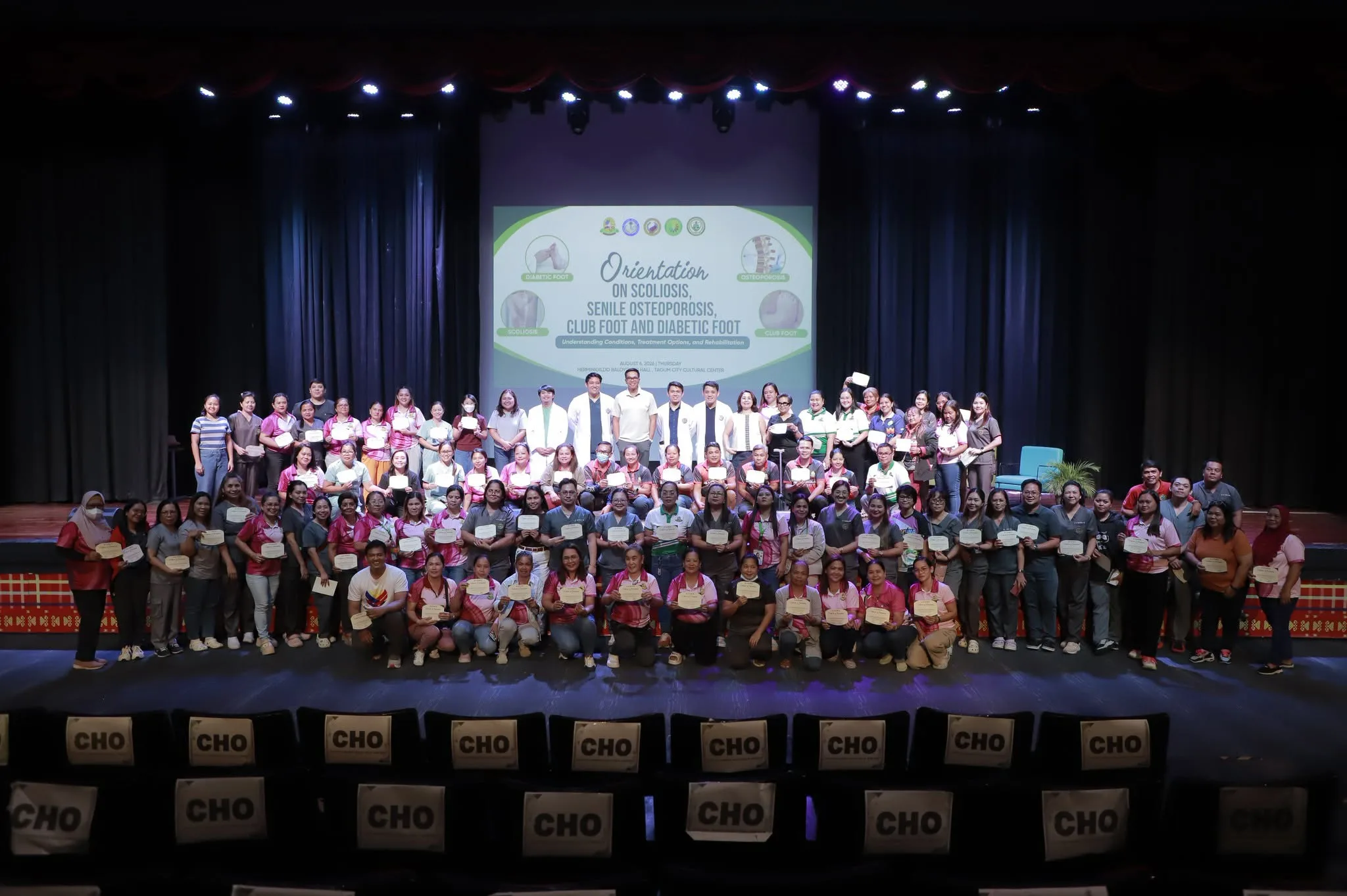
TAGUM CITY, Davao del Norte – Frontline health workers from across Tagum City gathered at the Herminigildo Baloyo, MD Hall on August 6, 2026 for a specialized orientation on four orthopedic and chronic conditions that affect many residents. The training aimed to arm them with the knowledge to detect problems early and guide patients toward proper care.
A Training Built on Partnerships
The City Health Office spearheaded the event, drawing participants from the Diocese of Tagum health volunteers, the City Mayor’s Office Community Nursing Assistance team, and social welfare personnel handling senior citizen and PWD sectors. Medical experts from the Davao Regional Medical Center shared their clinical experience, bridging the gap between hospitals and barangay clinics.
City Councilor Wes Caasi, vice-chairperson of the Committee on Health, attended the session to demonstrate the city government’s full support for continuous learning among health personnel. He noted that well-trained community workers are the first line of defense against diseases that often go undetected. The Tagum City Council of Women Foundation also backed the initiative, with a representative reading a message from its president.
Conditions That Affect Every Generation
The orientation covered four conditions that span a lifetime. Scoliosis, an abnormal curvature of the spine, usually appears during adolescent growth spurts and can cause chronic pain if missed. Senile osteoporosis silently weakens elderly bones until a minor fall results in a fracture. Clubfoot, a birth defect where a baby’s foot turns inward, is highly treatable when caught early.
Diabetic foot complications were also discussed, a pressing concern given the rising number of diabetes cases. Nerve damage can cause loss of sensation, allowing small cuts to become serious infections. Health workers learned practical foot inspection techniques that can prevent amputations. The training emphasized that each of these conditions has a window of opportunity for effective intervention.
Early Detection Saves Lives
Spotting a curved spine in a schoolchild or a healing wound on a diabetic patient starts with informed health workers. The orientation gave participants the tools to recognize warning signs and refer patients to the right specialists. The partnership with the Davao Regional Medical Center ensures a clear referral pathway for complex cases requiring surgery or advanced rehabilitation.
The sessions also covered non-surgical treatments, such as the Ponseti method for clubfoot and physical therapy for scoliosis. Seniors can benefit from fall prevention programs and calcium-rich diets that slow bone loss. By equipping community health teams, the city builds a safety net that catches these conditions before they lead to permanent disability.
A Healthier Tagum Through Knowledge
The event underscored the city’s commitment to preventive healthcare, moving beyond treating sickness to actively searching for early signs. Mayor Rey Uy’s administration has consistently invested in health personnel training, recognizing that empowered workers lead to healthier families. The collaboration between government, hospitals, foundations, and faith-based organizations showcased a united front against disease.
Community members can also do their part by visiting their local health centers for regular check-ups. Parents should observe their children’s posture, and families with elderly members should watch for signs of bone weakness. Together, trained health workers and informed residents can create a stronger, more resilient Tagum.