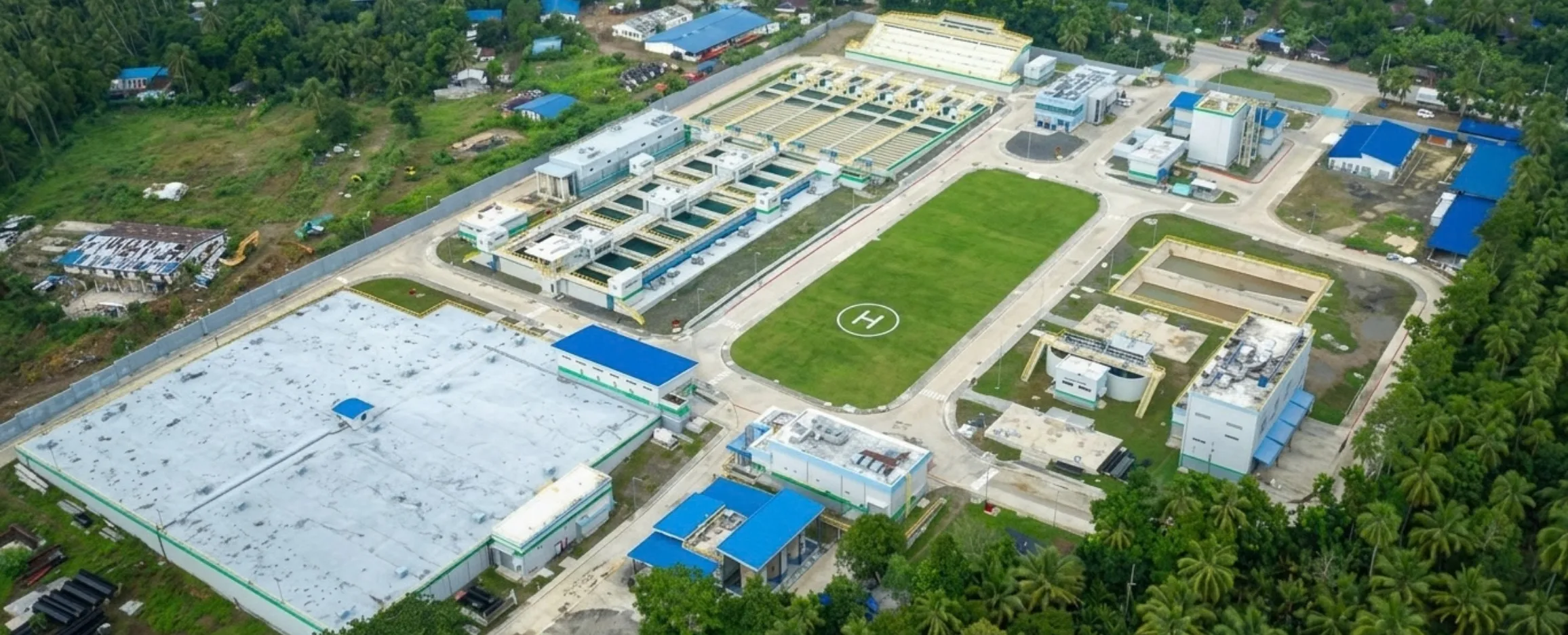
DAVAO CITY — The ₱13.3 billion Davao City Bulk Water Supply Project is currently facing its first major climate test as El Niño conditions intensify across Mindanao. This massive infrastructure, a public-private partnership between the Davao City Water District and Apo Agua Infrastructura, Inc., remains a cornerstone of local economic resilience.
A Southeast Asian First in Water-Energy Nexus
As the largest private bulk water facility in the country, the project serves over one million residents. It operates through a 300 million liters per day treatment plant and an extensive 70-kilometer pipeline network. This robust system ensures a steady water supply for the city's growing industrial and commercial sectors.
Notably, it is the first in Southeast Asia to implement an advanced water-energy nexus system. Water from the Panigan-Tamugan River flows through a 2-megawatt hydropower plant, generating electricity to power the facility. This innovative design allows the plant to operate entirely independently of the commercial power grid.
Mitigating the Impact of El Niño
However, the state weather bureau PAGASA warned that strong El Niño conditions could persist until the first half of 2027. Following below-normal rainfall, declining river flows recently pushed the facility's output down to between 260 and 270 million liters daily before recovering.
Cosette Canilao, president of Apo Agua's parent company Aboitiz InfraCapital, confirmed the company is actively seeking alternative water sources to mitigate the impact. Simultaneously, the DCWD is preparing reserve wells to ensure uninterrupted service to consumers and prevent any economic disruptions.
Conjunctive Use Ensures Economic Stability
Despite these environmental pressures, the city is better positioned than ever before. As of May 2026, DCWD produces approximately 728 million liters daily, while consumers utilize only about 52 percent of this total capacity. This significant surplus highlights the system's robust capacity and reliability.
The utility credits its strategic shift to a conjunctive use approach. By drawing 52 percent from groundwater and 48 percent from the bulk water project, the city keeps its groundwater in reserve. This balanced approach allows the local aquifers to naturally recharge during prolonged dry periods.
Call for Conservation and Preparedness
Relief is expected with the upcoming wet season, as historical data shows river flow recovers from November to March. In the meantime, the DCWD encourages residents to store water in clean containers and immediately report any supply concerns or pipeline leaks to local authorities.
This strategic infrastructure investment protects Davao City's water security while supporting its continuous economic expansion. By integrating sustainable water management with advanced energy technology, the city establishes a resilient framework capable of withstanding severe climate disruptions and ensuring long-term business stability.