


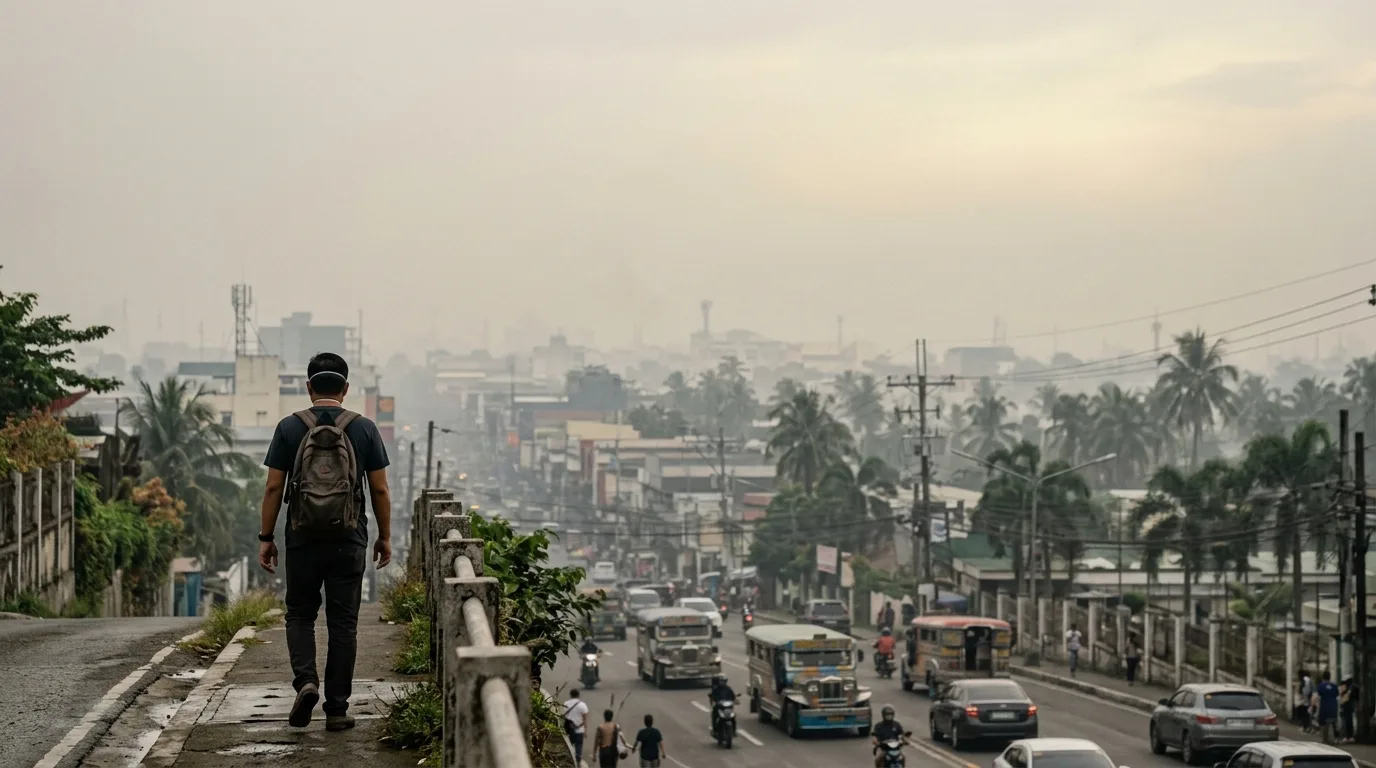
DAVAO — Air quality in Davao City is under close monitoring as transboundary haze from Indonesian wildfires shifts toward the southern Philippines. The Department of Environment and Natural Resources has flagged Calinan in Davao City as experiencing unhealthy air quality for sensitive groups.
A Shifting Environmental Challenge
The DENR-Environmental Management Bureau has observed a shift in haze movement from Luzon toward central and southern Philippines. The southwest monsoon, or habagat, continues to carry fine particulate matter from forest fires in Kalimantan, Indonesia. This has led to elevated PM2.5 levels in several areas, including Davao City.
Calinan in Davao City has been categorized as "unhealthy for sensitive groups." This classification indicates that individuals with respiratory conditions, such as asthma, should limit prolonged outdoor activity. The DENR advises the public to minimize outdoor exposure in areas visibly affected by haze.
Health Precautions for Davaoeños
People sensitive to air pollution are urged to take necessary precautions. Wearing N95 masks can prevent inhalation of very fine particles. For those with existing respiratory or cardiovascular conditions, staying indoors is strongly recommended.
The Department of Health reminds the public to seek medical attention for severe symptoms. These include persistent difficulty breathing, chest pain, and prolonged coughing. Children, the elderly, and pregnant women should also limit outdoor exposure.
Understanding the Haze Phenomenon
PM2.5 refers to fine particles that can be inhaled deep into the respiratory system. Once inhaled, they may enter the bloodstream and pose health risks. These particles originate from smoke, dust, and pollution, and can travel long distances through wind patterns.
Haze differs from fog, which is composed of tiny water droplets. Haze appears as a gray or blurry layer in the sky. It is caused by the accumulation of tiny particles from various sources, including forest fires and vehicle emissions.
Monitoring and Staying Informed
Air quality is dynamic and constantly changing. It depends on the source of pollution and meteorological conditions. Rain brought by the southwest monsoon may help remove fine particles from the air.
The DENR urges the public to monitor air quality updates from official pages. Local government units are also providing advisories as conditions evolve. Staying informed is crucial for making safe decisions for oneself and one's family.
A Community That Cares
Davao City is taking a proactive approach to the haze situation. Authorities are closely monitoring air quality and providing timely updates. Residents are encouraged to look out for vulnerable neighbors and family members.
The situation is temporary, but it calls for collective responsibility. By following health advisories, Davaoeños can minimize health risks. The community's resilience and care for one another will help everyone navigate this challenge safely.
