


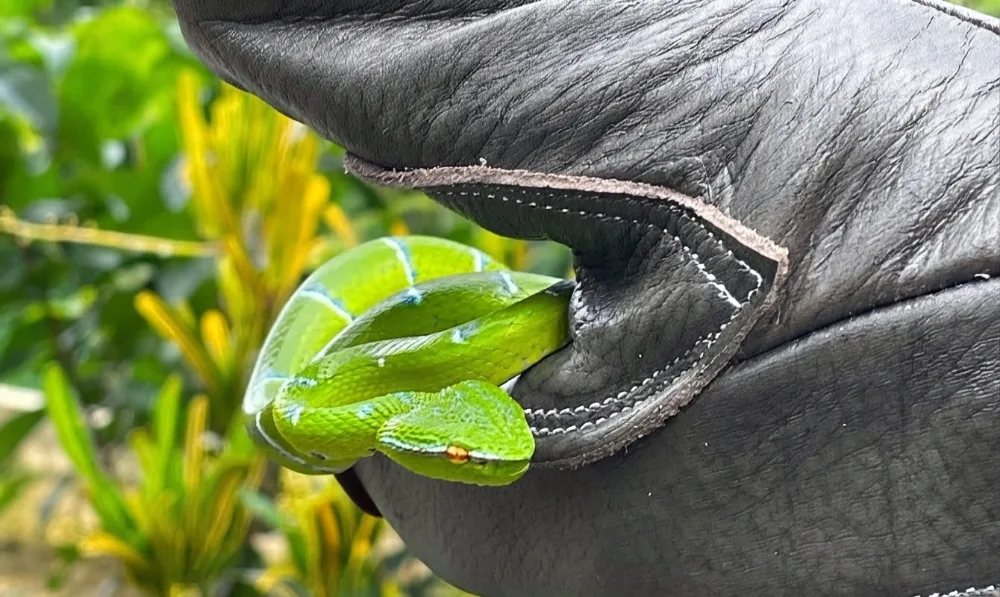
Bohol — Suburban wildlife encounters took a dramatic turn in Bohol when a juvenile Northern Philippine Temple Pit Viper (Tropidolaemus subannulatus) was safely captured after slithering onto a residential guava tree in Barangay Angilan, Duero. The alarming discovery unfolded mere moments away from where a local child had been actively playing, prompting immediate panic before emergency responders stepped in. Fortunately, swift intervention ensured that no one was harmed during the tense encounter, highlighting the vital importance of community vigilance and rapid response protocols.
Swift Multi-Agency Response Averts Potential Disaster
Responding urgently to distress reports from anxious residents, operatives from DENR-CENRO Tagbilaran City teamed up with the Municipal Disaster Risk Reduction and Management Office (MDRRMO) of Duero to secure the area. Trained responders expertly captured the striking reptile without causing it any harm, strictly adhering to professional animal-handling protocols. Under the direct supervision of Department of Environment and Natural Resources personnel, the juvenile pit viper was transported away from populated zones and safely released back into its natural forest habitat within the Rajah Sikatuna Protected Landscape on July 23, 2026.
Vital Reminders on Human-Wildlife Coexistence
Environmental officials stressed that such close calls serve as an urgent reminder that native fauna inherently belong in the wild rather than residential backyards. When confronted with venomous species—such as the highly reactive temple pit viper—unprepared citizens must never attempt to capture, corner, or harm the animal. Instead, residents are strongly advised to immediately contact local emergency units like the MDRRMO, CDRRMO, or the nearest DENR regional office. This ensures that professional handlers equipped with proper protective gear can safely intervene, assess the animal's health, and execute a secure relocation.
Balancing Biodiversity Protection and Community Safety
Protecting rare and venomous reptiles is a critical component of maintaining the ecological balance within Central Visayas' fragile forest ecosystems. As human settlements continue to expand closer to protected natural reserves, institutional coordination between local government units and environmental protection agencies becomes increasingly indispensable. By fostering a culture of informed respect and rapid hazard reporting, Bohol communities are proving that safeguarding human lives and preserving local biodiversity can go hand in hand.
