


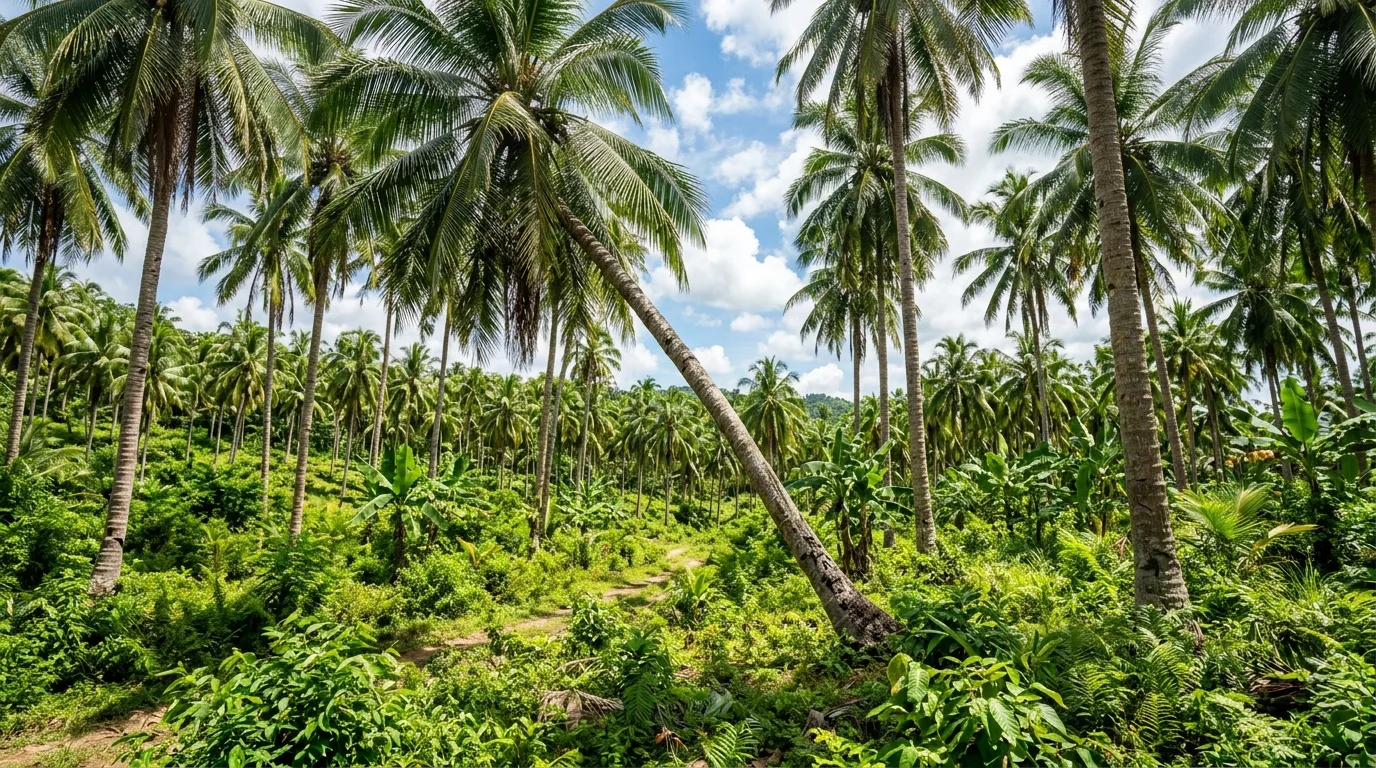
MATI CITY, Davao Oriental — Seedcore Agri-Industrial Corporation has identified Davao Oriental as a prime location for a climate-smart coconut farming initiative, presenting its Integrated Coconut Intercropping Ecosystem to Governor Nelson L. Dayanghirang on July 30. The proposal aims to revitalize the local coconut industry through sustainable farming and stronger market links.
A New Approach to Coconut Farming
Seedcore’s model moves away from traditional single‑crop coconut farming, which leaves smallholders vulnerable to price swings and extreme weather. Instead, the company introduced an intercropping system that plants high‑value crops like cacao and coffee beneath coconut trees, maximizing land use while protecting soil health. This approach generates multiple income streams for farmers from the same plot of land, reducing their dependence on coconut prices alone.
The framework also incorporates climate‑smart practices designed to withstand rising temperatures and unpredictable rainfall. Seedcore General Manager Semil R. Tuason explained that the ecosystem integrates inclusive financing, technology‑enabled traceability, and direct links to processors and export markets. The goal is to create a resilient agricultural system where farmers earn more and produce higher‑quality commodities.
Why Davao Oriental?
Davao Oriental ranks among the top coconut‑producing provinces in the Philippines. Its vast plantations and experienced farming communities provide a strong foundation for scaling up modern agricultural practices. However, many local farmers struggle with aging coconut trees, low yields, and limited access to processing facilities, challenges that Seedcore’s model directly addresses.
Governor Dayanghirang noted the province’s potential to become a model for coconut intercropping in Mindanao. He emphasized that the provincial government welcomes private sector partners who bring innovative solutions to long‑standing agricultural problems. The meeting at the Tourism Mansion highlighted Davao Oriental’s readiness to host transformative projects that uplift rural communities.
Building Stronger Value Chains
Seedcore’s proposal goes beyond farming techniques to tackle the entire supply chain. By connecting farmers directly with processors and international buyers, the model aims to eliminate costly middlemen and ensure fairer prices for producers. Digital traceability tools will track every harvest from farm to export, meeting global standards for quality and sustainability.
The company also plans to help establish local processing facilities that add value to raw coconut products. This shift from exporting raw materials to producing finished goods like coconut oil, milk, and desiccated coconut can significantly increase revenues for the province. The integrated approach promises to create jobs beyond the farm gate, benefiting transport, logistics, and manufacturing sectors.
Government and Private Sector Alignment
Governor Dayanghirang expressed strong support for the initiative, stressing the importance of close coordination between government agencies and private investors. He said that programs with direct community benefits should be prioritized and implemented through transparent partnerships. The provincial government is prepared to facilitate the necessary permits and infrastructure to support the project’s rollout.
Seedcore’s operations manager Corteza C. Moreno said the company is committed to working with local cooperatives and non‑government organizations to ensure farmers receive training and financial literacy support. The collaborative framework is designed to empower communities rather than impose external solutions. Both parties agreed that the next steps involve detailed planning and feasibility assessments.
A Boost for Rural Livelihoods
If fully implemented, the integrated coconut intercropping ecosystem could transform Davao Oriental’s agricultural landscape. Thousands of smallholder families stand to benefit from diversified income streams and access to stable markets. The project also aligns with national goals for food security and climate resilience, positioning the province as a leader in sustainable agri‑business.
