


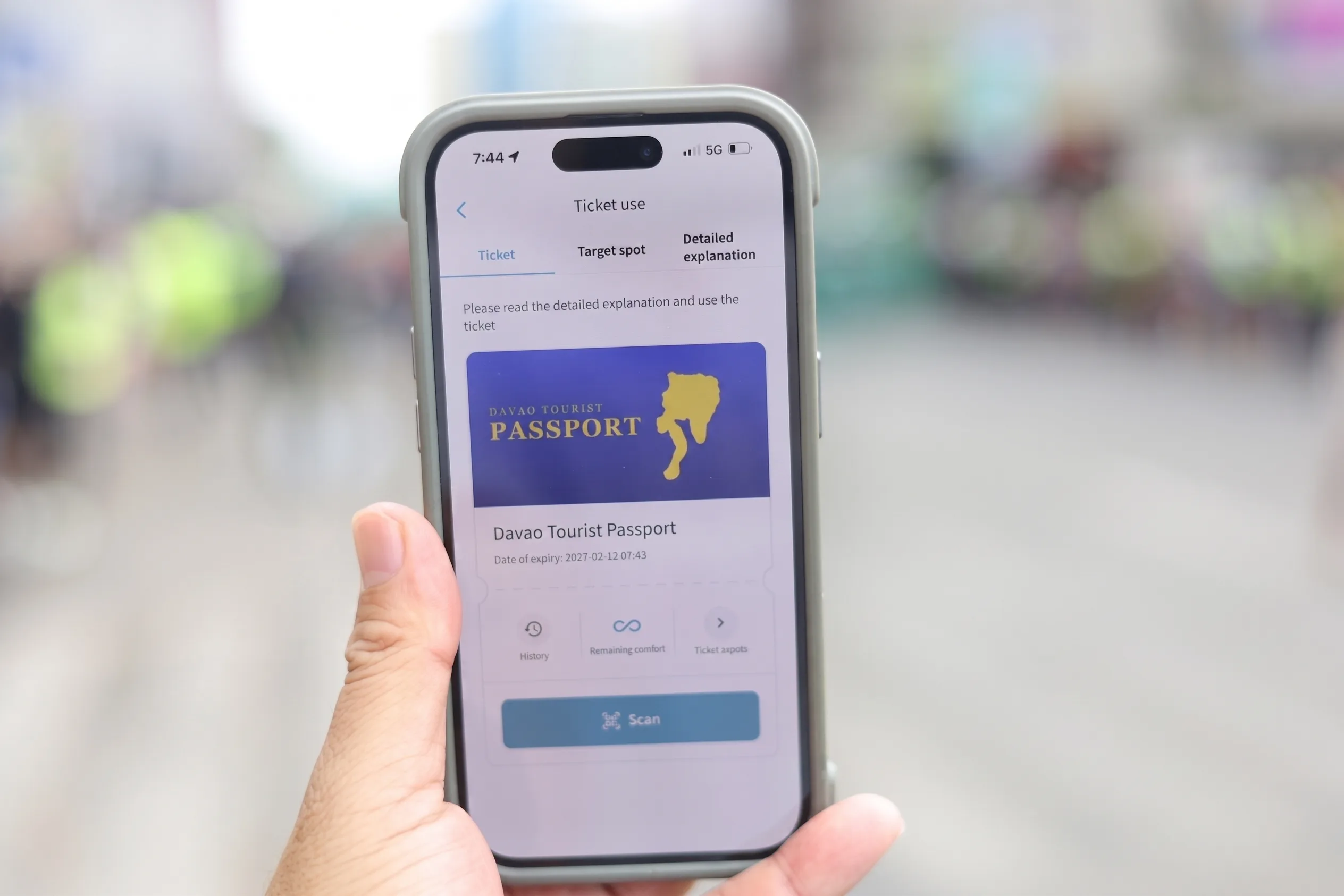
DAVAO CITY — The government of Japan, through its Ministry of Land, Infrastructure, Transportation and Tourism (MLITT), is actively supporting Davao City's bid to become a smart city. The latest initiative under the Smart JAMP program is the Digital Davao Tourist Passport App, designed to enhance the tourist experience while generating valuable data for urban planning.
A Partnership for Smart Urban Development
The Smart JAMP initiative, which began in 2020, aims to help cities across ASEAN address common urban challenges. Davao City has been a key beneficiary, with feasibility studies conducted in 2022 and 2024. These studies explored technologies such as artificial intelligence, GIS database systems, and smart traffic management.
Chiaki Ohya, Director for International Planning for the Construction Industry of the MLITT, emphasized the collaborative nature of the projects. She noted that the initiative utilizes smart city technologies and the expertise of Japanese companies. The goal is to create sustainable solutions that improve the quality of life for Davaoeños.
From Flood Control to Smart Tourism
Previous studies focused on critical infrastructure challenges. These included an Automated Traffic Control System and an AI-based water-level measurement system using existing river CCTVs. Another project aimed to improve flood management using Blitz GIS, a real-time stormwater management system.
The newest project shifts focus to tourism. The Digital Davao Tourist Passport App digitizes the existing tourist passport into a Mobility as a Service (MaaS) platform. The app helps tourists navigate the city, book transportation like taxis and TNVS, and access information about attractions. It is similar to MaaS apps used in Tokyo and other Japanese tourist areas.
Data-Driven Urban Planning
The app is more than just a convenience for tourists. The data collected from its use will be invaluable for traffic management and urban planning. "Visualizing tourist movement can help analyze the necessary public transport routes and frequencies," Ohya explained.
This traffic data can also inform decisions on road layouts and building designs. The insights gained could potentially be integrated into the planning of Davao City's High Priority Bus System. Yasuhiro Yamauchi of Yachiyo Engineering, a partner on the project, noted that tourism is a starting point for broader digital transformation.
A Booming Tourism Sector
Davao City's tourism industry is experiencing significant growth. Based on City Tourism Operations Office figures, the city recorded over one million tourist arrivals in the first half of 2026. This represents an 11% increase from the same period last year, the highest since the pandemic.
The recent Kadayawan Festival further boosted numbers, with 120,000 people participating in street events. City Tourism Operations Office OIC Willenito Tormis indicated plans for a broader tourism campaign in 2027. The focus will be on strengthening sports, arts, culture, halal, and community-based tourism.
A Model for Future Collaboration
The partnership between Japan and Davao City serves as a model for international cooperation in smart city development. It demonstrates how technology and expertise can be shared to address local challenges. The success of the Digital Davao Tourist Passport could pave the way for future projects.
The project proponents are hopeful that the app will gain widespread adoption among tourists. With a growing number of visitors, the app has the potential to become an essential tool. The collaboration underscores the strong ties between the Philippines and Japan in promoting sustainable urban development.
