


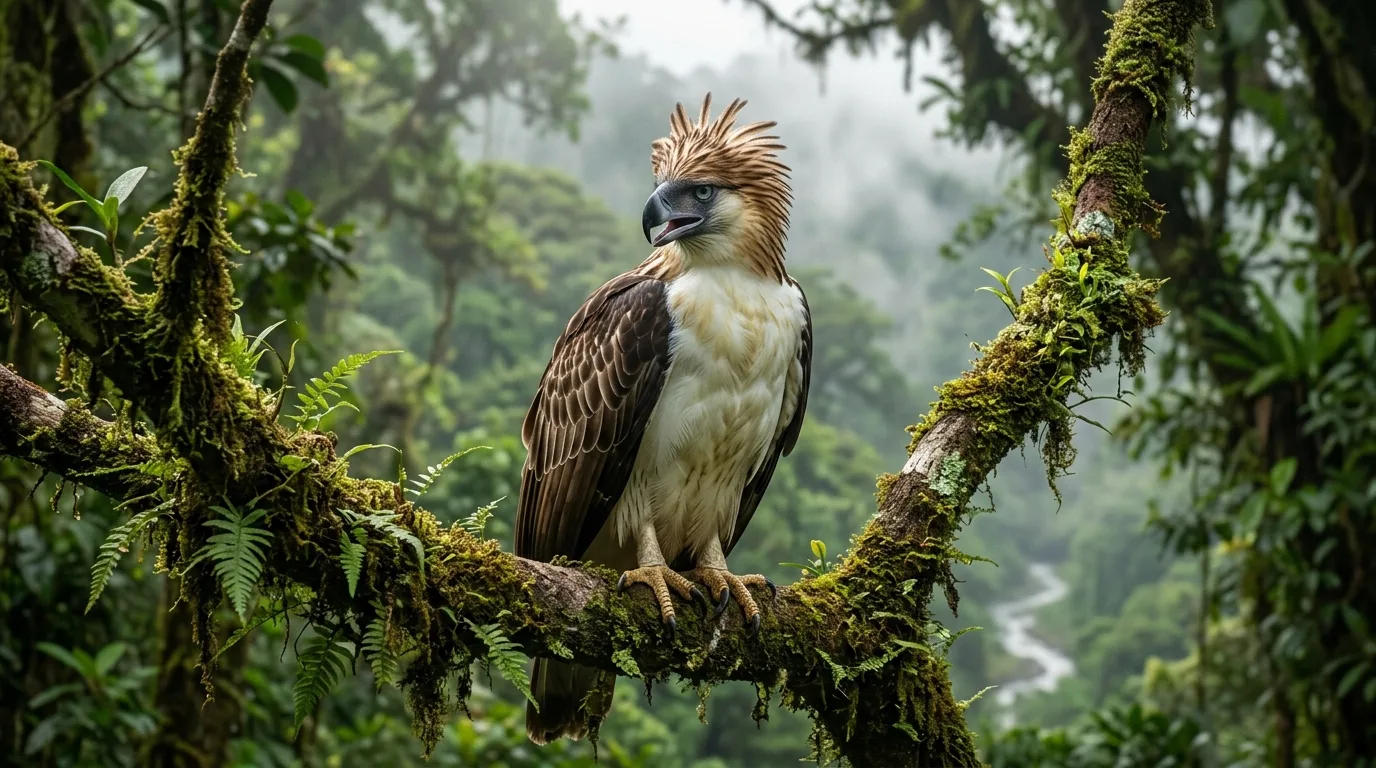
DAVAO CITY — A new conservation initiative launched on September 1, 2026, is bringing together the Department of Environment and Natural Resources Region XI, the Philippine Eagle Foundation, and Indigenous Peoples to protect the country's national bird. The project marks a historic shift toward community-led conservation within ancestral domains.
One Eagle, Many Landscapes
The initiative, known as the 'BD Corridor Project,' operates under the banner "One Eagle. Many Landscapes. Shared Stewardship." It focuses on the Eastern Mindanao Biodiversity Corridor (EMBC), where many of the eagle's nesting sites are located. The program recognizes that protecting the eagle means protecting the forests where it flies.
Environment Secretary Atty. Juan Miguel T. Cuna emphasized the importance of involving IP communities. He noted that a large portion of suitable nesting sites are within Ancestral Domains. The participation of Indigenous leaders ensures the integration of traditional knowledge into conservation efforts.
The Urgent Call to Action
Only 392 pairs of Philippine Eagles remain in the wild across Luzon, Eastern Visayas, and Mindanao. Habitat loss continues to shrink the forests these birds depend on. Avoidable deaths, particularly of young eagles, further threaten the species' survival.
Secretary Cuna stressed that there is no luxury of time. Every forest patch kept intact and every active nest safeguarded matters directly. The program aims to address these threats through coordinated planning and community engagement. The goal is to create lasting protection, not temporary measures.
Indigenous Peoples as True Partners
A core principle of the initiative is recognizing Indigenous communities as rights holders and knowledge holders. The project integrates customary governance with conservation science. Ancestral Domain Sustainable Development and Protection Planning will guide decisions across priority areas.
Datu Rodino Domogoy of the Manobo tribe expressed gratitude for the recognition. He called on all Indigenous communities nationwide to protect wildlife through action, not just words. His appeal highlights the central role IPs play in forest conservation.
Building a Future for Both People and Wildlife
The five-year initiative includes ambitious plans beyond immediate protection. The Philippine Eagle Center will be developed as an eco-cultural tourism destination and conservation academy. Stakeholder consultations will shape educational programs and visitor experiences.
Integration of indigenous knowledge into tourism products will create authentic cultural exchanges. Climate resilience planning ensures the center can withstand environmental changes. The academy will train future conservation leaders.
A Shared Stewardship Model
The collaboration represents a new model for wildlife protection in the Philippines. Government agencies, conservation groups, and Indigenous peoples working together create a stronger foundation. The shared goal is a future where both wildlife and human
communities thrive.
The initiative also aims to discourage hunting practices that unintentionally trap eagles. IP leaders can help educate their communities about the importance of conservation. This grassroots approach ensures that protection efforts are sustainable and culturally appropriate.
