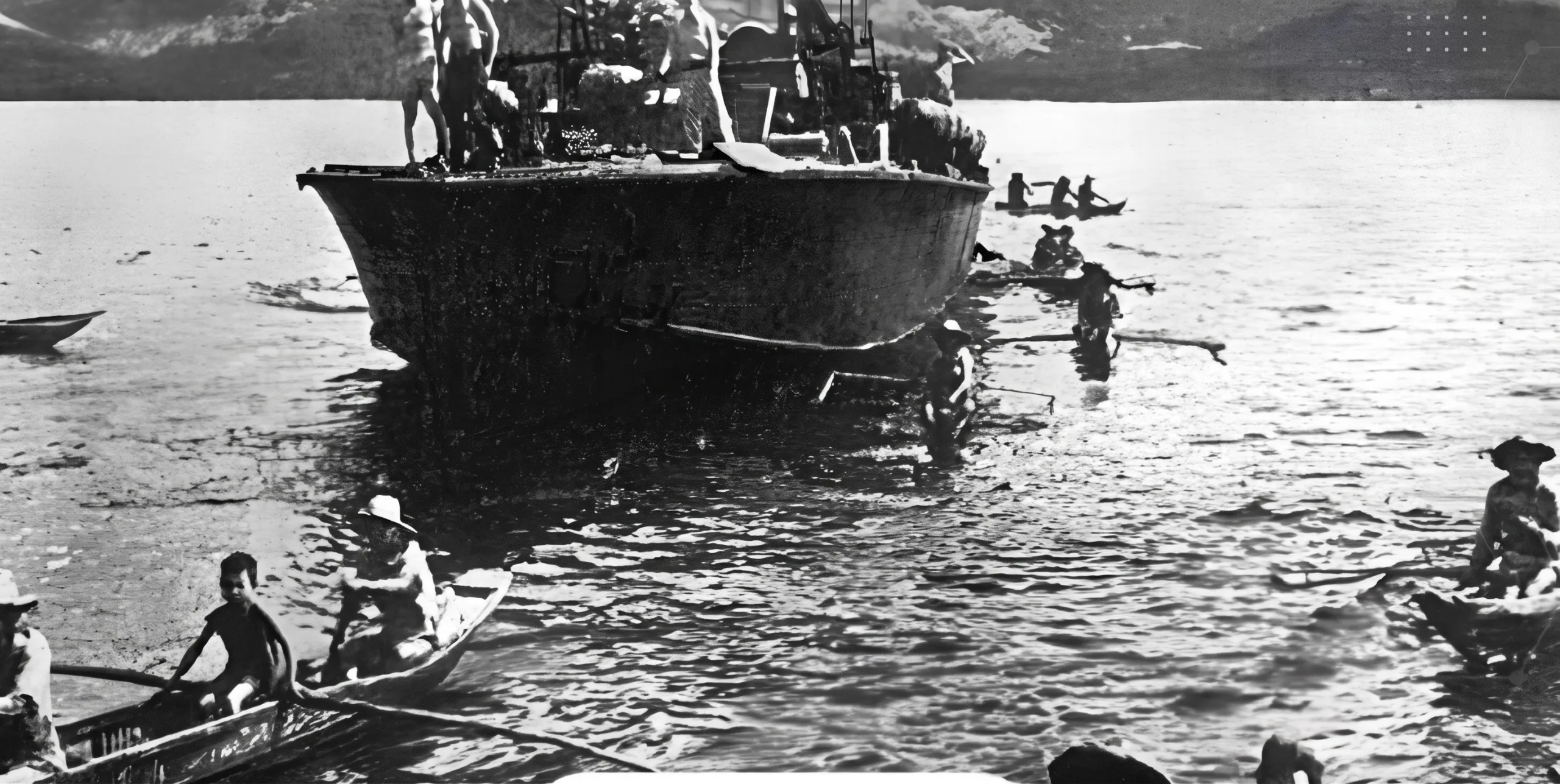
SURIGAO CITY — When the guns fell silent over Surigao Strait on October 25, 1944, the battle was over in hours. The lessons it left behind have endured for 82 years. As Exercise Surigao Sentinel 2026 unfolds from October 22 to 25, the principles that decided the Battle of Surigao Strait: unity, trust, and discipline remain the same principles that define modern territorial defense.
The Night That Decided the Strait
On the night of October 24–25, 1944, the Allied fleet under Rear Admiral Jesse B. Oldendorf confronted the Japanese Southern Force in a decisive engagement that would become one of the most lopsided naval victories of World War II. Oldendorf deployed his battleships, cruisers, and destroyers in a classic "crossing the T" maneuver, positioning his line across the path of the advancing enemy and bringing concentrated broadsides to bear while the Japanese could only reply with forward turrets. The result was the destruction of the Japanese battleship Yamashiro and the sinking of the Fusō, a tactical outcome that has been studied in war colleges ever since.
Unity: Strength Through a Common Purpose
The victory at Surigao Strait was not the product of a single ship or a single commander. It was the result of American and Australian naval forces operating under a shared objective: preventing the Japanese Southern Force from reaching Leyte Gulf. Battleships, cruisers, destroyers, and patrol torpedo boats each performed complementary roles in a coordinated defense, demonstrating that victory depends on the ability of different forces to work toward a common mission. That same logic drives Exercise Surigao Sentinel 2026, which brings together exactly 600 participants from the Philippine Army, Air Force, Navy, and reserve command alongside the Philippine National Police, Bureau of Fire Protection, and Philippine Coast Guard. The exercise tests whether these institutions can function as one system when the stakes are high.
Trust: The Foundation of Cooperation
As Japanese warships approached the strait, Allied patrol units monitored their movements and transmitted crucial information to commanders preparing for the engagement. Reliable communication and mutual confidence enabled forces to act decisively under pressure. That lesson has not faded. Exercise Surigao Sentinel 2026 is designed to test command-and-control procedures, interoperability, and information-sharing among military units and civilian agencies, including local governments, disaster response offices, and medical teams. In a crisis, trust is not a sentiment; it is a system, and the exercise is where that system is stress-tested.
Discipline: The Strength Behind Success
The Allied defense required careful planning, precise coordination, and disciplined execution. Successive torpedo attacks by destroyers weakened the advancing Japanese force before battleships and cruisers delivered the final blow. That discipline, the capacity to execute a plan under fire is the same quality that modern defense demands. Exercise Surigao Sentinel 2026 will test that discipline across multiple domains: live-fire exercises, maritime interdiction, coastal defense, and humanitarian response operations such as water search and rescue and noncombatant evacuation. The technologies have changed, but the requirement for disciplined execution remains constant.
A Legacy That Still Guides
Eighty-two years later, the Battle of Surigao Strait is more than a historical memory. It is a template for how a nation defends its waters: through unity of purpose, trust across institutions, and discipline in execution. As Exercise Surigao Sentinel 2026 draws to a close on October 25, the anniversary of the battle itself, those principles will be honored not with words but with the readiness they produce.